Symbolism of Egypt is more than a subject for historians — it is a living language carved into temple walls, painted on tomb ceilings, and worn as jewelry by travelers who fall in love with the Nile Valley.
If you are planning a trip to Egypt in 2026, understanding this symbolism will completely change how you experience the pyramids, temples, and museums. In four lines: this guide explains the meaning behind the ankh, the Eye of Horus, the scarab, the lotus, and dozens of other ancient Egyptian symbols.
You will learn which gods carried which symbols, what the colors of Egyptian art really meant, and where to see these icons in person. Along the way, we share insider travel tips so your 2026 journey with Egypt All Inclusive becomes an unforgettable, meaningful adventure.
By the end, you will understand egyptian symbols and meanings well enough to spot them everywhere — from the Egyptian Museum in Cairo to the temple walls of Luxor and Aswan.
Why Symbolism of Egypt Still Fascinates the World in 2026
Few civilizations left behind a visual language as rich, consistent, and emotionally powerful as ancient Egypt. For more than 3,000 years, the people of the Nile Valley used pictures, colors, and objects to express ideas that words alone could not capture — life, death, rebirth, protection, kingship, and love. This is the essence of ancient egyptian symbolism: a system where every image had a purpose, and nothing was drawn by accident.
When modern travelers ask about egypt symbols, they are usually reacting to something they have already seen — a piece of jewelry, a tattoo, a movie prop, or a photograph from a friend’s trip to Cairo. But the real story behind these ancient egyptian symbols is far deeper than pop culture suggests. Each symbol of ancient egypt was tied to religious belief, royal authority, medicine, mathematics, or daily life along the Nile.
Understanding this symbolism transforms a standard sightseeing trip into something far more meaningful. Instead of simply photographing a temple wall, you will recognize the ankh egyptian symbol in the hand of a goddess, understand why a scarab beetle appears above a pharaoh’s chest, or notice the eye of horus symbol carved above a doorway for protection. This is the difference between seeing Egypt and truly understanding it.
In 2026, Egypt remains one of the most visited historical destinations on earth, with newly opened attractions such as the Grand Egyptian Museum giving travelers unprecedented access to authentic artifacts carrying these ancient egyptian symbols and meanings. Millions of visitors are expected to walk through Cairo, Luxor, Aswan, and the Red Sea coast this year, many of them searching for exactly what you are reading right now: a clear, reliable explanation of what these symbols actually mean.
This article was written specifically for curious travelers — not academics — who want a genuinely useful, easy-to-read explanation before (or during) their trip. We will walk through the most important ancient egyptian symbols one by one: their history, their meaning, and where you can see them for yourself. We will also explain how modern Egyptians still use some of these symbols today, including the egyptian pound currency symbol and national symbols of Egypt used in flags and government emblems.
Whether you are drawn to this topic because you are planning a Nile cruise, researching before booking a Cairo tour package, or simply love ancient history, this guide gives you everything you need.
And if by the end you decide you want to see these symbols with your own eyes rather than just read about them, Egypt All Inclusive is ready to help you plan the trip of a lifetime in 2026.
What Do Egyptian Symbols Represent? An Overview of Symbolism in Ancient Egypt
Before diving into individual icons, it helps to understand the bigger picture of symbolism in ancient Egyptian art. Ancient Egyptians did not separate religion, art, and daily life the way modern societies often do. A symbol carved on a temple wall was not decoration — it was believed to hold real spiritual power. This is why symbols in ancient Egyptian art appear everywhere: on jewelry, furniture, coffins, temple columns, and even in the hieroglyphic writing system itself.
Egyptologists group ancient egyptian symbols into several broad categories, and understanding these categories makes the rest of this guide much easier to follow.
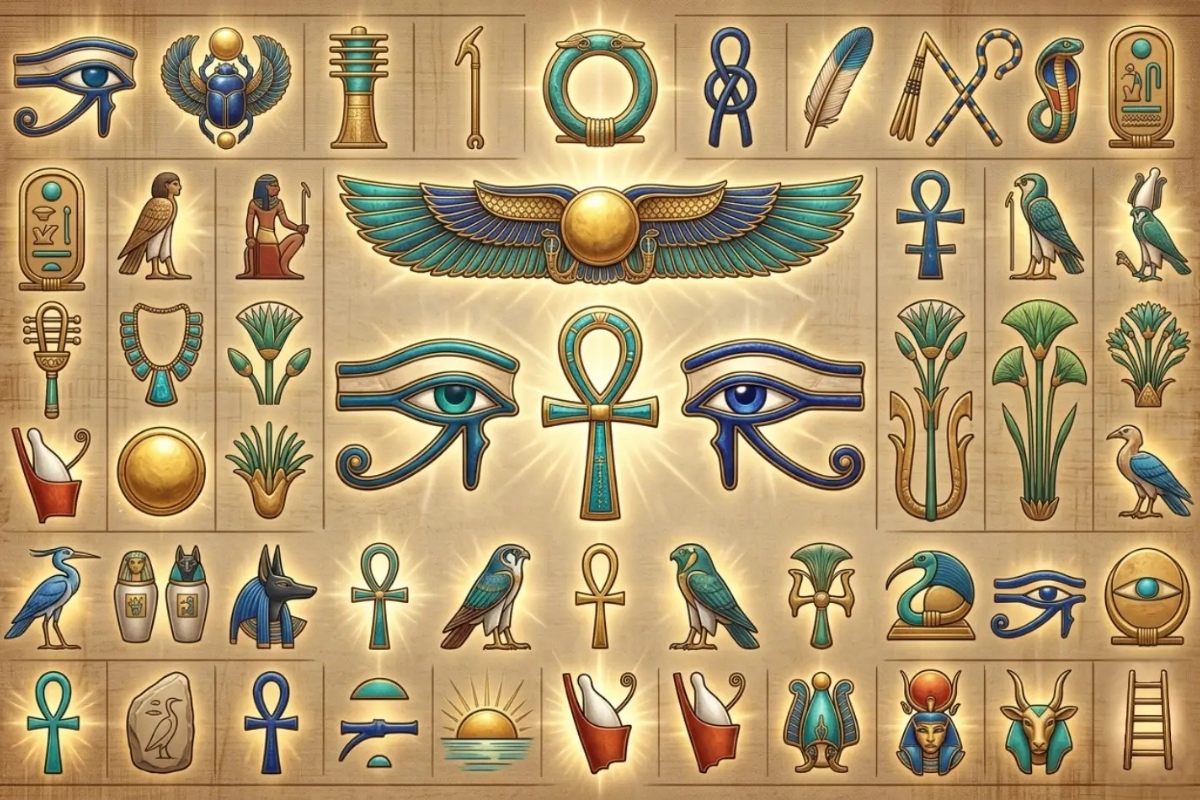
Religious and divine symbols represented gods, goddesses, and cosmic forces. These include the ankh, the Eye of Horus, and the sun disk associated with Ra. Symbols of royalty and power showed who held authority, such as the double crown, the crook and flail, and the cobra (uraeus) worn on a pharaoh’s forehead.
Protective symbols were believed to ward off evil and were placed in tombs, homes, and jewelry — the Eye of Horus and certain amulets fall into this group. Symbols of the afterlife reflected Egyptian beliefs about death and rebirth, including the scarab beetle and the djed pillar.
Everyday and natural symbols borrowed from the Nile environment itself, such as the lotus flower, papyrus plant, and various animals like the falcon, cobra, and ibis.
One of the most impressive aspects of ancient Egyptian symbols is how consistently they were used across three millennia. A scarab carved during the Old Kingdom carries essentially the same meaning as one made during the Ptolemaic period nearly 2,500 years later.
This consistency is part of why symbolism in ancient Egypt still feels so recognizable and powerful today — the visual language barely changed, even as dynasties rose and fell.
Color also played a major symbolic role, which we cover in detail later in this guide. Green symbolized rebirth and vegetation, black represented fertile soil and the afterlife (not death in the negative sense many assume), red carried associations with chaos and power, and gold represented the eternal, imperishable flesh of the gods.
It is also worth noting that many ancient egyptian religious symbols were multi-purpose. The ankh, for example, appears in religious ceremonies, royal art, and even as jewelry for ordinary Egyptians who wished to invoke long life. Similarly, the Eye of Horus functioned as a protective amulet, a mathematical symbol used in measuring grain and liquids, and a reference to a specific myth about the god Horus losing and regaining his eye.
For travelers, recognizing these categories in advance means you will spot patterns everywhere in Egypt — from the walls of Karnak Temple in Luxor to the small souvenir shops of Aswan. Guides on our Egypt All Inclusive tours are trained to point out these symbols in real time, turning every temple visit into a storytelling experience rather than a simple walkthrough.
In the next sections, we will explore each major symbol individually, starting with the most famous of them all: the ankh, the ancient egyptian symbol of life.
The Ankh: The Ancient Egyptian Symbol of Life and Eternal Life
If you ask most people to name a symbol from Egypt, the ankh is usually the first thing that comes to mind. Shaped like a cross with a looped top, the ankh egyptian symbol is instantly recognizable, and for good reason — it is the ancient egyptian symbol of life itself, representing not just physical existence but eternal life beyond death.
The word “ankh” in the ancient Egyptian language literally meant “life” or “to live.” In hieroglyphic writing, the symbol also functioned as a letter and word, appearing constantly in inscriptions describing pharaohs, gods, and blessings. When you see a god extending an ankh toward a pharaoh’s nose in temple art, this represents the divine gift of the “breath of life” — a powerful and touching image that appears in nearly every major temple in Egypt.
The egyptian symbol of life was closely associated with several major deities, particularly Isis, Osiris, and Ra. Isis, the goddess of magic and motherhood, is frequently depicted holding the ankh, symbolizing her power to grant and sustain life.
Osiris, god of the afterlife and resurrection, holds the ankh as a reminder that death is not an end but a transformation into eternal existence — which is precisely why the ankh egyptian symbols appear so often on coffins and funerary items.
There is genuine debate among Egyptologists about the ankh’s original design origin. Some believe it represents a sandal strap, others suggest it symbolizes the union of male and female principles (a combination of the symbols for Osiris and Isis), while another theory proposes it depicts the sunrise over the horizon. Whatever its origin, its meaning as ancient egyptian symbol of eternal life remained remarkably stable for thousands of years.
Beyond religious use, the ankh became one of the most popular ancient egyptian symbols of life in jewelry, both in antiquity and today. Ancient Egyptians wore ankh amulets believing they offered protection and long life, a tradition that modern jewelry designers have revived enthusiastically. If you browse markets in Cairo, Luxor, or Aswan today, you will find countless pieces of jewelry featuring this shape, often crafted from silver, gold, or semi-precious stones.
Where to see the ankh in Egypt
The ankh appears prominently at the Temple of Isis in Philae (Aswan), Karnak Temple, the tombs of the Valley of the Kings, and throughout the Egyptian Museum and the Grand Egyptian Museum in Cairo. On our guided tours, travelers are often surprised at just how frequently this symbol appears once they know what to look for — nearly every wall relief involving a god blessing a king includes it.
For 2026 travelers interested in bringing home a meaningful souvenir, an authentic ankh pendant purchased through a reputable Egyptian jeweler (something our Egypt All Inclusive guides can help arrange) makes a far more meaningful gift than a mass-produced trinket. Understanding the symbol’s true meaning — life, protection, and eternity — adds real depth to what might otherwise be just a pretty accessory.
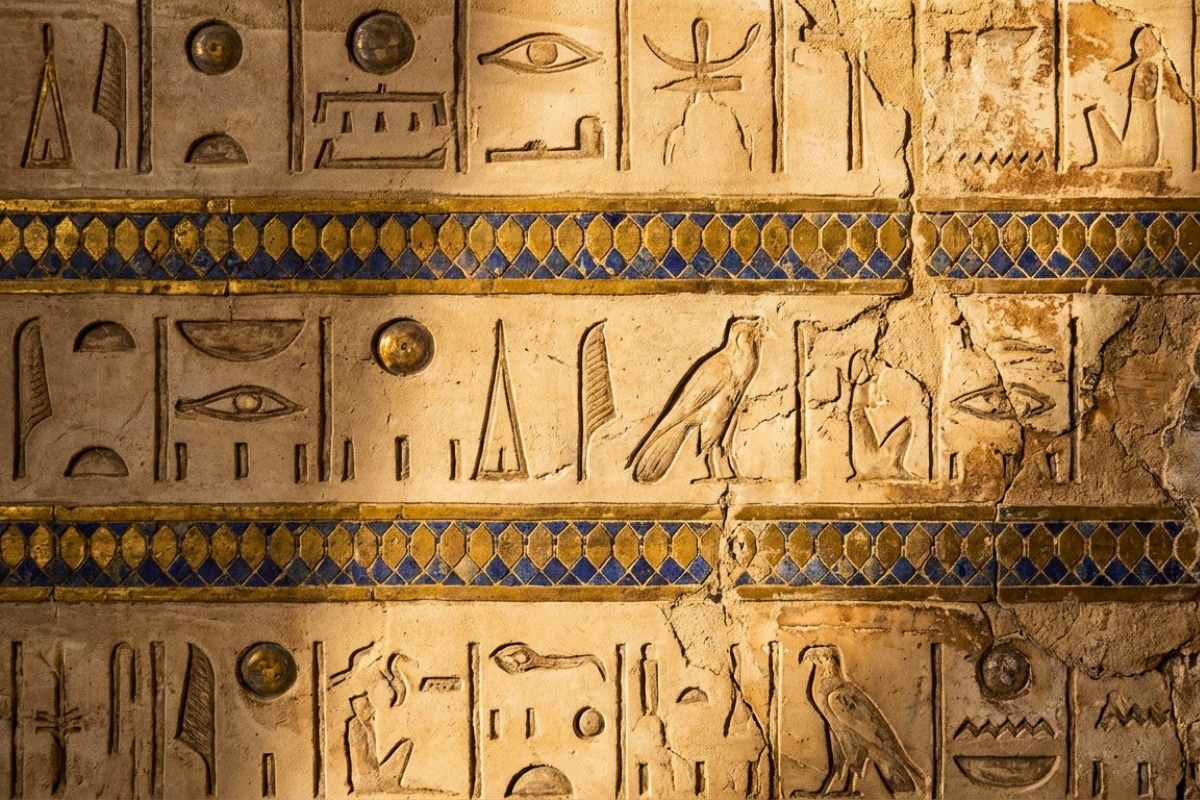
The Eye of Horus: Egypt’s Most Powerful Symbol of Protection and Healing
The Eye of Horus, sometimes called the “wedjat eye,” is one of the most enduring ancient egyptian symbols and meanings travelers ask about. This egyptian eye symbol represents protection, healing, and royal power, and its story is rooted in one of ancient Egypt’s most important myths.
According to Egyptian mythology, Horus was the falcon-headed god of the sky and kingship, son of Isis and Osiris. In a legendary battle to avenge his father’s death, Horus fought his uncle Set (also written Seth), the god of chaos.
During the conflict, Set tore out Horus’s eye. The eye was later healed and restored, usually through the intervention of the god Thoth. Because of this myth, the ancient egyptian eye symbol became a powerful representation of healing, restoration, and protection against harm.
The eye of horus symbol was so trusted for protection that Egyptians placed it on amulets, jewelry, and even funerary wrappings to guard the dead in the afterlife. It was also painted on the prows of boats to ensure safe travel — a tradition still echoed today on fishing boats in parts of the Mediterranean. This connection between the eye of horus and safe journeys makes it a particularly fitting symbol for modern travelers heading to Egypt themselves.
Interestingly, the egyptian eye symbol also had a practical, mathematical role in ancient Egypt. Each part of the eye’s design was associated with a fraction used in measuring grain, land, and liquid volumes — a system historians call the “Horus-eye fractions.” This dual role as both a spiritual and mathematical symbol illustrates how thoroughly integrated symbolism was into everyday ancient Egyptian life.
It’s worth distinguishing the Eye of Horus from the “Eye of Ra,” another important ancient egyptian eye symbol. While visually similar, the Eye of Ra is associated with the sun god Ra and represents fierce, protective feminine power, often linked to goddesses like Sekhmet, Hathor, or Wadjet. Many travelers use the terms interchangeably, but a knowledgeable Egyptologist guide can help you tell the difference when examining temple carvings.
Where to see the Eye of Horus in Egypt
This symbol appears throughout the Temple of Kom Ombo (dedicated partly to Horus), Edfu Temple — one of the best-preserved temples in Egypt and specifically devoted to Horus — and countless artifacts in the Egyptian Museum and Grand Egyptian Museum. The Temple of Edfu, located between Luxor and Aswan, is considered the single best place to understand the full mythology behind this symbol, making it a must-visit stop on any Nile cruise itinerary.
For travelers wanting a personal keepsake, Eye of Horus jewelry remains one of the most popular purchases in Egypt, sold in gold, silver, and lapis lazuli versions across markets in Cairo, Luxor, and Aswan. Just like the ankh, buying through trusted vendors ensures you’re getting authentic craftsmanship rather than imitation pieces — something our local guides are always happy to help you navigate.
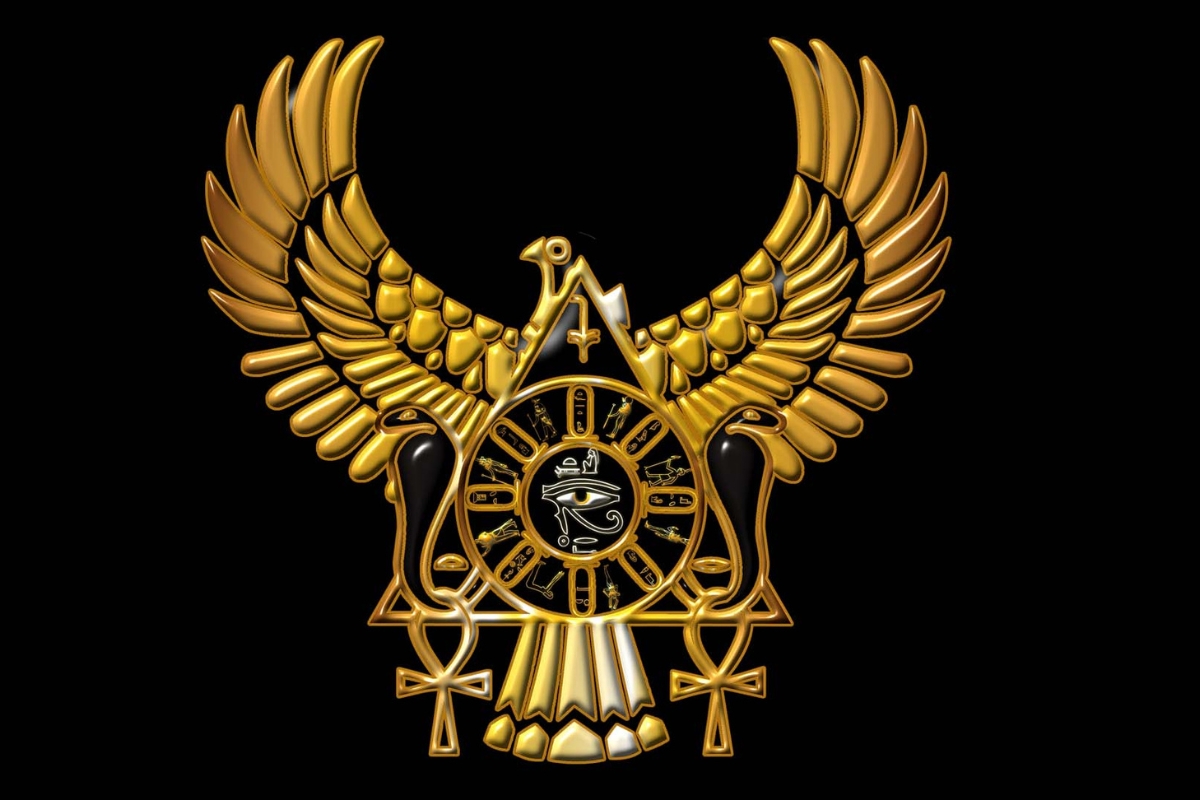
The Scarab Beetle: Ancient Egypt’s Symbol of Rebirth and Transformation
Few creatures held as much symbolic weight in ancient Egypt as the humble dung beetle, better known today through the beautifully stylized ancient egyptian scarab symbol. To modern eyes it might seem like an odd choice for such reverence, but the reasoning behind egyptian scarab symbol meaning is genuinely fascinating once explained.
Egyptians observed scarab beetles rolling balls of dung across the desert sand and laying their eggs inside. When new beetles later emerged from these balls, it appeared as though life had spontaneously generated from nothing. This observation led the Egyptians to associate the scarab with self-creation, transformation, and rebirth — making it one of the most important ancient egyptian symbols of life and renewal.
The scarab became directly linked to Khepri, a god associated with the rising sun. Just as the sun “rolled” across the sky and was reborn each morning, the scarab beetle rolling its dung ball became a living metaphor for this daily solar rebirth. This is why scarab imagery appears so frequently alongside sun disks and other solar symbols in Egyptian art.
Perhaps the most practical use of the egyptian scarab symbol was in funerary practice. Large stone scarabs, called “heart scarabs,” were placed over the hearts of mummified individuals. These carried inscribed spells from the Book of the Dead, asking the heart not to testify against its owner during the judgment of the soul in the afterlife — a critical moment when the heart was weighed against the feather of Ma’at, goddess of truth and balance. This makes the scarab beetle symbolism egypt travelers often ask about deeply connected to Egyptian beliefs about morality, judgment, and the soul’s journey after death.
Scarabs were also used as personal seals, stamps, and jewelry throughout daily Egyptian life, not just in funerary contexts. Officials wore scarab rings to stamp documents, and ordinary people wore scarab amulets believing they brought good luck, protection, and prosperity — which explains why scarabs are consistently listed among ancient egyptian good luck symbols even today.
Where to see the scarab in Egypt
The most famous example is the giant granite scarab statue at Karnak Temple in Luxor, where legend says walking around it seven times brings good luck — a fun and popular activity for visitors on our Luxor tours. The Egyptian Museum and Grand Egyptian Museum also house extraordinary collections of scarab amulets and heart scarabs, including some belonging to Tutankhamun.
For 2026 travelers, a scarab pendant or ring remains one of the most meaningful souvenirs available in Egypt, symbolizing transformation and renewal — fitting for anyone whose journey through Egypt feels like a personal transformation of its own. Ask your Egypt All Inclusive guide to point out authentic scarab jewelry versus tourist-market imitations while shopping in Luxor or Aswan.
The Lotus Flower: Egyptian Symbol of Creation and New Beginnings
The egyptian lotus symbol is one of the gentlest yet most philosophically rich icons in Egyptian symbolism. Unlike the ankh or scarab, which are stylized human-made shapes, the lotus flower egyptian symbol comes directly from nature — specifically, the blue and white water lilies that grew along the banks of the Nile River.
What made the lotus so significant to ancient Egyptians was its daily behavior: the flower closes and sinks beneath the water each night, then reopens and rises above the surface every morning. Egyptians saw this natural cycle as a perfect metaphor for creation, rebirth, and the sun’s daily journey — closely tying the egyptian symbols lotus tradition to solar worship, much like the scarab beetle discussed above.
According to one important creation myth, the very first sunrise occurred when a giant lotus flower opened atop the primeval waters of chaos, revealing the young sun god within its petals. This story cemented the lotus as a symbol not just of beauty, but of the origin of life itself — making it one of the foundational ancient egyptian symbols of life alongside the ankh and scarab.
The lotus also became deeply tied to Upper Egypt (the southern region), while the papyrus plant represented Lower Egypt (the northern Nile Delta). Together, these two plants were often shown intertwined around a symbol called “sema-tawy,” representing the unification of Egypt’s two lands under one ruler. This is why you’ll frequently see lotus and papyrus carvings paired together on temple columns and royal thrones.
Beyond mythology, the lotus appeared constantly in Egyptian art and architecture. Temple columns were often carved to resemble bundles of lotus stems with capitals shaped like open or closed lotus blossoms — a design choice you can still admire today at temples throughout Luxor and Karnak. The flower also appeared in banquet scenes, where guests are shown holding or smelling lotus blossoms, believed to bring pleasure and even mild euphoric effects in some depictions.
Where to see the lotus in Egypt
Lotus-column architecture is beautifully preserved at the Temple of Luxor and Karnak Temple, while smaller lotus motifs decorate countless artifacts in the Egyptian Museum and Grand Egyptian Museum. If you take a felucca sailboat ride on the Nile near Aswan — a favorite activity on our Aswan excursions — you may even spot real water lilies growing along quieter stretches of the riverbank, connecting you directly to the same natural inspiration that shaped this ancient symbolism thousands of years ago.
For travelers, the lotus offers a beautifully symbolic gift idea: perfumes, oils, and jewelry featuring lotus motifs are widely available in Egypt and carry a lighter, more poetic meaning than some of the more dramatic protective symbols — representing rebirth, beauty, and new beginnings, which makes it a popular choice for travelers marking a fresh chapter in their own lives during their 2026 Egypt journey.
Ancient Egyptian Gods and Their Symbols: A Complete Reference Table
Understanding ancient egyptian gods and symbols is essential to reading any temple wall in Egypt. Each major deity carried specific symbols, animals, and colors that identified them instantly to ancient worshippers — and can help you identify them just as easily on your 2026 trip. Below is a practical reference table covering the most important symbols of ancient egyptian gods you’re likely to encounter.
| God / Goddess | Domain | Primary Symbol(s) | Sacred Animal |
|---|---|---|---|
| Osiris | Afterlife, resurrection, agriculture | Ankh, crook and flail, djed pillar | — |
| Isis | Magic, motherhood, protection | Ankh, throne headdress, tyet knot | Kite (falcon-like bird) |
| Horus | Kingship, the sky | Eye of Horus (wedjat), falcon | Falcon |
| Ra | Sun, creation | Sun disk, ankh | Falcon, scarab (as Khepri) |
| Anubis | Mummification, the afterlife | Was scepter, embalming tools | Jackal |
| Set (Seth) | Chaos, storms, the desert | Was scepter | Set-animal (unidentified creature) |
| Thoth | Wisdom, writing, the moon | Writing palette, moon disk | Ibis, baboon |
| Hathor | Love, joy, music | Sistrum, cow horns with sun disk | Cow |
| Ptah | Craftsmanship, creation | Was scepter, djed pillar | Apis bull |
| Sekhmet | War, healing | Sun disk, ankh | Lioness |
| Bastet | Home, fertility, protection | Sistrum | Cat |
| Ma’at | Truth, balance, justice | Ostrich feather | — |
The ancient egyptian god osiris symbol most commonly recognized is the djed pillar, a column-like shape believed to represent his spine and, by extension, stability and endurance. Osiris is also shown holding the crook and flail — tools symbolizing his role as shepherd and provider for his people, later adopted by pharaohs as symbols of royal authority.
The anubis egyptian god symbol — the jackal — reflects the animal’s real-world association with cemeteries in ancient Egypt, where jackals were commonly seen scavenging near burial grounds. Rather than fearing this connection, Egyptians transformed it into a protective role: Anubis became the guardian of the dead and the god who guided souls through mummification and judgment.
The set egyptian god symbol, sometimes called the seth egyptian god symbol, remains one of Egyptology’s enduring mysteries. The “Set-animal” doesn’t clearly match any known creature, leading some scholars to believe it may be a stylized composite or even an extinct species. Set represented chaos and the harsh desert, standing in mythological opposition to the order represented by Osiris and Horus.
Recognizing these symbols of ancient egyptian gods will make temple visits during your 2026 trip far more rewarding. On Egypt All Inclusive tours, our Egyptologist guides walk you through these exact associations in person, helping you “read” temple walls almost like a storybook rather than simply admiring beautiful but unexplained carvings.
Symbols of Royalty, Power, and Protection in Ancient Egypt
Beyond religious icons, ancient Egypt developed an entire visual system dedicated to royalty and power. These symbols of egyptian royalty appear constantly on statues, temple reliefs, and royal tombs, and recognizing them helps travelers immediately identify which figures in a carving are pharaohs versus gods or commoners.
The double crown, known as the pschent, combined the White Crown of Upper Egypt with the Red Crown of Lower Egypt, visually representing what did the double crown of egypt symbolize: the unification of the entire nation under one ruler. This was one of the most important ancient egyptian symbols of power, worn exclusively by pharaohs to assert their authority over both regions.
The uraeus, a rearing cobra symbol worn on the pharaoh’s forehead or crown, represented the goddess Wadjet and functioned as a powerful ancient egyptian protection symbol. According to myth, the cobra could spit fire to destroy the king’s enemies, making it both a literal and symbolic shield of royal power. This egyptian snake symbol appears on nearly every royal headdress and crown throughout Egyptian history, from the earliest dynasties through the Ptolemaic period.
The crook and flail, crossed over the pharaoh’s chest in countless statues and coffin depictions (most famously Tutankhamun’s golden death mask), represented the king’s role as both shepherd and provider for his people — echoing the same symbols originally associated with Osiris. Holding these tools visually confirmed a pharaoh’s divine right to rule.
The was scepter, a straight staff topped with an animal head and forked base, represented dominion and power, carried by both gods and pharaohs in formal depictions. It frequently appears alongside the ankh and djed pillar in a trio representing life, stability, and power together.
Other important ancient egyptian protection symbols include the tyet knot (sometimes called the “Isis knot”), resembling an ankh with folded arms, believed to protect the wearer under the goddess Isis’s care, and the shen ring, a circular rope shape with no beginning or end, representing eternal protection — the shen egyptian symbol is often shown being held in the talons of protective falcons hovering above pharaohs in temple art.
Royal identity was also marked through the cartouche, an oval loop surrounding a pharaoh’s name written in hieroglyphs. While not a symbol in the mythological sense, the cartouche functioned as a protective boundary, believed to shield the ruler’s name — and by extension, their identity and legacy — for eternity. Travelers can commission personalized cartouche jewelry featuring their own name translated into hieroglyphs, a wildly popular and genuinely unique souvenir available in Cairo and Luxor markets.
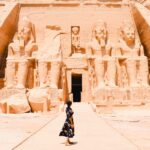
Where to see royal symbols in Egypt: Tutankhamun’s treasures at the Grand Egyptian Museum offer the single best collection of royal symbolism anywhere in the world, including his crook, flail, crowns, and uraeus-adorned death mask. Abu Simbel’s colossal statues of Ramses II also dramatically display the double crown and royal regalia at a scale that photographs simply cannot capture — a definite highlight for travelers joining our Aswan and Abu Simbel excursions in 2026.
Hieroglyphics and the Ancient Egyptian Alphabet: A Language Made of Symbols
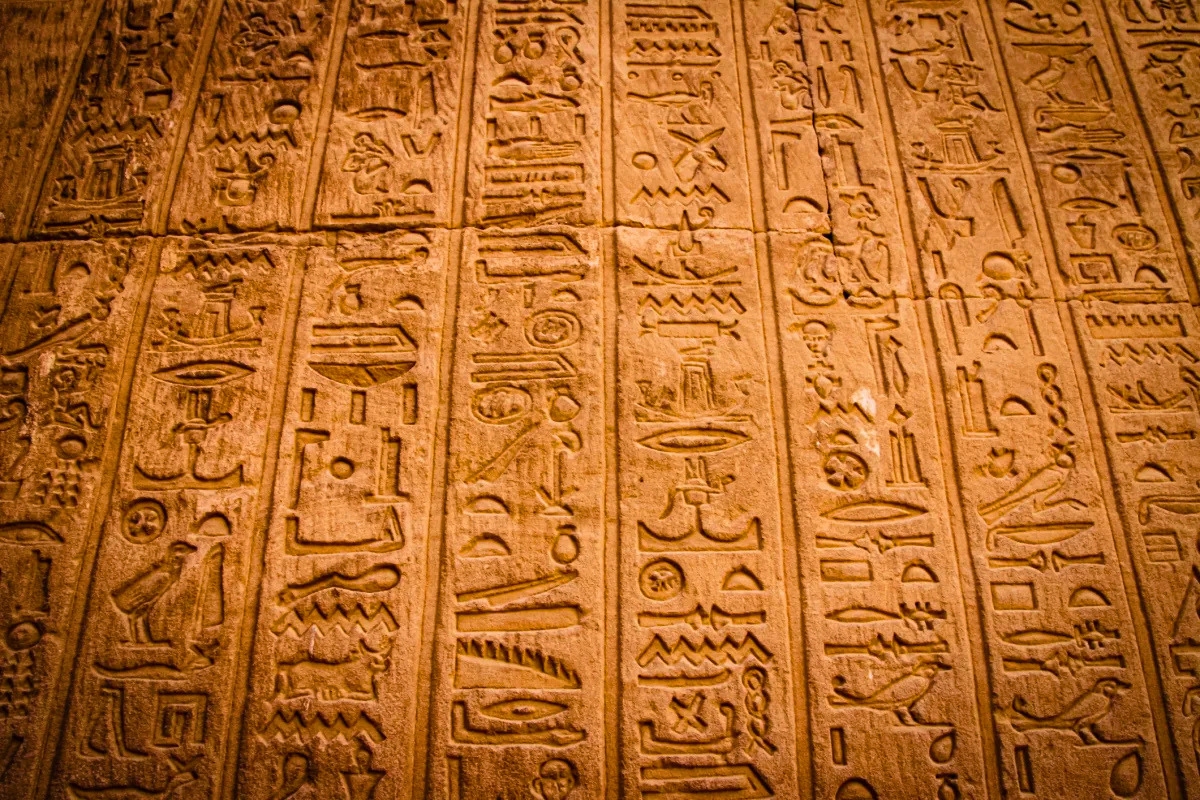
No discussion of egyptian symbols and meanings is complete without exploring hieroglyphics themselves — arguably the grandest symbolic system ever created by human hands. The ancient egyptian hieroglyphics symbols formed a complete writing system combining phonetic sounds, whole words, and determinatives (symbols clarifying meaning) into one elegant visual language used for over 3,000 years.
The word “hieroglyph” comes from Greek, meaning “sacred carving,” reflecting how Greeks encountered this writing primarily on temple walls and monuments. Egyptians themselves called their writing “the words of the gods,” believing that Thoth, god of wisdom and writing, had gifted this system to humanity. This divine origin explains why the ancient egyptian writing symbols were treated with such reverence, often reserved for temples, tombs, and royal monuments rather than everyday communication (which used simpler cursive scripts called hieratic and, later, demotic).
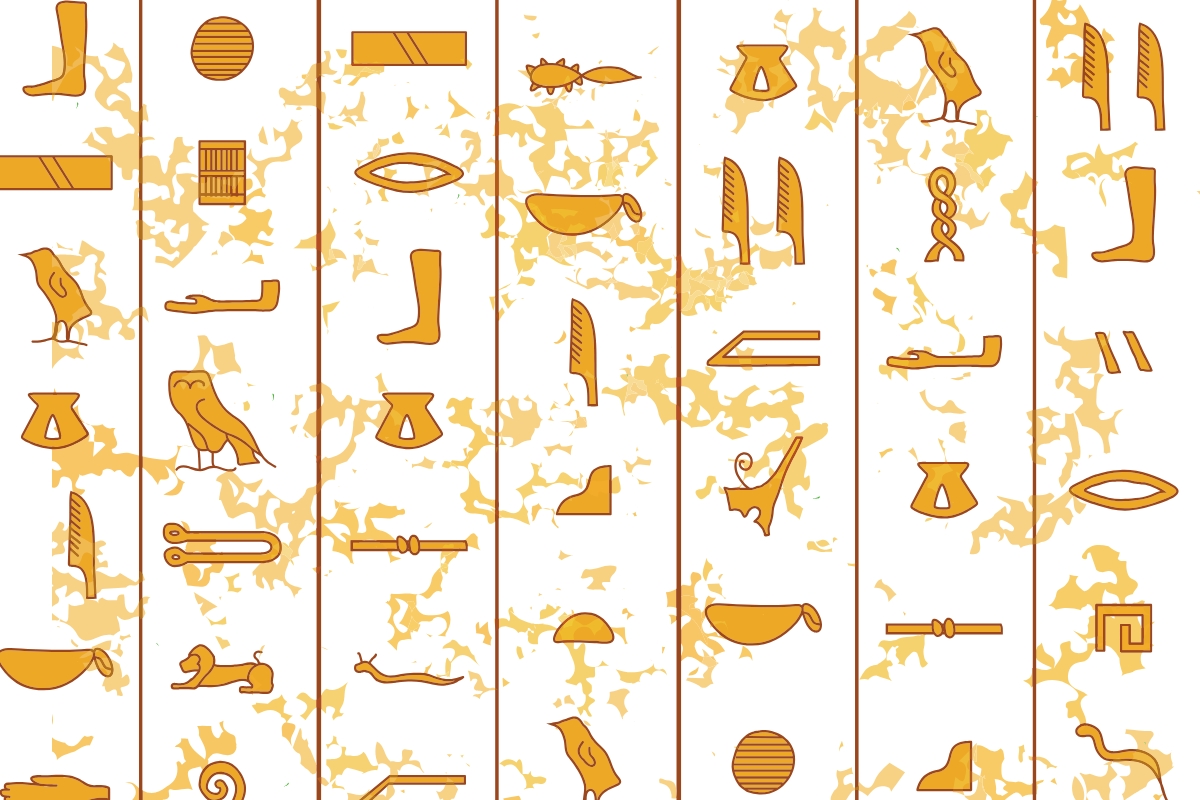
The ancient egyptian alphabet symbols are not quite an “alphabet” in the way English speakers understand the term. Hieroglyphics combined roughly 24 single-consonant signs (functioning similarly to an alphabet) with hundreds of additional symbols representing two or three consonant sounds, whole words, or silent classifiers indicating a word’s category — such as a small walking-legs symbol added to verbs of motion. This complexity is why decoding ancient egyptian hieroglyphics symbols and meanings puzzled scholars for centuries.
The breakthrough came in 1799 with the discovery of the Rosetta Stone, which featured the same decree written in hieroglyphics, demotic script, and ancient Greek. French scholar Jean-François Champollion used this trilingual text to finally crack the code in 1822, unlocking thousands of years of previously silent Egyptian history. Fascinatingly, the original Rosetta Stone remains in the British Museum, though Egypt has an excellent replica on display, and ongoing conversations about repatriation remain a notable topic in the heritage world as of 2026.
Hieroglyphics also included the ancient egyptian math symbols used for counting, measuring land, and calculating taxes — a system based on multiples of ten, with distinct symbols for one, ten, one hundred, and so on, alongside fraction symbols directly related to the Eye of Horus discussed earlier in this guide.
For travelers, one of the most enjoyable parts of visiting Egypt is learning to recognize a handful of common hieroglyphic symbols before your trip. Simple signs like the owl (representing the “m” sound), the reed leaf (“i” sound), and the horned viper (“f” sound) appear constantly across temple walls, and spotting them yourself adds a rewarding puzzle-like element to every site you visit.
Where to see hieroglyphics in Egypt
Nearly every ancient site in Egypt features hieroglyphic inscriptions, but the best-preserved and most extensive examples are found at Karnak Temple, the Temple of Luxor, Abydos Temple, and the tombs of the Valley of the Kings, where painted (rather than only carved) hieroglyphics retain vivid color even after thousands of years. Our expert guides can teach you to read your own name in hieroglyphs during your tour — a small but memorable detail many travelers rank among their favorite trip moments.
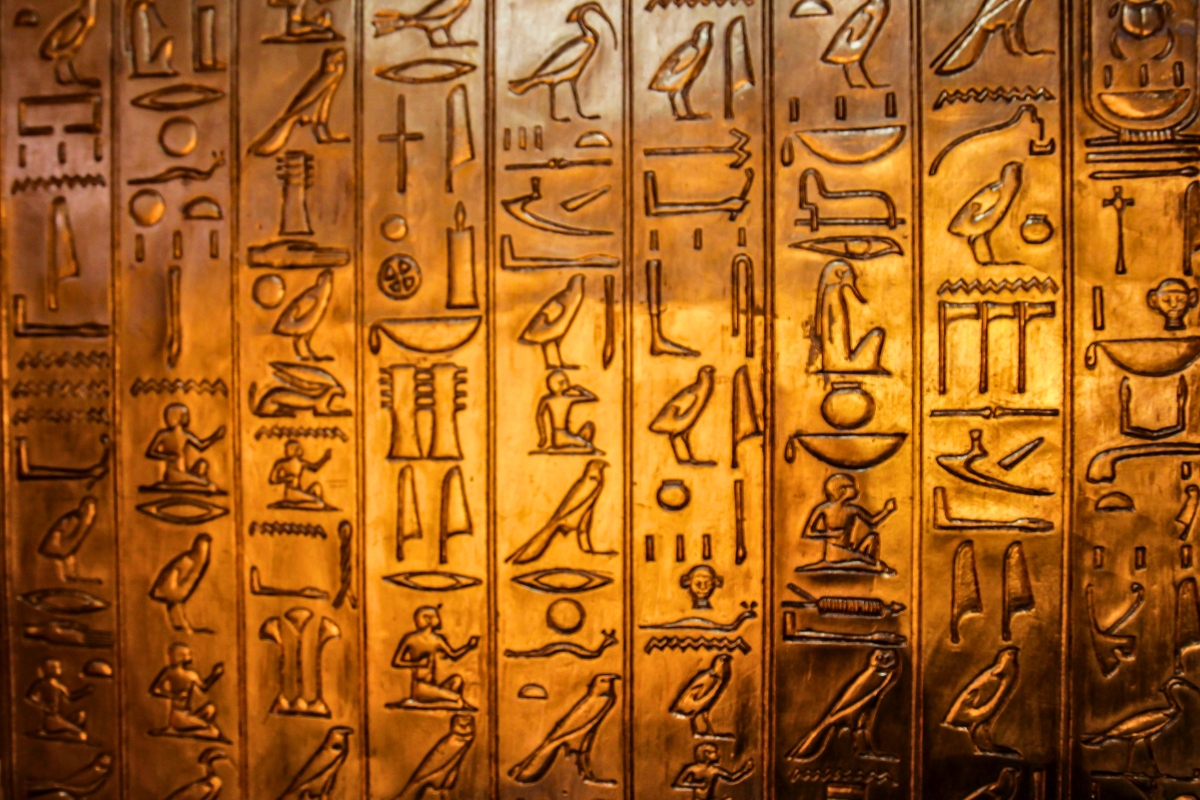
Color Symbolism in Ancient Egypt: What Every Shade Really Meant
Color was never random in ancient Egyptian art. Every pigment used on temple walls, coffins, and statues carried deliberate meaning, forming a complete system of egyptian color symbolism that modern travelers rarely learn about — but that adds enormous depth once understood. Here is a quick-reference table covering the core meanings.
| Color | Egyptian Name | Symbolic Meaning |
|---|---|---|
| Green | Wadj | Rebirth, vegetation, fertility, growth |
| Black | Kem | Fertile Nile soil, the afterlife, resurrection |
| Red | Desher | Chaos, power, danger, life energy |
| White | Hedj | Purity, sacredness, cleanliness |
| Gold | Nub | Divinity, eternity, the flesh of the gods |
| Blue | Irtiu | The heavens, the Nile, creation, rebirth |
Green (wadj) was strongly tied to Osiris, who is frequently depicted with green skin, symbolizing vegetation and agricultural renewal along the Nile. This same color gave its name to the “wadjet eye” (Eye of Horus), linking color and symbol together in a single concept of protection and life.
Black (kem) is one of the most misunderstood colors in Egyptian symbolism. Rather than representing death negatively, black referred to the rich black silt deposited by the Nile’s annual floods — the very soil that made Egyptian agriculture, and therefore civilization, possible. Anubis, god of mummification, is traditionally shown with black skin not to signify death itself, but rebirth and the protective embalming process that prepared the body for eternal life. In fact, the ancient Egyptians called their own land “Kemet,” meaning “the Black Land,” referring proudly to this fertile soil.
Red (desher) carried more dangerous, powerful associations, connected to the god Set and the harsh, lifeless “Red Land” of the surrounding desert. Red was used carefully in art — sometimes to depict genuine danger or chaos, and other times to represent powerful protective energy, depending on context.
Gold (nub) represented the eternal and imperishable, which is why royal death masks, coffins, and divine statues were so frequently covered in gold leaf. Egyptians believed the skin of the gods was literally made of gold, explaining the material’s overwhelming presence in royal tombs such as Tutankhamun’s.
Blue, closely associated with lapis lazuli (a prized imported stone), represented the heavens, the life-giving Nile, and creation itself. Many statues of gods and pharaohs feature blue crowns or blue-painted hair, such as the famous blue “Khepresh” war crown.
Understanding egyptian color symbolism gives travelers an entirely new lens for appreciating tomb paintings in the Valley of the Kings, where colors remain remarkably vivid due to Egypt’s dry climate. Rather than simply admiring the beauty of these paintings, you’ll begin reading the intended emotional and religious meaning behind every color choice — from the protective black of Anubis to the eternal gold surrounding royal figures.
Sacred Animal Symbols in Ancient Egypt
Ancient Egyptians observed the natural world around them with extraordinary attention, and many of their most powerful ancient egyptian animal symbols came directly from creatures they encountered daily along the Nile. Understanding these animal symbols helps travelers instantly recognize which god or concept a carving represents.
The falcon, most closely associated with Horus, represented the sky and kingship — its sharp eyesight and dominance in flight made it a natural symbol for a ruling sky god. This is sometimes referred to as the ancient egyptian eagle symbol by modern visitors, though Egyptologists more accurately identify the bird as a falcon (specifically resembling a peregrine or lanner falcon) rather than a true eagle. Regardless of terminology, this powerful bird symbol appears on royal thrones, crowns, and temple ceilings throughout Egypt.
The cobra, discussed earlier as the uraeus, represented protection and royal authority, tied to the goddess Wadjet of Lower Egypt. Cobra symbolism egyptian imagery also appears in funerary contexts, where cobras were believed to guard tomb entrances against intruders — both physically and spiritually.
The ibis and baboon, both sacred to Thoth, god of wisdom and writing, represented intelligence and knowledge. Thousands of mummified ibises have been discovered in ancient Egyptian animal cemeteries, reflecting how seriously this sacred symbolism was taken.
The cat, sacred to the goddess Bastet, represented home, fertility, and protection. Egyptians famously revered cats to the point of mummifying beloved pets, and harming a cat could carry serious legal and religious consequences in ancient Egyptian society.
The lion and lioness, associated with fierce goddesses like Sekhmet, represented both destructive power and protective strength — a duality reflecting how Egyptians viewed powerful forces as capable of both harm and protection depending on how they were approached.
The jackal, as discussed with Anubis, represented guardianship of the dead, while the bull (particularly the Apis bull associated with Ptah) represented strength, fertility, and royal power, often linked directly to the pharaoh’s own vitality.
Birds beyond the falcon also held significance — the vulture represented the goddess Nekhbet and royal protection over Upper Egypt, frequently paired with the cobra of Lower Egypt in royal headdresses to represent the unified nation, much like the lotus and papyrus pairing discussed earlier.
Where to see animal symbolism in Egypt
The Saqqara necropolis near Cairo includes fascinating animal catacombs where mummified sacred animals were discovered, offering unique insight into this practice. The Egyptian Museum and Grand Egyptian Museum both display extensive collections of animal mummies and related artifacts, while temple reliefs throughout Luxor, Karnak, and Edfu showcase these animal-headed gods in their full artistic glory. On our tours, we make a point of highlighting these animal symbols so travelers can independently identify gods across every site they visit for the remainder of their trip.
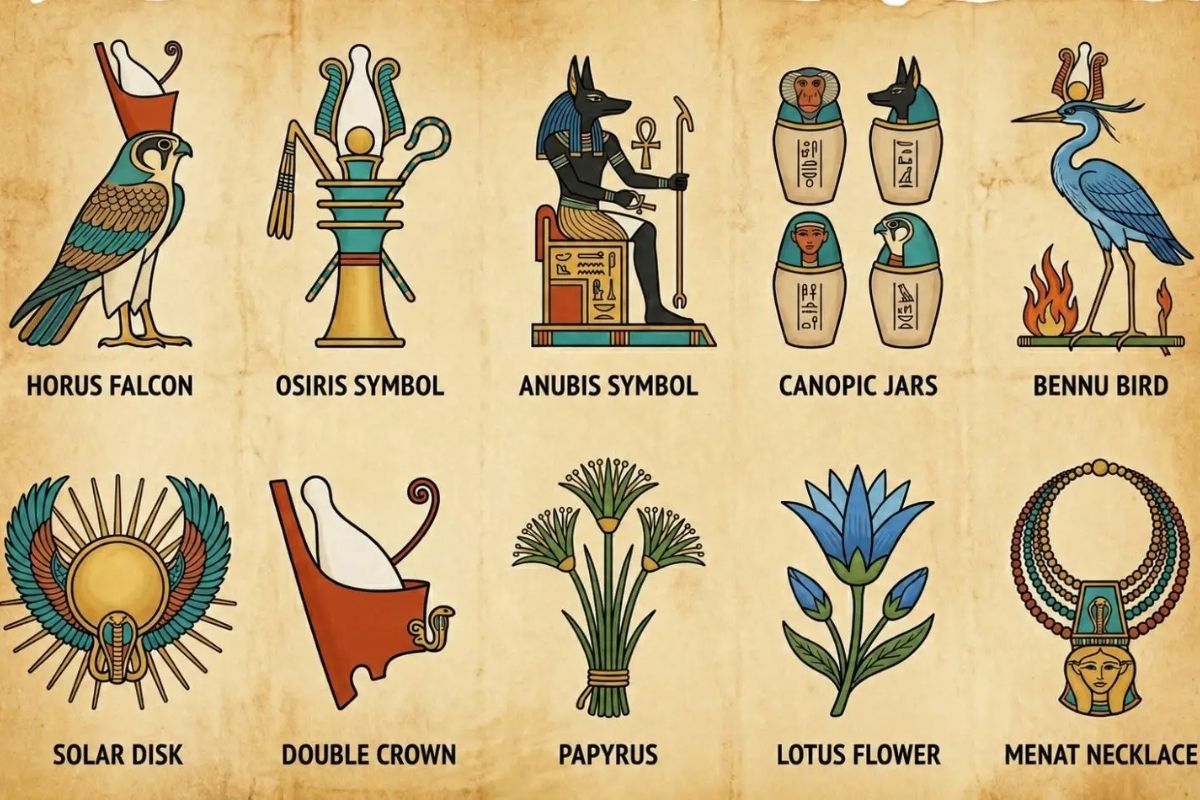
Symbols of Love, Family, Strength, Wisdom, Peace, and Truth in Ancient Egypt
Beyond the famous icons already covered, ancient Egypt developed symbols representing more personal, emotional concepts — ideas travelers frequently ask about when searching for meaningful, gift-worthy imagery to bring home from their trip.
The egyptian symbol for love is most often represented by the combination of the ankh (life) held near the heart, or by depictions of Isis and Osiris together, representing devoted marital and divine love. Some jewelry designers also use the tyet knot as a love symbol, since it was associated with Isis’s protective, nurturing bond with her family. There isn’t one single universally agreed “love hieroglyph,” but this combination of ankh and Isis imagery is the closest match to what most people search for as the ancient egyptian symbol of love.
The egyptian symbol for family is often represented through images of Isis, Osiris, and their son Horus shown together — ancient Egypt’s version of a sacred family unit. This trio appears frequently in temple art and represents protection, continuity, and generational strength.
The egyptian symbol for strength is commonly associated with the was scepter discussed earlier, along with lion and bull imagery representing raw physical and royal power. The djed pillar also carries strength symbolism, representing stability and endurance — literally meaning “to be stable” in the ancient Egyptian language.
The egyptian symbol for wisdom belongs firmly to Thoth, represented by the ibis bird or a baboon, along with the writing palette he is often shown holding. As the god who invented writing and mathematics, Thoth’s symbols represent intellectual achievement and knowledge preserved across generations.
The egyptian symbol for peace is less formally defined in Egyptology than some other concepts, but the sema-tawy (the lotus and papyrus intertwined, representing the unification of Egypt) is often cited as the closest match, symbolizing harmony between two previously divided lands. Ma’at, goddess of truth, balance, and cosmic order, is also closely tied to peace — her ostrich feather symbol represented the ideal of a balanced, harmonious society.
The ancient egyptian symbol for truth belongs to Ma’at’s single ostrich feather, used famously in the “weighing of the heart” ceremony, where a deceased person’s heart was placed on a scale against this feather to determine whether they had lived a truthful, balanced life worthy of entering the afterlife.
These deeply personal symbols make wonderful additions to a travel itinerary focused on meaning rather than just sightseeing. Many of our Egypt All Inclusive travelers choose to have custom jewelry made featuring the specific symbol that resonates most with their own life — whether that’s the strength of the djed pillar, the wisdom of Thoth’s ibis, or the enduring love represented by Isis and Osiris.
Practical tip: When shopping for symbolic jewelry in Khan el-Khalili market in Cairo or the souks of Luxor and Aswan, ask your guide to help verify authenticity and fair pricing — a small step that makes a meaningful difference in both the quality and cultural accuracy of your souvenir.
Symbols of Death, Rebirth, and the Afterlife
Ancient Egyptian civilization is often remembered primarily through its monuments to the dead — the pyramids, tombs, and mummies that dominate museum collections worldwide. This focus makes sense once you understand how central the concept of the afterlife was to Egyptian belief, and it explains why so many ancient egyptian death symbols are, paradoxically, also symbols of rebirth and hope.
The ancient egyptian symbol of death most directly associated with mortality is the djed pillar, representing the backbone of Osiris and, by extension, stability even through death. Rather than a grim symbol, the djed pillar was viewed positively, representing endurance and the promise of resurrection following Osiris’s own mythological death and return to life.
The egyptian symbol for rebirth, closely tied to everything discussed earlier in this guide, includes the scarab beetle (self-generation), the lotus flower (daily rising from water), and the sun disk (daily rebirth at dawn). Together these three symbols formed a consistent visual vocabulary Egyptians used to express their core belief: death was not an ending, but a transition into a new form of eternal existence.
Mummification itself was deeply symbolic, not merely a practical means of preservation. Each stage of the mummification process — removal of organs, application of natron salt, and wrapping in linen — was accompanied by religious rituals invoking Anubis and reciting spells from the Book of the Dead. The four canopic jars used to store organs were topped with the heads of the four Sons of Horus, each representing a different protective role over specific organs.
The weighing of the heart ceremony, mentioned earlier, represented the pivotal moment of judgment in the Egyptian afterlife. If a person’s heart was lighter than Ma’at’s feather of truth, they proceeded to the Field of Reeds — the Egyptian paradise. If the heart was heavier, weighed down by wrongdoing, it was devoured by Ammit, a fearsome composite creature part crocodile, lion, and hippopotamus, resulting in a second, permanent death.
The famous Book of the Dead was less a single book and more a personalized collection of spells, prayers, and symbolic images placed in tombs to guide the deceased safely through this dangerous journey. Illustrated papyri from the Book of the Dead are among the most visually stunning artifacts you can see in Egyptian museums today, packed with symbols discussed throughout this guide — ankhs, scarabs, the Eye of Horus, and Ma’at’s feather all appear together in a single unified symbolic system meant to protect the soul.
Where to explore death and rebirth symbolism in Egypt: The Valley of the Kings near Luxor offers the single richest concentration of afterlife symbolism anywhere in the world, with elaborately painted tomb corridors depicting the soul’s entire journey through the underworld. The Egyptian Museum’s mummy rooms and the Grand Egyptian Museum’s Tutankhamun galleries also provide unforgettable, deeply moving encounters with this symbolism in person — an experience photographs simply cannot replicate.
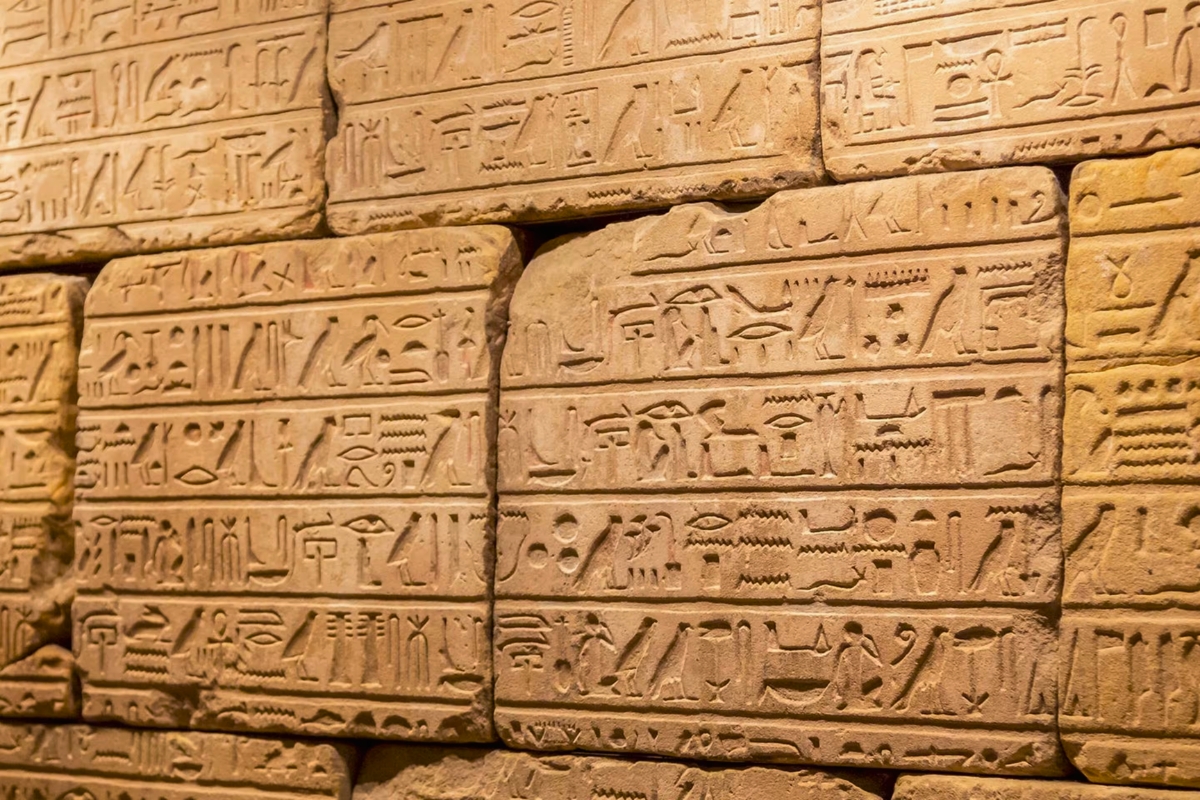
Ancient Egyptian Symbols in Art, Jewelry, and Modern Culture
The influence of ancient egyptian art symbols didn’t fade with the fall of the pharaonic civilization — it has continued shaping fashion, jewelry, tattoos, and design for thousands of years, and remains extremely popular heading into 2026.
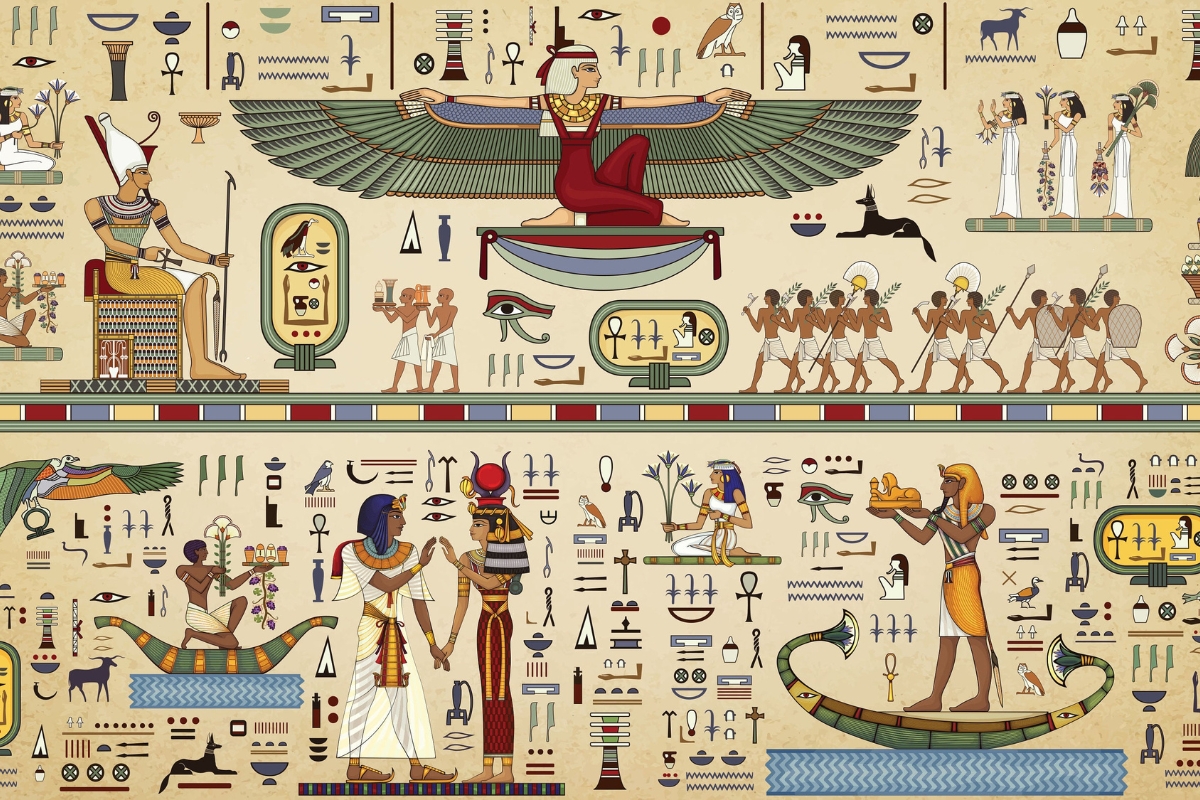
Symbolism in ancient egyptian art followed strict artistic conventions that make it instantly recognizable: figures shown with the head in profile, torso facing forward, and legs in profile again (a style called “composite view”), sizes indicating importance rather than realistic proportion (pharaohs drawn larger than servants), and consistent color symbolism as covered earlier in this guide. Recognizing these conventions helps travelers appreciate just how deliberate and skillful ancient Egyptian artists truly were, working within a system meant to convey eternal, idealized truth rather than a single fleeting moment.
Egyptian symbols tattoos have become genuinely popular worldwide, with the ankh, Eye of Horus, and scarab ranking among the most requested designs at tattoo studios globally. If you’re considering an Egypt-inspired tattoo, understanding the true meaning behind each symbol — rather than just its visual appeal — ensures your choice carries the significance you actually intend, whether that’s protection (Eye of Horus), eternal life (ankh), or transformation (scarab).
Egyptian symbols text, meaning hieroglyphic-style text used decoratively in modern design, jewelry, and even “ancient egyptian symbols copy and paste” tools online, has surged in popularity for personalizing digital content, social media, and custom merchandise. While fun, it’s worth noting that true hieroglyphic writing follows strict grammatical rules — casual copy-paste hieroglyph generators often produce decorative approximations rather than linguistically accurate text, so travelers wanting an authentic cartouche translation should consult a knowledgeable source (or ask your guide during your Egypt trip) rather than relying solely on online generators.
Ancient Egyptian influence also appears constantly in global architecture, cinema, and even alchemy and esoteric traditions. Ancient egyptian alchemy symbols, later absorbed into medieval European alchemical thought, borrowed heavily from Egyptian religious imagery, particularly solar symbols and the ankh, which some interpret as an early symbol representing the union of opposites — a concept alchemists found deeply compelling centuries later.
For travelers specifically interested in art and design, Egypt offers unmatched opportunities to see these symbols in their original, breathtaking context rather than through modern reinterpretations. Few experiences compare to standing before the original wall reliefs at Karnak or Luxor Temple, seeing firsthand the artistic precision behind symbols that have inspired jewelry designers, tattoo artists, and filmmakers for generations.
A unique 2026 travel tip: Several artisan workshops in Luxor and Cairo now offer hands-on classes where visitors can try their hand at traditional papyrus painting or jewelry-making featuring these authentic symbols, guided by local artists. Egypt All Inclusive can arrange these immersive cultural experiences as an add-on to your standard tour package, giving you a genuinely unique souvenir — one you made yourself, guided by artisans preserving techniques passed down for generations.
Egyptian Symbols in Astronomy, Numbers, and the Zodiac
Ancient Egyptians were remarkably advanced astronomers and mathematicians, and this expertise produced its own distinct set of ancient egyptian zodiac symbols and numerical symbols that travelers rarely learn about outside specialized museum exhibits.
Egyptian astronomy was closely tied to religious belief, particularly the star Sirius (called “Sopdet” or Sothis), whose annual reappearance in the sky predicted the Nile’s life-giving flood and marked the beginning of the Egyptian new year. This connection between astronomy and agriculture made celestial symbols deeply practical as well as spiritual, guiding the entire farming calendar that sustained Egyptian civilization.
The Dendera Zodiac, one of the most famous ancient egyptian zodiac symbols discoveries, is a stunning circular ceiling relief originally located in the Temple of Hathor at Dendera, near Luxor. Dating to the Ptolemaic period, it represents a fusion of traditional Egyptian decan-star symbolism with Babylonian and Greek zodiac concepts introduced during that later era of Egyptian history. The original is displayed in the Louvre in Paris, though an excellent replica remains at Dendera Temple itself, well worth the short excursion from Luxor.
The ancient egyptian math symbols used a base-ten numeral system with distinct hieroglyphic signs for one, ten, one hundred, one thousand, and beyond — a coiled rope represented one hundred, while a lotus flower (echoing the symbol discussed earlier) represented one thousand, and a tadpole represented an astonishing one hundred thousand, reflecting the sheer scale of ancient Egyptian record-keeping for taxation, construction projects, and royal accounting.
Egyptian priests and astronomers also developed one of the earliest solar calendars in human history, dividing the year into 365 days across twelve months of thirty days, plus five additional festival days dedicated to the births of major gods including Osiris, Isis, Horus, Set, and Nephthys. This calendar system, remarkably close to the modern calendar we still use today, demonstrates just how sophisticated ancient Egyptian symbolic and scientific thinking truly was.
For travelers with an interest in astronomy, the alignment of major monuments with celestial events adds an entirely new dimension to a visit. Abu Simbel is world-famous for its solar alignment phenomenon, occurring twice yearly (typically around February 22 and October 22) when sunlight penetrates the temple’s inner sanctuary to illuminate statues of the gods and Ramses II himself — a genuinely breathtaking event that thousands of travelers now plan entire 2026 itineraries around.
Where to explore astronomical symbolism in Egypt: Dendera Temple near Luxor, the solar alignment at Abu Simbel, and the precise cardinal orientation of the Great Pyramids of Giza (aligned with extraordinary accuracy to true north) all showcase ancient Egypt’s sophisticated relationship between symbolism, religion, and the stars. Our specialized Abu Simbel departure schedules are designed around these solar alignment dates for travelers who want to witness this phenomenon firsthand.
Modern Egyptian Symbols: Currency, Flag, and National Identity in 2026
While most of this guide focuses on ancient symbolism, modern Egypt has its own set of important national symbols that travelers encounter constantly during their trip — and understanding them adds useful, practical context to your journey.
The egyptian pound currency symbol, often written as “E£” or “LE” (short for “livre égyptienne,” reflecting historical French influence on Egyptian currency), is what you’ll see on price tags, receipts, and ATMs throughout your trip. As of 2026, the Egyptian pound remains the official currency, and travelers should always confirm current exchange rates before their trip, since rates can fluctuate. Egypt All Inclusive travelers benefit from pre-arranged, all-inclusive packages that minimize the need to handle constant currency exchange, though having some Egyptian pounds on hand for markets, tips (known locally as “baksheesh”), and small purchases is always recommended.
Interestingly, the modern Egyptian pound symbol has no connection to ancient Egyptian symbolism — ancient Egypt operated primarily through a barter and grain-based economy for most of its history, only adopting coinage relatively late, during the Persian and Greek periods. Still, many modern Egyptian banknotes proudly feature ancient monuments and symbols, including images of temples, pyramids, and pharaohs, creating a beautiful visual bridge between ancient and modern Egyptian identity.
The national symbols of Egypt today include the golden eagle (specifically the Eagle of Saladin) featured on the Egyptian flag and coat of arms — notably different from the falcon associated with Horus in ancient symbolism, though both represent similar values of strength and vigilance. The modern Egyptian flag itself uses red, white, and black — colors with deep historical resonance in the region, representing revolution, purity, and Egypt’s past respectively, according to common national interpretation.
It’s a wonderful moment of cultural connection when travelers realize that despite thousands of years of change, certain symbolic threads — powerful birds representing strength and protection, meaningful color choices, and pride in the Nile itself — still run through Egyptian identity today. This continuity is part of what makes Egypt such an extraordinary place to visit: it isn’t simply a country with ancient ruins, but a living culture that still honors and celebrates its symbolic heritage.
Practical travel tip for 2026: Keep a small amount of Egyptian pounds in smaller denominations for tipping guides, drivers, and hospitality staff throughout your trip — a customary and appreciated practice in Egyptian tourism culture. Egypt All Inclusive provides a detailed tipping guide to every traveler before departure, so you’ll never feel unsure about local customs during your journey.
Healing, Magic, and Protective Amulet Symbols
Ancient Egyptian medicine and magic were deeply intertwined, and understanding ancient egyptian healing symbols reveals just how holistic their approach to wellbeing truly was — treating physical illness and spiritual protection as part of the same practice.
The ancient egyptian medicine symbol most closely associated with healing is, once again, the Eye of Horus, thanks to its mythological restoration after injury. Physicians in ancient Egypt were often also priests, and healing spells frequently invoked Horus, Isis (renowned for her powerful healing magic), and Sekhmet, goddess associated with both plague and medicine — a duality reflecting the belief that the same forces capable of causing illness could also cure it.
The ancient egyptian heka symbol refers to Heka, the personified concept of magic itself, often shown as a god holding two intertwined snakes — an image with striking similarity to the modern caduceus symbol still used in medical branding today, though the two symbols developed independently in different cultures. Heka represented the creative, transformative power believed to underlie both healing and religious ritual throughout Egyptian life.
Ancient egyptian protection symbols used in amulets extended far beyond the Eye of Horus and ankh already discussed. The Bes amulet, depicting a dwarf-like protective god with a lion’s mane and tongue stuck out, was believed to ward off evil spirits, particularly protecting women during childbirth and young children — making Bes one of the most beloved, approachable deities in everyday Egyptian household life, despite his fierce appearance. The Taweret amulet, depicting a pregnant hippopotamus goddess, served a similar protective role for pregnant women and newborns.
The ancient egyptian infinity symbol, while not a single formalized icon the way modern culture imagines an infinity symbol, is most closely represented by the shen ring discussed earlier — a continuous loop with no beginning or end, symbolizing eternal protection and endless cycles, similar in spirit to how modern audiences interpret infinity imagery today.
Ancient egyptian hand symbols also carried protective meaning, particularly the raised hand or “hand of Fatima”-style amulets (more commonly associated with later Middle Eastern traditions, though Egypt’s own history includes hand-shaped protective charms used to ward off the evil eye) — a belief in protective, deflective imagery that persists strongly throughout modern Egyptian and broader Middle Eastern culture even today.
Where to see healing and protective symbolism in Egypt: The Egyptian Museum houses an extraordinary collection of protective amulets recovered from tombs, including Bes and Taweret figures, alongside medical papyri detailing ancient surgical and pharmaceutical practices. Kom Ombo Temple, dedicated jointly to Horus and Sobek, also features rare carved medical instrument reliefs, believed to be one of the earliest visual records of surgical tools in human history — a fascinating stop for any traveler with a medical or scientific interest joining our Nile cruise itineraries.
How to Experience Egyptian Symbolism Firsthand: 2026 Travel Tips
Reading about symbolism of Egypt is one thing — standing in front of it is an entirely different experience. Here are our best insider tips, gathered from years of guiding travelers through Egypt, to help you get the absolute most out of your 2026 trip.
1. Book a guide who explains symbolism, not just history.
Many tours focus purely on dates and dynasties. Ask specifically for guides who explain the meaning behind carvings, not just who built them. This single choice transforms a tour from informative to genuinely unforgettable, and it’s a standard we hold every Egypt All Inclusive guide to.
2. Visit the Grand Egyptian Museum early in your trip, not at the end.
Seeing Tutankhamun’s treasures — packed with nearly every symbol covered in this guide — before visiting temple sites gives you a visual “vocabulary” that makes everything you see afterward far more meaningful and recognizable.
3. Bring a small notebook or use your phone to jot down symbols you don’t recognize.
With so many ancient egyptian symbols and meanings to absorb, it’s easy to forget details by the end of a long touring day. A quick note lets you look things up later or ask your guide directly.
4. Time your Abu Simbel visit around the solar alignment if possible.
As mentioned earlier, this rare phenomenon (around February 22 and October 22) offers a spectacular, symbolism-rich experience worth planning your entire trip schedule around if your travel dates allow flexibility.
5. Shop for symbolic jewelry with a knowledgeable guide present.
Prices and authenticity vary enormously across markets, and having someone who understands both the symbolism and fair local pricing protects you from overpaying for lower-quality pieces.
6. Consider a Nile cruise for the best temple concentration.
Luxor, Edfu, Kom Ombo, and Aswan together offer the richest concentration of symbolic temple art anywhere in Egypt, and a cruise lets you visit all of them comfortably without repeated long drives.
7. Photograph symbols in natural light when possible.
Early morning and late afternoon light dramatically improves photos of carved reliefs, since the low angle creates shadow definition that reveals carving details often lost in harsh midday sun.
8. Ask about symbol-specific tours or add-ons.
Some travelers build entire itineraries around a personal theme — such as goddesses and feminine symbolism, or royal power and kingship symbols. Egypt All Inclusive can customize 2026 itineraries around these specific interests upon request.
| 2026/2027 Travel Tip | Why It Matters |
|---|---|
| Book guides who explain symbolism | Turns sightseeing into genuine understanding |
| Visit Grand Egyptian Museum early | Builds visual vocabulary before temple visits |
| Time trips around Abu Simbel alignment | Rare, spectacular symbolic solar event |
| Shop with a trusted guide | Ensures authentic, fairly priced jewelry |
| Choose a Nile cruise itinerary | Maximizes temple and symbol density per day |
| Photograph in early or late light | Reveals carving detail invisible at midday |
Following these tips, drawn from real traveler experiences and years of guiding expertise, ensures your 2026 Egypt trip goes far beyond typical tourism — becoming a genuinely educational, emotionally resonant journey into one of history’s richest symbolic traditions.
Frequently Asked Questions About Egyptian Symbols
What is the most important ancient Egyptian symbol?
Most Egyptologists and travelers alike would point to the ankh as the single most iconic ancient egyptian symbol of life, given its constant appearance across religious art, jewelry, and royal iconography spanning thousands of years.
What does the Egyptian ankh symbolize exactly?
The ankh symbolizes life, both physical and eternal. It represents the “breath of life” granted by the gods and is closely tied to concepts of immortality and rebirth in the afterlife.
What animal is a symbol of power in Egyptian culture?
The lion (and lioness, particularly linked to the goddess Sekhmet) represented raw power and protective ferocity, while the falcon, tied to Horus, represented the power of kingship and the sky. Both are strong candidates depending on whether you’re asking about physical strength or royal authority.
What is the ancient Egyptian symbol for death?
There isn’t one single universal “death symbol” the way modern culture might expect, since Egyptians viewed death as transformation rather than an ending. The djed pillar (stability through Osiris’s mythological death and resurrection) and the scarab (rebirth) are the closest matches, both carrying more hopeful than grim connotations.
What is a sacred symbol of ancient Egypt still visible today?
The Sphinx, the pyramids, temple obelisks, and countless smaller carved symbols across Luxor, Karnak, and Abydos remain visible and largely well-preserved today, thanks to Egypt’s remarkably dry climate — a rare gift for modern archaeology and tourism alike.
Can travelers still see original, uncopied symbols in Egypt in 2026?
Absolutely. Unlike many ancient civilizations whose artifacts survive mostly as fragments or museum pieces, Egypt retains extraordinary quantities of in-situ (original location) carvings and paintings, particularly across Upper Egypt’s temple sites and the Valley of the Kings — a major reason Egypt remains such a uniquely rewarding historical travel destination.
Is it respectful to get an Egyptian symbol tattoo as a traveler?
Generally yes, provided the symbol is chosen and used respectfully, with an accurate understanding of its meaning rather than as a purely decorative trend. Many Egyptian jewelers and artisans actively welcome this global appreciation of their cultural heritage, and purchasing symbolic jewelry directly from local craftspeople during your trip is a wonderful, culturally supportive way to bring a piece of this symbolism home.
What’s the best way to learn about these symbols during an actual trip rather than beforehand?
Traveling with knowledgeable, specialized guides remains the single best method — reading in advance (like this guide) builds a strong foundation, but seeing symbols explained in real time, in their original context, creates the kind of lasting understanding no article or book fully replicates.
Why Travelers Choose Egypt All Inclusive for Their 2026 Egypt Trip
Understanding egyptian symbols and meanings is only valuable if you actually get to experience them in person, and that experience depends enormously on who you travel with. Here’s what sets Egypt All Inclusive apart for travelers planning their 2026 journey.
Egyptologist-trained guides, not generalist tour leaders. Every guide on our team has deep, specific training in Egyptian history, mythology, and symbolism — the same knowledge shared throughout this article, delivered live and in context as you stand in front of each carving, statue, and temple wall.
Fully customizable itineraries. Whether you’re drawn to royal and religious symbolism, want a family-friendly pace, or are traveling as a couple looking for a meaningful, once-in-a-lifetime experience, we tailor every 2026 itinerary around your specific interests rather than offering a rigid, one-size-fits-all package.
Comfortable, all-inclusive logistics. From airport transfers and quality accommodations to Nile cruise cabins and skip-the-line entry tickets, everything is arranged in advance, letting you focus entirely on the experience rather than logistics and paperwork during your trip.
Trusted local shopping connections. As mentioned throughout this guide, our guides help travelers find authentic, fairly priced symbolic jewelry and souvenirs, protecting you from the overpriced or inauthentic pieces sometimes found in heavily touristed areas.
Real reviews, real reputation. Our growing base of satisfied 2026 travelers consistently highlights the same thing: guides who don’t just show you Egypt, but genuinely teach you to understand it — exactly the philosophy behind everything in this article.
If you’ve read this far, you clearly care about experiencing Egypt with real depth and understanding, not just checking famous landmarks off a list. That’s precisely the kind of traveler we love working with, and precisely the kind of trip we specialize in creating.
Quick-Reference Glossary: Ancient Egyptian Symbols and Their Meanings
For travelers who want a fast, scannable reference, here is a complete glossary covering the ancient egyptian symbols and meanings discussed throughout this guide, plus a few additional icons worth knowing before your 2026 trip.
| Symbol | Ancient Egyptian Name | Meaning |
|---|---|---|
| Ankh | Ankh | Life, eternal life |
| Eye of Horus | Wedjat | Protection, healing, royal power |
| Scarab beetle | Kheper | Rebirth, transformation, self-creation |
| Lotus flower | Seshen | Creation, rebirth, the sun |
| Djed pillar | Djed | Stability, endurance |
| Was scepter | Was | Power, dominion |
| Crook and flail | Heka and Nekhakha | Kingship, shepherding, provision |
| Double crown | Pschent | Unification of Upper and Lower Egypt |
| Uraeus (cobra) | Wadjet | Royal protection |
| Shen ring | Shen | Eternity, endless protection |
| Tyet knot | Tyet (Isis knot) | Protection, motherhood |
| Sema-tawy | Sema-tawy | Unification, harmony |
| Ostrich feather | Ma’at | Truth, balance, justice |
| Sun disk | Aten/Ra | The sun, creation, divine kingship |
| Cartouche | Shenu | Protected royal name, identity |
| Papyrus plant | Wadj | Lower Egypt, growth |
| Falcon | Bik | Kingship, the sky, Horus |
| Vulture | Nekhbet | Protection over Upper Egypt |
This kind of comprehensive ancient egyptian symbols list is exactly what many travelers search for before their trip, hoping to arrive with a working knowledge of what they’re about to see. We recommend saving or printing this table before you fly — it works wonderfully as a lightweight, at-a-glance companion while touring temples and museums, saving you from constantly searching your phone for meanings mid-tour.
It’s worth remembering that Egyptology is a living, evolving field. New discoveries, ongoing excavations, and academic reinterpretation continue to refine our understanding of certain symbols each year. Reputable Egyptologist-led tours (rather than generic sightseeing guides) stay current with these developments, which is one more reason working with specialized experts — rather than relying purely on static reference material — gives you the richest, most accurate experience during your actual 2026 visit.
A Sample 2026 Itinerary Built Around Egyptian Symbolism
If everything you’ve just read has you excited to see these symbols in person, here’s how a symbolism-focused itinerary might realistically unfold across a 9 to 10 day trip — the kind of journey Egypt All Inclusive designs regularly for travelers who want depth, not just a checklist of famous sites.
Days 1–2: Cairo and Giza. Begin at the Grand Egyptian Museum, home to the full Tutankhamun collection and an unmatched concentration of royal, protective, and religious symbols in one place. Follow with the Pyramids of Giza and the Sphinx, marveling at both the engineering and the symbolic weight of these monuments as eternal royal tombs. A visit to Saqqara adds the Step Pyramid and animal catacombs discussed earlier in this guide.
Days 3–4: Luxor (East Bank). Explore Karnak Temple, home to the giant scarab statue and endless hieroglyphic inscriptions, followed by Luxor Temple itself, beautifully lit at night, showcasing lotus-column architecture in dramatic detail.
Day 5: Luxor (West Bank). Spend a full day in the Valley of the Kings, exploring tomb after tomb of vividly painted afterlife symbolism, followed by the Temple of Hatshepsut and the Colossi of Memnon.
Days 6–8: Nile Cruise to Aswan. Sail south, stopping at Edfu Temple (the definitive site for understanding Horus and the Eye of Horus mythology) and Kom Ombo Temple (dual dedication to Horus and Sobek, with rare medical instrument carvings). Arrive in Aswan for the Temple of Philae, dedicated to Isis, along with a peaceful felucca sail past Elephantine Island.
Day 9: Abu Simbel. A full-day excursion to see Ramses II’s colossal temple, ideally timed around the solar alignment dates for travelers whose schedule allows it.
Day 10: Departure or Red Sea extension. Many travelers extend their trip with a few relaxing days in Hurghada or Sharm El-Sheikh before flying home — a well-earned reward after days of rich historical exploration.
This itinerary naturally exposes travelers to virtually every symbol covered throughout this guide, in exactly the order that builds understanding most effectively — starting broad at the museums, then deepening at each successive temple site. Of course, every Egypt All Inclusive itinerary is fully customizable; some travelers prefer a shorter 6-day Cairo and Luxor combination, while others want to add extra days at Abu Simbel or extend their Nile cruise further. Whatever your preference, our team builds each 2026 itinerary around your specific interests and available time.
Conclusion: Bring the Symbolism of Egypt to Life in 2026
The symbolism of Egypt is a story written in stone, gold, and color — one that has survived thousands of years and still has the power to move travelers today. From the ankh’s promise of eternal life to the Eye of Horus’s protective gaze, from the scarab’s quiet transformation to the lotus rising fresh each morning, every symbol we’ve explored carries meaning that goes far beyond decoration. These are the ideas ancient Egyptians considered most important: life, protection, rebirth, love, wisdom, and truth. Reading about them is only the beginning. Seeing them carved into the walls of Karnak, painted across a royal tomb in the Valley of the Kings, or gleaming inside the Grand Egyptian Museum is where this knowledge truly comes alive.
That is exactly the experience Egypt All Inclusive was built to deliver. As the best travel agency in Egypt in 2026, we combine expert Egyptologist guides, comfortable Nile cruises, seamless logistics, and genuine passion for this history to give every traveler a trip that goes far beyond typical sightseeing. Whether you dream of standing before Abu Simbel during its famous solar alignment, holding a symbolic scarab pendant chosen for its true meaning, or simply want a knowledgeable guide by your side as you explore Luxor and Cairo, our team is ready to make it happen.
Egypt’s ancient symbols have waited thousands of years to be understood — don’t let your 2026 trip be the kind where you walk past them without knowing their story. Book your journey with Egypt All Inclusive today, and let us turn this article’s knowledge into a real, unforgettable adventure along the Nile.