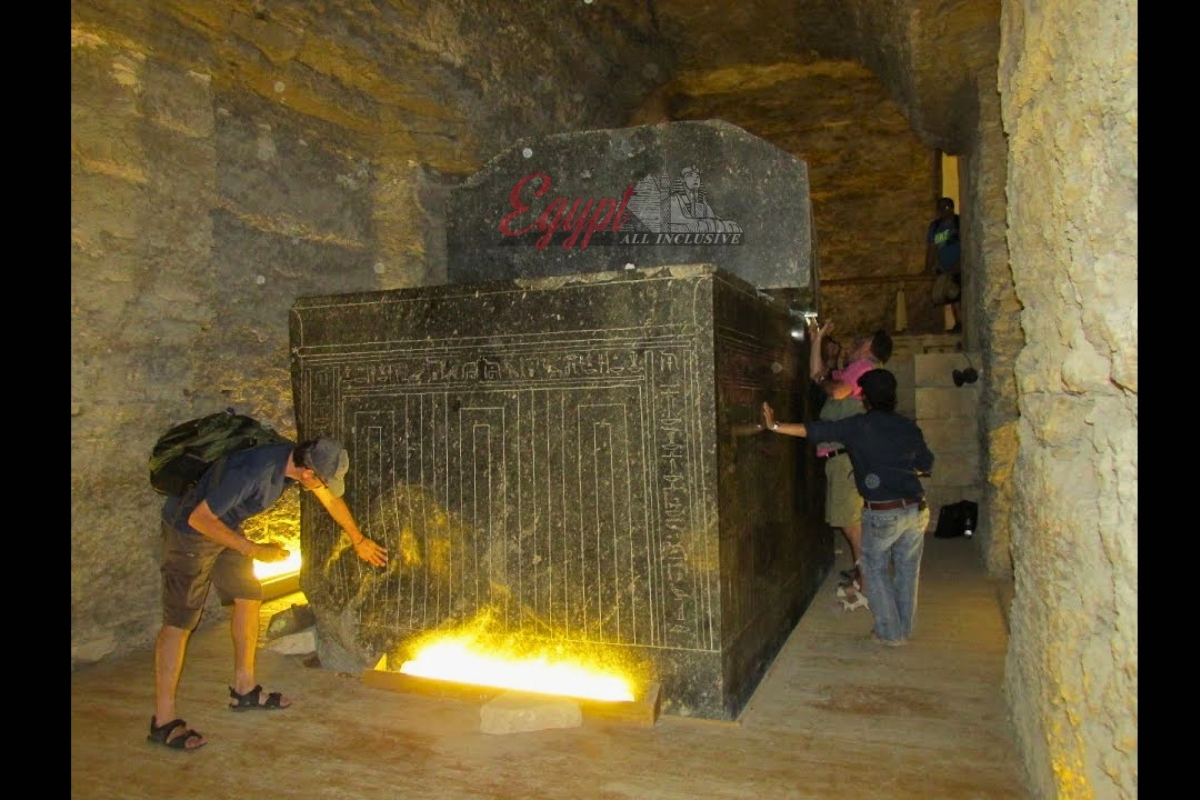
Quick Answer: What Is the Serapeum of Saqqara?
The Serapeum of Saqqara is an ancient underground necropolis where the sacred Apis bulls of Memphis were buried.
The complex is located in the Saqqara archaeological area, south of Cairo, near important monuments including the Step Pyramid of Djoser. It was used for the burial of Apis bulls, which were associated with the god Ptah and later with the syncretic deity Serapis.
The main features of the Serapeum include:
- Underground burial galleries
- Large granite and basalt sarcophagi
- Chambers for the burial of sacred Apis bulls
- Religious inscriptions and archaeological remains
- Connections with the ancient city of Memphis
- A fascinating history spanning several centuries
The site became particularly important during the New Kingdom and continued to be used and developed during later periods of Egyptian history.
The Serapeum of Saqqara is one of the most fascinating underground monuments in Egypt. Hidden beneath the ancient necropolis of Saqqara, this vast complex of tunnels and burial chambers was built for the sacred Apis bulls, animals that were worshipped as manifestations of the god Ptah in ancient Memphis.
Unlike the pyramids, which were built primarily as royal tombs, the Serapeum served a very different religious purpose. Its enormous granite sarcophagi, underground galleries, and connection with the ancient Memphis religious tradition make it one of the most unusual archaeological sites to explore near Cairo.
Today, visiting the Saqqara Serapeum offers travelers the opportunity to see enormous underground chambers and learn about the religious beliefs, burial traditions, and mythology of ancient Egypt.
Where Is the Serapeum of Saqqara?
The Serapeum is located in the Saqqara necropolis, approximately 30 kilometers south of modern Cairo.
Saqqara was one of the most important burial grounds of ancient Memphis. The area contains monuments from different periods of Egyptian history, including the famous Step Pyramid of Djoser, tombs of nobles, pyramids, temples, and underground burial complexes.
The Serapeum is situated relatively close to the Step Pyramid complex, making it practical to combine both sites during a private Saqqara tour.
A typical itinerary can include:
- Step Pyramid of Djoser
- Saqqara tombs
- Serapeum of Saqqara
- Memphis
- Dahshur
This combination provides a broader understanding of the development of ancient Egyptian architecture and religion.
What Does “Serapeum” Mean?
The name Serapeum is connected with the deity Serapis, a later Greco-Egyptian god associated with both Egyptian and Greek religious traditions.
However, the history of the site begins with the worship of the Apis bull at Memphis.
The Apis bull was considered sacred to the god Ptah, one of the principal gods of Memphis. Certain bulls were identified according to specific physical characteristics and were treated as divine animals during their lifetime.
After death, these sacred bulls were ceremonially buried.
Over time, the burial complex became known as the Serapeum.
Therefore, when people search for Serapeum Saqqara, Saqqara Serapeum, or the Serapeum of Saqqara, they are referring to the same remarkable underground religious and funerary complex.
The Sacred Apis Bulls of Memphis
To understand the Serapeum, it is important to understand the religious importance of the Apis bull.
The ancient Egyptians did not simply regard the bull as an ordinary animal. The Apis bull was considered a living manifestation associated with Ptah.
Priests searched for a bull possessing particular physical characteristics. Once identified, the animal was taken to Memphis and given an important religious role.
The bull lived under careful supervision and was treated with great reverence.
After its death, the animal was mummified and buried according to elaborate religious rituals.
A new Apis bull was then identified and the religious tradition continued.
This cycle continued for centuries, creating the need for a dedicated burial complex.
Who Built the Serapeum of Saqqara?
The Serapeum developed over a long period rather than being constructed by a single pharaoh.
Its origins are associated with the New Kingdom, while major expansions took place during the Late Period and the Ptolemaic period.
The ruler Psamtik I, who founded the Saite Dynasty, is traditionally associated with major developments of the Apis burial complex.
Later rulers continued to expand and modify the underground galleries.
This long history explains why the Serapeum contains architectural and archaeological evidence from different periods.
The Discovery of the Saqqara Serapeum
The Serapeum became famous in modern archaeology after it was rediscovered by the French archaeologist Auguste Mariette in the nineteenth century.
Mariette began excavating at Saqqara after becoming interested in archaeological material connected with the sacred bulls.
His work revealed the extensive underground galleries and enormous stone sarcophagi.
The discovery attracted international attention because of the size of the chambers and the scale of the burial containers.
The Serapeum subsequently became one of the best-known monuments within the Saqqara necropolis.
What Is Inside the Serapeum?
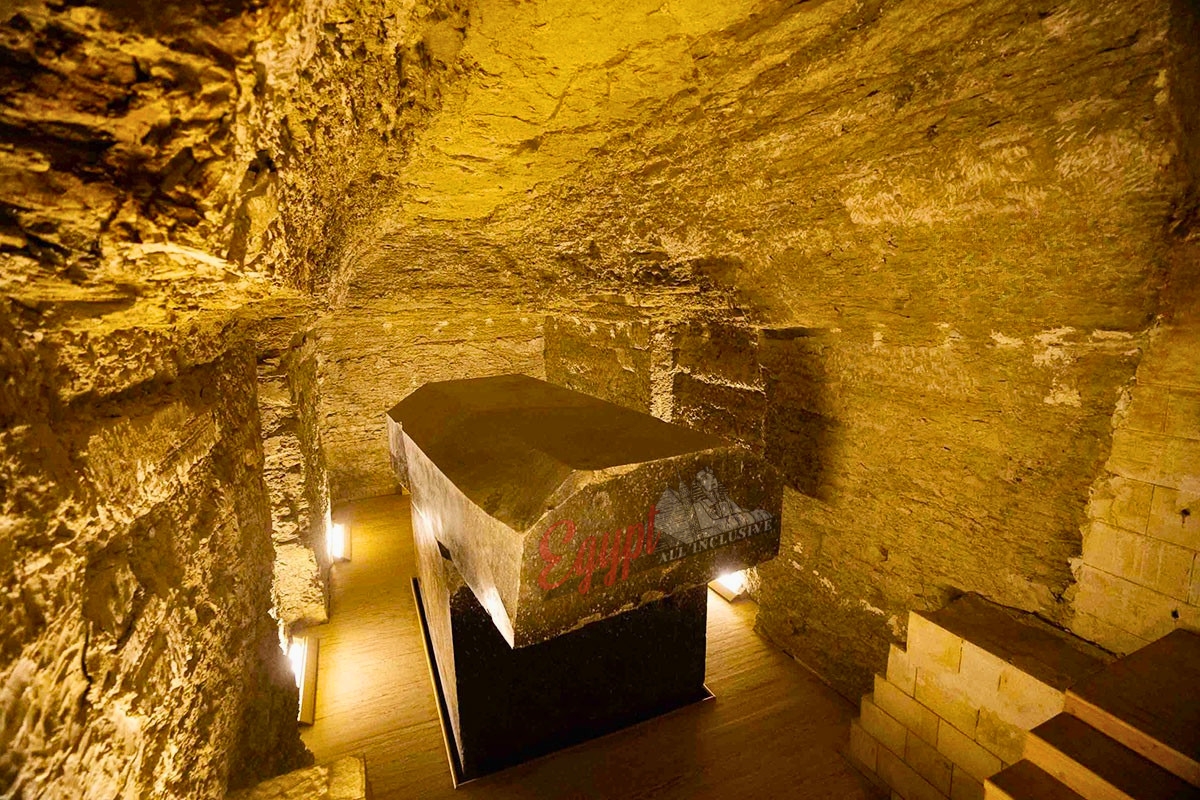
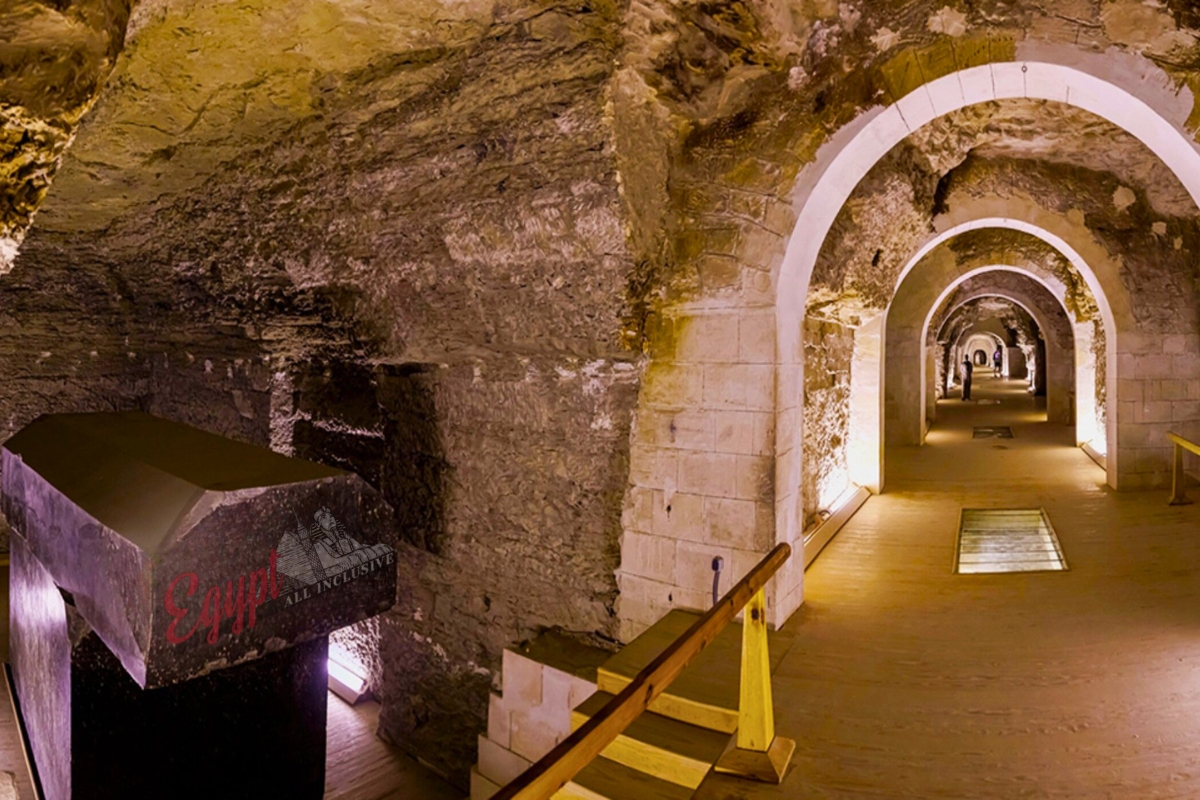
The underground complex consists of passages, chambers, and galleries carved or constructed beneath the desert.
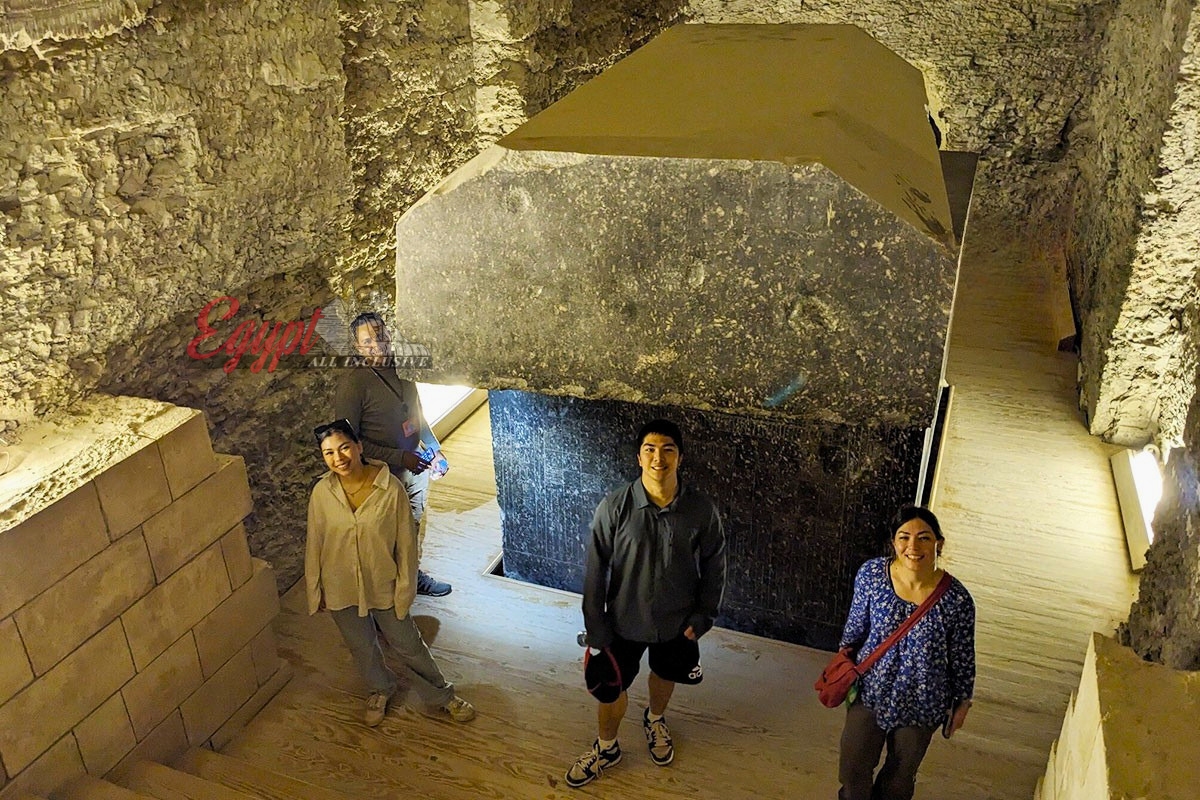
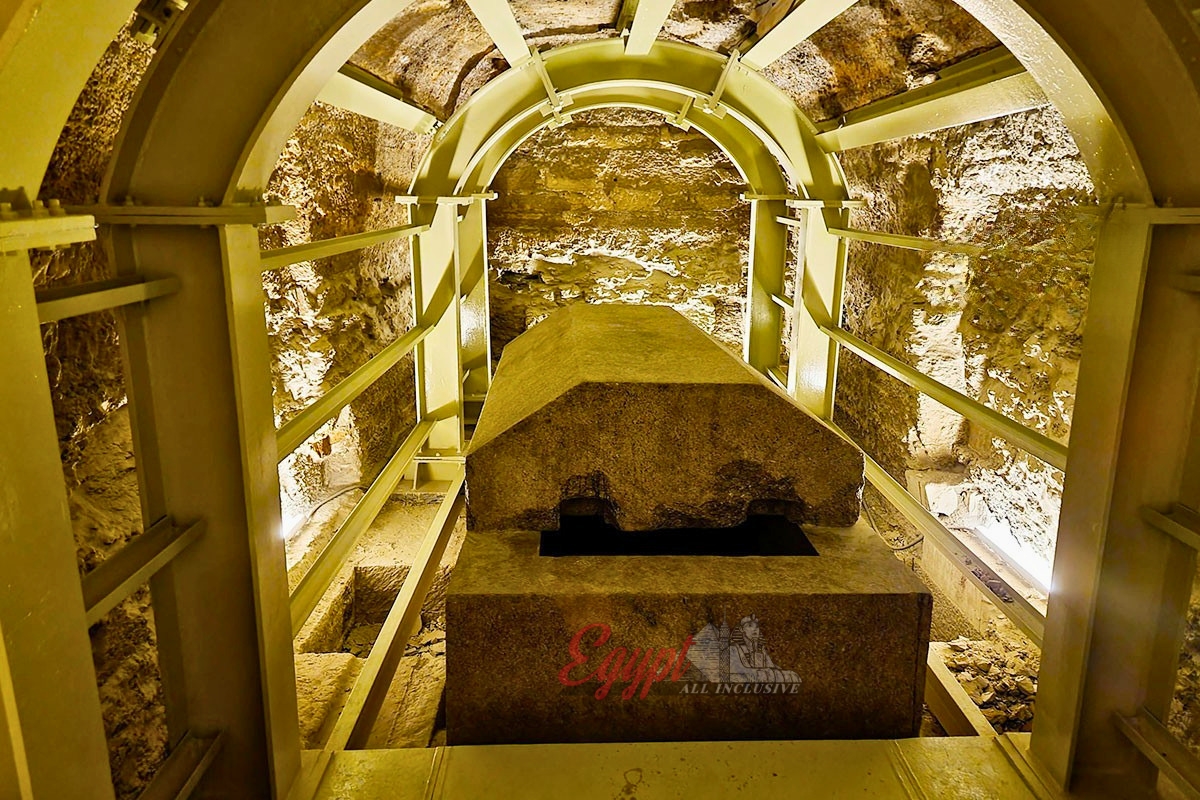
One of the most impressive features is the enormous stone sarcophagi.
These are much larger than many visitors expect.
The burial chambers were designed to accommodate the remains of the sacred bulls, and some of the granite sarcophagi are massive blocks of stone weighing many tons.
Inside the complex, visitors can see:
- Long underground corridors
- Large burial chambers
- Massive stone sarcophagi
- Ancient inscriptions
- Rock-cut passages
- Evidence of repeated religious use
The scale of the architecture is one of the main reasons the Serapeum remains such a memorable part of a Sakkara Tours visit.
The Famous Granite Sarcophagi
One of the most frequently discussed features of the Serapeum of Saqqara is its huge granite sarcophagi.
Many were made from extremely hard stone and were transported over considerable distances.
Their enormous size has led to many questions about how ancient Egyptian craftsmen extracted, transported, shaped, and positioned them.
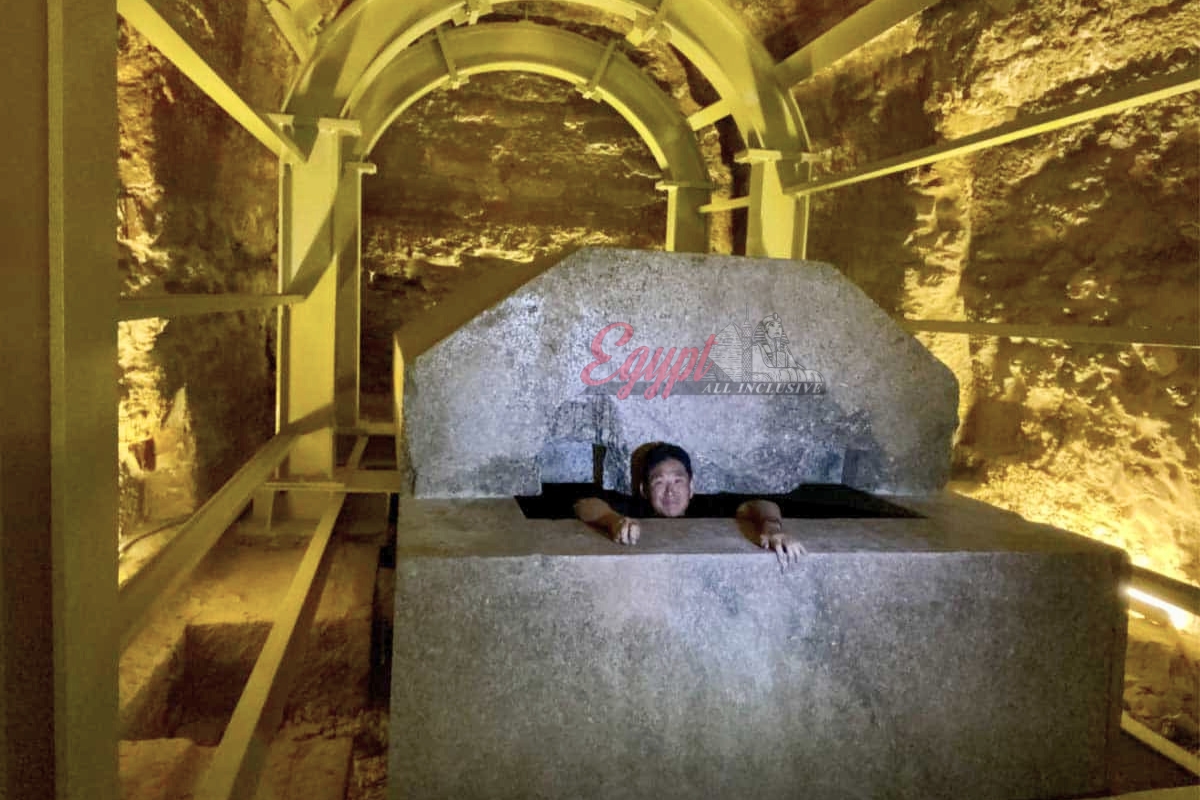
Some visitors are surprised to discover that the sarcophagi are not small animal coffins. They are monumental containers constructed with extraordinary precision.
Their presence demonstrates the importance of the Apis cult and the resources invested in the burial of the sacred bulls.
How Were the Serapeum Boxes Made?
Searches for Serapeum of Saqqara boxes often refer to the enormous stone sarcophagi found within the underground galleries.
These containers were generally carved from large blocks of stone and carefully finished.
The exact techniques used by ancient Egyptian craftsmen continue to attract archaeological and engineering interest.
Ancient Egyptian stone workers had access to:
- Copper tools
- Stone pounders
- Abrasive materials
- Wooden sledges
- Ropes
- Levers
- Skilled labor
Hard stones such as granite presented a significant technical challenge.
The precision of some surviving objects shows that ancient craftsmen developed sophisticated methods for cutting and finishing stone.
However, claims that the Serapeum boxes could only have been produced with modern machinery are not supported by the archaeological evidence. Ancient Egyptian stone-working technology was highly capable, even though the exact procedure used for every individual sarcophagus is not known.
Serapeum of Saqqara Theory: Why Is It So Mysterious?
The Serapeum of Saqqara theory is a popular search topic because the monument has generated numerous theories about its purpose, construction, and technology.
Some theories presented online suggest that the enormous sarcophagi were used for purposes completely different from the burial of Apis bulls.
Others propose that the underground chambers had astronomical, technological, or even unknown functions.
These ideas are fascinating, but they should be separated from established archaeological evidence.
The accepted archaeological interpretation is that the Serapeum functioned primarily as a sacred burial complex for Apis bulls.
At the same time, several questions remain interesting from a historical perspective, particularly concerning:
- How the largest stones were transported
- How the sarcophagi were finished
- How the underground galleries were organized
- How religious practices changed over time
- How the Apis cult developed across different periods
The mystery surrounding these questions is part of what makes the site so interesting.
Why Were Bulls Buried at Saqqara?
The burial of Apis bulls was directly connected to ancient Egyptian religious beliefs.
The bull was regarded as a living manifestation of Ptah.
Memphis was the major cult center of Ptah, and the Apis cult became an important part of the religious life of the city.
When an Apis bull died, its body was prepared for burial through religious rituals.
The burial was not simply an animal burial. It represented the death of a sacred manifestation of the deity.
This explains why the ancient Egyptians invested so much effort in creating monumental burial facilities.
The Connection Between Ptah, Apis and Serapis
The religious history of the Serapeum becomes even more interesting during the Greco-Roman period.
The Greek rulers of Egypt introduced and promoted new religious traditions while also incorporating elements of Egyptian religion.
The deity Serapis became particularly important during the Ptolemaic period.
Serapis combined aspects of Egyptian and Greek religious traditions and became an important deity in Ptolemaic Egypt.
The name “Serapeum” therefore reflects the later religious development surrounding the Apis tradition.
Serapeum vs. Step Pyramid of Djoser
The Serapeum and the Step Pyramid are both located within the Saqqara archaeological landscape, but they served very different purposes.
| Monument | Main Purpose | Period |
|---|---|---|
| Step Pyramid of Djoser | Royal funerary complex | Old Kingdom |
| Serapeum | Sacred Apis bull burials | Mainly New Kingdom onward |
| Saqqara Tombs | Elite and private burials | Multiple periods |
| Memphis | Religious and political center | Multiple periods |
The Step Pyramid of Djoser is associated with the evolution of Egyptian pyramid architecture.
The Serapeum represents a different aspect of ancient Egyptian civilization: animal worship, religious ritual, and sacred burial.
Visiting both provides a much broader picture of ancient Egyptian beliefs.
How to Visit the Serapeum of Saqqara
The easiest way to visit the Serapeum at Saqqara is as part of a private guided tour from Cairo.
Because Saqqara is a large archaeological area, having a knowledgeable guide can make a major difference.
A guide can explain:
- The history of the Apis cult
- The role of Ptah
- The purpose of the underground galleries
- The significance of the sarcophagi
- The development of Saqqara
- The relationship between Memphis and Saqqara
A private vehicle is also convenient because the major archaeological sites are spread across the area.
How Far Is the Serapeum from Cairo?
The Serapeum is approximately 30 kilometers south of central Cairo, although the actual travel time depends on your starting point and traffic.
A private vehicle is generally the most convenient option.
Many travelers visit the area on a half-day or full-day tour combining Saqqara with Memphis and Dahshur.
For travelers interested specifically in ancient Egyptian architecture and archaeology, a longer itinerary can include Giza as well.
Best Time to Visit the Serapeum of Saqqara
The best time to visit Saqqara is generally during the cooler months.
From approximately October through April, temperatures are usually more comfortable for exploring archaeological sites.
For the best experience:
- Start early in the morning
- Wear comfortable walking shoes
- Bring water
- Use sun protection
- Allow enough time for the underground areas and surrounding monuments
- Visit with a licensed Egyptologist guide if possible
Summer visits are possible, but temperatures can become very high during the middle of the day.
How Long Do You Need at the Serapeum?
Most travelers do not need an entire day for the Serapeum itself.
A visit can usually be combined with other Saqqara attractions.
A well-planned Saqqara itinerary could look like:
Morning
- Step Pyramid of Djoser
- Saqqara tombs
- Serapeum
Afternoon
- Memphis
- Dahshur
- Bent Pyramid
- Red Pyramid
This gives travelers the opportunity to explore several major archaeological sites in one day.
Is the Serapeum of Saqqara Worth Visiting?
Yes, particularly if you are interested in ancient Egyptian religion, archaeology, or unusual historical monuments.
The Serapeum is different from the famous pyramids.
Instead of standing above the desert as a monumental royal tomb, the Serapeum takes visitors underground into a network of ancient galleries.
The huge stone sarcophagi are also impressive.
For many travelers, the combination of underground architecture, religious history, and unanswered questions makes the Serapeum one of the most memorable attractions in Saqqara.
Serapeum of Saqqara and the Ancient City of Memphis
The Serapeum cannot be fully understood without considering Memphis.
Memphis was one of ancient Egypt’s most important cities and served as a major political and religious center for thousands of years.
The city was strongly associated with the god Ptah.
The Apis bull cult developed within this religious environment.
Saqqara functioned as the major necropolis serving Memphis.
This relationship explains why so many important monuments were built at Saqqara.
The Serapeum was therefore not an isolated monument. It formed part of a much larger religious and funerary landscape connected with Memphis.
What Else Can You See Near the Serapeum?
One of the advantages of visiting the Saqqara Serapeum is its proximity to several important archaeological attractions.
Step Pyramid of Djoser
The Step Pyramid is one of the most important monuments in Egyptian architectural history.
Built for Pharaoh Djoser, it is generally regarded as the earliest large-scale stone pyramid complex in Egypt.
Saqqara Tombs
Saqqara contains numerous private tombs decorated with scenes of everyday life, agriculture, food production, hunting, and religious practices.
Memphis
The remains of ancient Memphis include statues and archaeological remains connected with the ancient capital.
Dahshur
Dahshur is home to the Bent Pyramid and Red Pyramid.
Together, Saqqara and Dahshur demonstrate the remarkable development of pyramid construction.
Serapeum of Saqqara vs. Other Ancient Egyptian Tombs
The Serapeum differs from conventional royal and private tombs.
Royal tombs were designed for kings and their funerary cults.
Private tombs belonged to officials and other members of the elite.
The Serapeum, by contrast, was dedicated to sacred animals associated with a major deity.
Its underground design and monumental sarcophagi reflect this special religious purpose.
This makes the site particularly valuable for understanding the diversity of ancient Egyptian beliefs.
Frequently Asked Questions About the Serapeum of Saqqara
Who discovered the Serapeum?
The modern rediscovery of the Serapeum is closely associated with French archaeologist Auguste Mariette, whose excavations in the nineteenth century revealed the underground complex.
Why were bulls buried in Saqqara?
The Apis bulls were considered sacred manifestations associated with Ptah. After their deaths, they were mummified and buried through religious ceremonies.
How old is the Serapeum?
The complex developed over many centuries, with origins associated with the New Kingdom and major later expansions during the Late Period and Ptolemaic era.
What are the huge boxes inside the Serapeum?
They are monumental stone sarcophagi associated with the burial of the sacred Apis bulls.
Tips for Visiting the Serapeum of Saqqara
Before visiting, keep these practical tips in mind:
1. Start Early
An early start helps you avoid the strongest daytime heat and gives you more time to explore the wider Saqqara area.
2. Wear Comfortable Shoes
Saqqara involves walking across archaeological terrain, and the underground galleries may also require walking through uneven areas.
3. Bring Water
The Egyptian desert climate can be hot, particularly outside the winter season.
4. Hire a Knowledgeable Guide
The architecture is impressive, but understanding the religious background makes the experience much more meaningful.
5. Combine It With Other Sites
Do not visit the Serapeum in isolation if you have enough time. Combining it with Djoser’s Step Pyramid, Memphis, and Dahshur creates a much more complete archaeological experience.
A Suggested Saqqara Archaeological Tour
For travelers staying in Cairo, a private day tour can include:
08:00 – Pick-up from Cairo
Travel south toward the Saqqara archaeological area.
09:00 – Step Pyramid of Djoser
Explore Djoser’s famous pyramid complex and learn about the early development of monumental stone architecture.
10:30 – Saqqara Tombs
Visit selected tombs and see ancient scenes depicting daily life.
11:30 – Serapeum of Saqqara
Explore the underground galleries and see the enormous stone sarcophagi.
13:00 – Lunch
Enjoy a traditional Egyptian lunch.
14:00 – Memphis
Visit the remains of the ancient capital.
15:30 – Dahshur
Continue to the Bent Pyramid and Red Pyramid.
17:00 – Return to Cairo
Return to your hotel after a full day exploring the ancient Memphis necropolis.
Why the Serapeum Matters Today
The Serapeum of Saqqara is more than an underground archaeological attraction.
It provides a window into how ancient Egyptians understood animals, gods, death, and religious continuity.
The enormous galleries demonstrate the resources invested in sacred burial.
The Apis cult demonstrates the importance of Memphis as a religious center.
The sarcophagi reveal the remarkable capabilities of ancient Egyptian craftsmen.
And the site’s long history shows how Egyptian religious traditions continued to evolve while remaining connected to much older beliefs.
For modern visitors, this combination makes the Serapeum one of the most unusual archaeological experiences near Cairo.
Final Thoughts
The Serapeum of Saqqara offers a completely different experience from visiting the Great Pyramid of Giza.
Here, the focus is not on a monumental royal pyramid rising above the desert, but on an underground world created for the sacred Apis bulls of Memphis.
From the enormous stone sarcophagi to the ancient religious traditions surrounding Ptah and Apis, the site reveals an important but sometimes overlooked part of Egyptian history.
If you are planning a trip to Cairo and have an interest in ancient Egyptian civilization, adding the Serapeum to a Saqqara, Memphis and Dahshur tour is an excellent way to explore beyond the most famous pyramids.
For travelers who want a deeper archaeological experience, visiting the Serapeum with a professional Egyptologist guide can turn a short underground visit into a fascinating journey through thousands of years of Egyptian religious history.