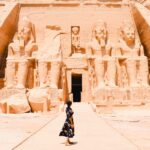

Quick Answer: Is Egypt wheelchair friendly for travelers in 2027?
Egypt can be wheelchair friendly with careful planning, but it is not consistently wheelchair accessible. Modern museums such as the Grand Egyptian Museum offer documented accessibility facilities, while ancient monuments, city sidewalks, transportation, and Nile cruises present more challenges. Wheelchair users can visit many of Egypt’s highlights by arranging suitable transportation, verifying hotels and attractions, and choosing a realistic itinerary tailored to their mobility needs.
Seeing the Great Pyramids of Giza from a wheelchair and entering the narrow chambers inside a pyramid are two very different experiences. One can be achievable with the right arrangements; the other involves ancient passageways and steep internal routes that are not suitable for wheelchair access.
That distinction matters throughout Egypt.
In Cairo, a purpose-built museum may have elevators, accessible restrooms, and broad visitor pathways. In Luxor, an extraordinary temple might have a manageable main route but uneven stone surfaces farther inside. On the Nile, a cruise ship might have a suitable cabin yet an inaccessible gangway.
For travelers planning wheelchair-accessible Egypt holidays in 2027, the question is not simply whether a destination welcomes disabled visitors. It is whether the complete journey—from arriving at the airport to entering a hotel room, boarding transport, visiting attractions, and returning safely—works for the individual traveler.
With that approach, Egypt becomes a destination where many remarkable experiences are possible without pretending that every obstacle has disappeared.

Is Egypt Really Wheelchair Accessible?
Egypt is partially wheelchair accessible, and the level of access varies considerably between destinations, buildings, vehicles, and archaeological sites.
Modern tourism facilities generally offer better possibilities than historic streets, ancient tombs, and traditional boats. Even within one attraction, accessibility can change from one pathway to another.
Three levels of access are especially useful when planning an Egypt holiday.
1. Documented accessibility facilities
These are places that officially identify features such as elevators, ramps, adapted toilets, or wheelchair services.
The Grand Egyptian Museum and the National Museum of Egyptian Civilization are particularly useful starting points.
Documented facilities are encouraging, but travelers should still confirm that the precise routes and equipment they need will be available.
2. Possible access with advance arrangements
Some archaeological sites have manageable exterior areas, visitor paths, or nearby viewpoints.
However, uneven ground, slopes, thresholds, and vehicle transfers may require assistance or a carefully selected route.
This category includes many experiences around Giza, Luxor, and Aswan.
3. Access that may not be practical without leaving the wheelchair
Certain attractions contain steep staircases, confined passages, unadapted boats, or other physical barriers.
A traveler who cannot transfer or be carried should not assume these experiences will be possible.
Examples include the interior passageways of the Great Pyramid, many ancient tomb chambers, and some traditional Nile boats.
The essential planning rule: Never interpret “wheelchair friendly” as a guarantee of independent, step-free access throughout an entire attraction.
Which Attractions in Egypt Are Best for Wheelchair Users?
The following comparison provides a practical starting point for planning accessible tours to Egypt.
These assessments describe general accessibility considerations, not a certified audit of every visitor route. Where an attraction does not publish comprehensive accessibility specifications, individual confirmation remains essential.
| Attraction | Practical accessibility assessment | What to know before visiting |
|---|---|---|
| Grand Egyptian Museum, Giza | Strong documented accessibility facilities | Ramps, lifts, wheelchairs, accessible restrooms, and mobility assistance are identified by the museum |
| National Museum of Egyptian Civilization, Cairo | Strong documented museum access | Elevator access to exhibitions and wheelchair availability are officially listed |
| Egyptian Museum, Tahrir Square | Partially adapted historic museum | A ramped entrance and elevator are listed; confirm the specific gallery route |
| Giza Pyramids exterior | Possible with route planning | Some visitor approaches are manageable, but sand, slopes, and surface changes remain important |
| Great Pyramid interior | Not wheelchair accessible | Narrow, steep ancient passageways prevent normal wheelchair access |
| Great Sphinx viewing area | Potentially manageable | Confirm the current approach, viewing point, ground surface, and drop-off arrangements |
| Karnak Temple, Luxor | Portions may be manageable | Prioritize main visitor routes and verify slopes, thresholds, and surface conditions |
| Luxor Temple | Portions may be manageable | Some areas have practical approaches, while other sections contain uneven historic surfaces |
| Valley of the Kings | Limited and highly route-dependent | Reaching the site is different from entering individual royal tombs |
| Hatshepsut Temple | Partial exterior access may be possible | The terraced architecture creates significant level changes |
| Colossi of Memnon | Generally a practical exterior stop | Confirm where the vehicle can stop and whether the viewing surface suits your wheelchair |
| Philae Temple, Aswan | Boat transfer is the primary challenge | Access depends on embarkation, disembarkation, and the island’s visitor routes |
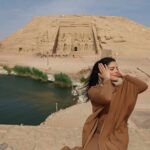
| Abu Simbel | Exterior viewing may be possible | Confirm the approach, interior thresholds, and transport arrangements |
| Red Sea resorts | Property-specific | Accessible bedrooms do not necessarily mean accessible pools, beaches, or restaurants |
For first-time wheelchair visitors, Cairo and Giza provide a useful foundation because several historically important experiences can be combined with modern museum infrastructure.
Luxor adds exceptional archaeological sites but increases the importance of route planning. Aswan is attractive for its Nile scenery, although boat transfers can determine which excursions are practical.
Travelers comparing destinations can begin with an overview of Egypt’s major tourist attractions before deciding which places deserve the most time.

What Does a Wheelchair User Need to Confirm Before Booking Egypt?
Before choosing hotels or sightseeing activities, define the mobility requirements that cannot be compromised.
The same itinerary may be easy for a traveler who can walk a few steps but completely unsuitable for someone who must remain in a powered wheelchair.
Your personal accessibility requirements
Consider the following questions:
- Do you use a manual wheelchair, powered wheelchair, mobility scooter, or another mobility aid?
- Can you stand or transfer independently, or do you require a mechanical hoist?
- Can you tolerate short assisted transfers, or is completely step-free access essential?
- Do you require a roll-in shower or specific toilet-transfer arrangement?
- Can your wheelchair handle firm gravel or mildly uneven stone?
- Do you need a vehicle lift rather than a portable ramp?
- Do you require wheelchair-accessible toilets during every excursion?
- Do you need assistance with personal care?
- How long can you comfortably remain outside in hot weather?
- What would you do if an elevator, vehicle lift, or boat boarding system became unavailable?
Travelers should also record the occupied width, length, height, and total weight of their wheelchair and occupant, plus any requirements for secure transport.
Think about the complete accessibility chain
One of the most useful ways to assess wheelchair travel in Egypt is to examine the entire journey rather than evaluating individual attractions.
For example, a museum may have excellent accessibility facilities, but the visit still fails if the transfer vehicle cannot accommodate the traveler’s wheelchair.
| Part of the journey | What needs confirmation |
|---|---|
| Airport arrival | Wheelchair assistance, aircraft transfer, and mobility-equipment collection |
| Airport transfer | Suitable vehicle, secure wheelchair restraints, and safe boarding |
| Hotel entrance | Step-free approach from vehicle to reception |
| Guest room | Door clearances, turning space, bed access, and usable furniture layout |
| Bathroom | Shower access, grab bars, toilet layout, and transfer space |
| Excursion vehicle | Lift or ramp specifications, tie-downs, and seat belt |
| Attraction | Accessible entrance, realistic visitor route, and suitable toilets |
| Cruise or boat | Boarding arrangements, gangways, cabin access, and deck connections |
| Emergency or backup plan | Replacement transport, equipment assistance, and alternative activities |
The trip is only as accessible as its least accessible essential component.
This principle helps prevent one of the most common problems with accessible tourism: booking a holiday based on an attractive list of accessible attractions without checking how the traveler will actually move between them.

Is Cairo Wheelchair Accessible?
Cairo has several accessible attractions, but ordinary street travel remains difficult for many wheelchair users.
The most reliable way to explore Cairo is usually to use prearranged accessible transportation between carefully chosen destinations.
Sidewalks can be uneven or obstructed, pedestrian crossings are not consistently suitable, and older neighborhoods have limited step-free routes.
A good Cairo itinerary therefore relies less on long street walks and more on visits where the vehicle can drop travelers reasonably close to an accessible entrance.
Grand Egyptian Museum: One of the strongest options
The Grand Egyptian Museum (GEM) is located near the Giza Pyramids.
For wheelchair users, it is one of Egypt’s most encouraging major cultural attractions because accessibility has been incorporated into its modern visitor facilities.
The museum officially identifies:
- Accessible pathways and ramps
- Elevators between visitor levels
- Wheelchairs for visitor use
- Accessible restrooms
- Seating and rest areas
- Mobility assistance, including golf carts
- Assistance through visitor information services
Its collections offer an opportunity to explore thousands of years of Egyptian history without relying entirely on ancient outdoor pathways.
The museum’s architecture is also part of the experience, with expansive interior spaces and monumental displays.
Our guide to Grand Egyptian Museum architecture explains the building’s design and relationship with the nearby Pyramids.
Suggested visit duration: Allow approximately three to four hours for a selective museum visit, with additional time if you prefer frequent breaks or wish to see more galleries. This is a planning recommendation, not a prescribed museum duration.
Because the museum covers a substantial area, fatigue and travel distance within the building can matter even when the route is step-free.
Before visiting in 2027, reconfirm elevator availability, wheelchair borrowing procedures, accessible parking or drop-off arrangements, and any ticket documentation requirements.
National Museum of Egyptian Civilization
The National Museum of Egyptian Civilization (NMEC) is located in Fustat, Cairo.
This museum offers another valuable option for travelers who need a structured indoor cultural experience.
Its published accessibility information confirms wheelchair availability, designated parking, and elevator access to exhibits.
The museum is especially important for visitors interested in the broader development of Egyptian civilization rather than a single historical period.
Its collections and Royal Mummies Hall help explain how ancient Egypt connects with later periods of the country’s history.
For more background, explore the National Museum of Egyptian Civilization.
Suggested visit duration: Approximately two to three hours, depending on your interests and preferred pace.
Confirm the route between your vehicle drop-off, museum entrance, galleries, restrooms, and return collection point.
The Egyptian Museum in Tahrir Square
The historic Egyptian Museum in Cairo, opened in 1902, remains an important destination for visitors interested in Egyptian antiquities.
The Ministry of Tourism and Antiquities identifies an elevator and ramped entrance among the museum’s facilities.
However, its historic building requires more specific accessibility planning than a newer purpose-built museum.
Confirm whether the galleries you want to visit can be reached comfortably, whether an accessible restroom is available, and whether the museum can accommodate the dimensions of your wheelchair.
Travelers comparing Cairo’s archaeological collections can consult our Egyptian Museum visitor guide.
If you have limited time and require a predictable accessible museum environment, the Grand Egyptian Museum or NMEC may be better initial choices.
Islamic Cairo, Coptic Cairo, and historic streets
Historic Cairo presents a different kind of experience.
Areas such as Khan el-Khalili, Al-Muizz Street, and parts of Coptic Cairo contain centuries-old architecture, narrow streets, crowded market spaces, and uneven surfaces.
Some individual attractions or streets may be navigable, but it would be misleading to describe these neighborhoods as consistently wheelchair accessible.
If visiting historic Cairo is important to you:
- Choose one or two specific destinations rather than an extended walking route.
- Ask for the exact accessible entrance and vehicle drop-off location.
- Check for steps, rough paving, and accessible toilets.
- Visit during a quieter period when possible.
- Have an alternative plan if the selected route proves unsuitable.
For someone who cannot negotiate uneven ground at all, a modern museum experience may be preferable to a historic-market excursion.

Can Wheelchair Users Visit the Pyramids of Giza?
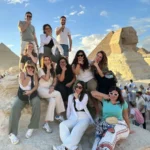
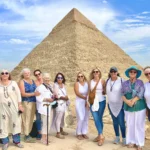
Yes. Wheelchair users can experience the exterior of the Giza Pyramids, but access depends on current visitor routes, ground conditions, transportation, and individual mobility requirements. The interiors of the main pyramids are not wheelchair accessible.
This is an important distinction because visiting the Pyramids does not require entering the ancient chambers.
Standing near the monumental limestone blocks, viewing the pyramids against the desert skyline, and appreciating the Great Sphinx are meaningful experiences in their own right.
What can wheelchair travelers see at Giza?
The Giza Plateau contains three principal royal pyramids:
- The Great Pyramid of Khufu
- The Pyramid of Khafre
- The Pyramid of Menkaure
These monuments were constructed during Egypt’s Old Kingdom, primarily in the Fourth Dynasty.
The Great Pyramid is associated with Pharaoh Khufu and remains the most famous monument on the plateau.
Nearby stands the Great Sphinx, a colossal sculpture with a lion’s body and a human head, commonly associated with the reign of Khafre.
For visitors who use wheelchairs, the main objective should be to identify safe exterior viewpoints and accessible routes between them.
Our Giza Necropolis guide explains the archaeological landscape and its principal monuments.
Why the Great Pyramid interior is unsuitable for wheelchair access
The interior of the Great Pyramid includes narrow stone passages, inclines, restricted spaces, and steep sections.
These are fundamental characteristics of its ancient construction.
A wheelchair-accessible route into the principal interior chambers should not be expected.
Travelers who cannot climb or negotiate these passages should plan to enjoy the exterior monuments instead.
This does not prevent visitors from appreciating the architecture, history, and scale of the pyramid complex.
The practical challenge: Ground conditions
The Giza Plateau is an archaeological desert landscape, not a uniformly level modern pedestrian area.
Depending on the selected route, visitors may encounter firm paved sections, irregular stone, gravel, slopes, and areas of loose sand.
A manual wheelchair with small front casters may behave very differently from a suitable powered wheelchair on these surfaces.
Even a generally accessible viewpoint can become difficult if the route to reach it involves loose ground or an unexpected curb.
Before booking, ask the tour operator to confirm the following:
- Which entrance will be used?
- How will the wheelchair user move between viewing points?
- Are the required visitor shuttles or transport vehicles wheelchair accessible?
- Is any specially authorized vehicle access needed, and can it be arranged?
- How much of the route has firm, suitable ground?
- Is assistance necessary at any point?
- Can the traveler reach an accessible restroom?
- Is a close vehicle pickup possible if fatigue or heat becomes a problem?
The visitor transportation arrangements at Giza have changed in recent years. Do not rely on older descriptions of unrestricted private vehicle access or assume that every shuttle can carry an occupied wheelchair. Obtain confirmation of the system operating on your intended date.
A realistic wheelchair-friendly Giza visit
A practical itinerary might involve:
First: Arrive early in a suitable vehicle and confirm the accessible entrance and local transportation arrangements.
Second: Visit an appropriate viewpoint near the Great Pyramid, allowing time to appreciate the monument without attempting difficult terrain.
Third: Continue to another confirmed viewpoint if the visitor route and available transport permit.
Fourth: View the Great Sphinx from a location reachable by your wheelchair.
Fifth: Return to the vehicle for rest, refreshments, or transfer to the Grand Egyptian Museum.
Allow approximately two to four hours for the Giza exterior experience, according to the agreed route, weather, and access arrangements.
Important: A route that works for a traveler using a manual wheelchair with assistance may not work for a large powered wheelchair. Your tour operator should confirm the complete itinerary rather than simply promising a “wheelchair-accessible Pyramids tour.”
Is Luxor Wheelchair Accessible?
Luxor is partially accessible, with some temple areas and outdoor monuments easier to visit than ancient tombs.
The city lies beside the Nile River in Upper Egypt and contains some of the country’s most significant archaeological sites.
Ancient Luxor corresponds to Thebes, which became a major political and religious center of ancient Egypt.
For wheelchair travelers, Luxor is best understood in two areas:
- East Bank: Karnak Temple, Luxor Temple, museums, hotels, and modern city facilities.
- West Bank: Valley of the Kings, Hatshepsut Temple, Colossi of Memnon, and extensive archaeological landscapes.
The East Bank is often a more convenient base, although the actual accessibility of hotels and streets must still be verified.
Karnak Temple: The main route is the priority
Karnak is one of the largest and most important ancient religious complexes in Egypt.
Its most famous feature is the Great Hypostyle Hall, containing 134 monumental columns.
Karnak’s broad central spaces make sections of the complex more promising for wheelchair visits than confined archaeological structures.
However, the terrain changes as visitors move through different courts, gateways, and side areas.
Expect possible challenges involving uneven paving, raised thresholds, gravel, and exposed surfaces.
A useful plan is to prioritize the main temple axis and confirm which sections are currently usable with your specific wheelchair.
The historical significance of the complex is explained in our Karnak Temple guide.
Suggested visit duration: Approximately 90 minutes to two hours for a selective accessible route, with flexibility for slower movement and rest.
Luxor Temple: Ancient architecture in the city center
Luxor Temple is located on the East Bank and is particularly famous for its monumental entrance, statues, colonnades, and architectural additions made by several pharaohs.
A carefully selected route may allow wheelchair visitors to experience important parts of the temple.
However, historic thresholds, paving changes, and access into smaller chambers can create obstacles.
Ask whether a suitable accessible entrance or alternative route is currently available, and whether the planned circuit requires crossing steps.
An early or late-day visit may also be more comfortable than sightseeing during the hottest hours.
Can wheelchair users visit the Valley of the Kings?
The Valley of the Kings is located in the desert hills on Luxor’s West Bank.
It was used as a royal burial ground during the New Kingdom and contains the tombs of numerous Egyptian pharaohs, including Tutankhamun.
For wheelchair users, the visitor area and individual tombs must be evaluated separately.
Some routes around the archaeological site may be manageable with assistance, but many tombs contain steep descents, narrow passages, steps, or confined chambers.
Accessibility also differs between tombs.
Do not assume that reaching the Valley of the Kings means being able to enter a particular tomb.
Before purchasing special tomb tickets, ask for an updated assessment of the exact tombs you intend to visit.
Read our guide to the Valley of the Kings to understand the royal burial site and its significance.
If interior access is impossible, consider an exterior visit paired with more accessible temples or museum experiences.
Hatshepsut Temple: Spectacular views, significant level changes
The Mortuary Temple of Hatshepsut stands against the limestone cliffs at Deir el-Bahari, on Luxor’s West Bank.
It was built for the female pharaoh Hatshepsut and is famous for its terraces, colonnades, and dramatic architectural setting.
The temple’s monumental appearance is visible from the approach, which can make an exterior-focused visit worthwhile.
However, the different terraces rise above one another, and reaching every level cannot be assumed possible.
Travelers who need completely step-free access should request confirmation of the exact accessible terrace, ramp conditions, and transport drop-off.
For historical context, explore the Mortuary Temple of Hatshepsut.
Colossi of Memnon: A useful short stop
The Colossi of Memnon are two monumental seated statues of Amenhotep III on Luxor’s West Bank.
Because the main experience involves viewing outdoor statues rather than entering a complex building, this may be a practical addition to an accessible West Bank itinerary.
The suitability of the viewing area still depends on its current surface, traffic arrangements, and vehicle stopping position.
A short visit can provide an important historical experience without the demands of a long temple circuit.
How to organize an accessible day in Luxor
For a first visit, avoid combining too many archaeological attractions in one day.
A reasonable approach is:
Day one: Karnak Temple and, if appropriate, Luxor Temple.
Day two: Selected West Bank attractions, concentrating on achievable exterior experiences.
Keep an accessible vehicle available throughout the excursions and schedule rest breaks between sites.
For travelers sensitive to heat, early starts are particularly valuable.

Is Aswan Suitable for Wheelchair Users?
Aswan can be a rewarding destination for wheelchair users, particularly for Nile scenery and selected cultural attractions, but many popular excursions involve boats or uneven archaeological terrain.
Located south of Luxor, Aswan has a different atmosphere and landscape from Cairo.
The Nile flows between granite outcrops, islands, and desert hills, making the river itself one of the area’s greatest attractions.
Philae Temple: The boat transfer is the deciding factor
The Temple of Philae is dedicated primarily to the goddess Isis.
Its monuments were relocated to Agilkia Island as part of the international effort to protect Nubian heritage threatened by changes to Nile water levels.
Today, visitors generally reach the temple by boat.
For wheelchair travelers, the central challenge is not simply whether the temple has manageable paths. It is whether the person can safely board and leave the boat.
A typical boat landing can involve variable height differences, steps, narrow access points, or movement between the vessel and dock.
The conditions may change with the boat, mooring position, and river level.
Before booking, ask for photographs or video of the exact boat, both boarding points, and the route from the landing to the temple.
If a traveler requires a completely step-free transfer, do not accept an assurance that staff can simply lift the wheelchair.
The historical background is covered in our Philae Temple guide.
Abu Simbel: Ancient monuments in southern Egypt
The Abu Simbel temples were constructed during the reign of Ramesses II.
The larger temple is famous for the four colossal seated statues on its facade.
Abu Simbel lies south of Aswan, and visiting it ordinarily requires a substantial road journey or a flight arrangement.
For wheelchair travelers, three elements need investigation:
- The accessible transfer or flight arrangements.
- The route from the visitor arrival point to the temple facade.
- Whether the interior rooms can be entered with the visitor’s wheelchair.
Exterior viewing may be achievable with suitable planning, but visitors should not assume that all interior areas are step-free.
Explore the history of the monuments in our Abu Simbel Temple guide.
For someone who finds prolonged sitting difficult, the travel time alone may make Abu Simbel less attractive than experiences closer to Aswan.
Other Aswan experiences
Depending on access arrangements, travelers may consider:
- A selected viewpoint at the Aswan High Dam.
- The Nubian Museum, after verifying its current accessible entrances and facilities.
- Accessible riverside viewpoints.
- A private sightseeing drive with limited walking.
- A carefully planned excursion to an archaeological site with confirmed access.
Not every traditional Nubian village tour, island excursion, or felucca sailing trip will accommodate an occupied wheelchair safely.
An enjoyable accessible Aswan holiday does not need to include every boat excursion advertised in standard itineraries.
Can Wheelchair Users Enjoy Hurghada and Sharm El Sheikh?
Yes, wheelchair users may find suitable resort holidays in Hurghada and Sharm El Sheikh, but accessibility depends on the specific hotel, beach facilities, excursions, and transport arrangements.
Egypt’s Red Sea destinations can offer a less demanding alternative to multi-city archaeological tours.
A traveler who prefers a relaxing holiday may benefit from remaining in one accessible resort rather than changing hotels frequently.
However, resort advertising deserves the same careful verification as city hotels.
A property may have an accessible bedroom yet lack a safe route to the beach.
Other possible barriers include raised swimming-pool edges, stairs between restaurants, inaccessible beach sand, and boats without suitable boarding equipment.
Ask about:
- Step-free access between the room and main facilities.
- Pool hoists or other confirmed pool-entry options.
- Beach wheelchairs or firm accessible pathways.
- Adapted bathrooms and usable showers.
- Accessible restaurant and entertainment areas.
- Transfers from the airport.
- Medical and equipment-support arrangements.
A beach wheelchair does not necessarily allow independent movement or safe entry into the sea.
If water access is important, request the exact equipment specifications and confirm how assistance is provided.
Our guide to Sharm El Sheikh provides destination background for travelers comparing Red Sea resorts with historical sightseeing.
For some travelers, an accessible Red Sea resort combined with a short Cairo visit will provide a better overall holiday than a demanding itinerary covering every major ancient site.
Are Nile Cruises in Egypt Wheelchair Accessible?
Some Nile cruise arrangements may accommodate wheelchair users, but accessibility varies by vessel, cabin, deck layout, gangway, and excursion program. No cruise should be described as fully wheelchair accessible without checking the specific ship.
Nile cruises commonly operate between Luxor and Aswan, stopping near major archaeological attractions along the river.
They are among Egypt’s most attractive travel experiences because travelers can enjoy changing scenery without repeatedly changing hotels.
However, a cruise vessel presents different accessibility challenges from a modern hotel.
The seven checks that matter most
| Cruise feature | What wheelchair travelers should ask |
|---|---|
| Boarding gangway | Is boarding step-free for an occupied wheelchair at every planned stop? |
| Accessible cabin | What are the exact door widths, turning clearances, and cabin dimensions? |
| Bathroom | Is there a true roll-in shower, accessible toilet, and suitable transfer space? |
| Elevator | Which passenger decks and facilities does the elevator actually serve? |
| Dining room | Can the passenger reach the dining area independently? |
| Sun deck | Is there wheelchair access, or is it reached only by stairs? |
| Shore excursions | How are wheelchair users transferred from the ship to vehicles and attractions? |
The boarding arrangement is particularly important.
A ship may advertise a wheelchair-accessible cabin but use a gangway that becomes difficult to negotiate when the boat docks beside another vessel.
A cruise also changes locations, so a ramp that works at embarkation may not be suitable at every landing point.
Why the ship name matters more than the cruise category
Terms such as luxury Nile cruise, five-star cruise, or premium cabin describe service levels rather than accessibility.
A luxurious cabin may still have a raised bathroom threshold.
A ship may have an elevator connecting several passenger decks but require stairs to reach the upper sun deck.
A traditional dahabiya may provide an intimate Nile experience while having multiple stair-connected levels and no elevator.
For these reasons, an accessible Nile cruise should be selected using documented vessel information, not general marketing categories.
Travelers comparing sailing styles can explore Nile cruises in Egypt, but each vessel’s accessibility must be confirmed independently.
Request an accessibility walkthrough before paying
Ask the cruise provider for a continuous video or recent photographs showing:
- Boarding from the dock.
- The route into the vessel.
- Access to the assigned cabin.
- The cabin bathroom.
- Access between relevant decks.
- The dining room.
- The route to disembark for excursions.
Also request the exact ship name and a written accessibility confirmation.
If a mechanical lift is necessary, obtain the lift’s capacity and dimensions.
Do not rely on crew members carrying a passenger in an occupied wheelchair as a substitute for a safe accessible boarding system.
When should you skip the Nile cruise?
A Nile cruise may not be the best option for travelers who require completely step-free access and cannot obtain adequate proof that every essential transfer is possible.
In that situation, consider remaining in accessible hotels in Luxor and Aswan, using confirmed adapted road transportation between selected attractions.
A land-based itinerary can sometimes provide greater control over the accommodation, bathroom facilities, transport, and daily schedule.
This alternative still allows visitors to experience Nile scenery and important monuments without depending on an unsuitable vessel.

What Is the Best Transportation for Wheelchair Users in Egypt?
A prearranged wheelchair-accessible private vehicle is generally the most dependable option for travelers requiring predictable mobility support.
Egypt’s ordinary taxis, minibuses, trains, and public transport systems should not be assumed to accommodate an occupied wheelchair.
Even where accessible public transport exists, its suitability for a visitor’s exact journey may be uncertain.
Private transportation offers greater flexibility for close drop-offs, equipment storage, breaks, and changes of plan.
Wheelchair-accessible vehicles
Ask whether the operator supplies a true adapted vehicle or simply a standard minivan.
These are not the same service.
A suitable vehicle may require:
- A wheelchair lift or ramp with an appropriate weight rating.
- Adequate doorway and interior headroom.
- Sufficient space for the wheelchair and its occupant.
- A suitable wheelchair tie-down system.
- Occupant restraint equipment.
- A driver trained in safe wheelchair transportation.
- Air-conditioning.
- Enough space for luggage and mobility equipment.
The combined weight of the traveler and wheelchair matters when evaluating lift capacity.
Ask for photographs of the actual vehicle and request confirmation of its suitability for your chair.
If a traveler plans to remain seated in a wheelchair during transport, the restraints and occupied-wheelchair arrangements are especially important.
Do not assume that a vehicle is suitable merely because the ramp appears wide enough.
Cairo airport accessibility
International travelers commonly arrive through Cairo International Airport.
Wheelchair assistance can be requested through the airline and relevant airport arrangements.
For example, EGYPTAIR publishes assistance categories covering passengers who can walk short distances, cannot use stairs, or require wheelchair support to the cabin seat.
The correct service should be requested according to the passenger’s actual needs.
When booking flights:
- Notify the airline of your mobility requirements.
- Explain whether you can transfer into an aircraft seat.
- Confirm how your wheelchair will be loaded and returned.
- Provide the specifications of powered mobility equipment.
- Verify the airline’s battery rules.
- Arrange assistance at connecting airports.
- Confirm how you will travel from the arrivals area to your hotel.
Travelers bringing powered wheelchairs should not assume identical battery-handling rules across airlines.
The operating airline must approve the relevant equipment arrangements.
Domestic flights, trains, and long-distance travel
Flying between Cairo, Luxor, and Aswan may reduce journey time, but boarding methods, aircraft space, and wheelchair handling need advance confirmation.
Rail travel introduces different questions concerning carriage entrances, platform gaps, toilets, and station assistance.
If the required accessibility features cannot be confirmed, do not assume that a train or domestic flight will be suitable.
An adapted private road transfer can provide an alternative on some routes, but journey duration, seating tolerance, rest stops, and accessible toilets must be considered.
For travelers with complex mobility needs, a slightly longer journey with reliable facilities may be preferable to a faster journey involving uncertain transfers.
How Do You Choose a Truly Wheelchair-Accessible Hotel in Egypt?
Choose an accessible hotel based on the actual room and bathroom specifications, not merely the property’s accessibility label.
International hotel brands and modern properties may offer accessible accommodation, but the standard can vary between individual buildings and room categories.
Never assume that every room in a hotel is accessible.
The eight essential hotel questions
- Is there an accessible room available for the entire stay?
- Is the route from the entrance to the room completely step-free?
- What are the clear widths of the bedroom and bathroom doors?
- Is there enough space beside the bed for the required transfer?
- Is the bathroom equipped with a suitable roll-in shower?
- What grab bars, shower seating, and toilet-transfer arrangements are available?
- Can the guest reach the restaurant, reception, and other necessary facilities?
- Is there an emergency evacuation plan suitable for the guest’s mobility requirements?
Additional considerations include bed height, mattress type, room layout, elevator dimensions, and space for charging powered mobility equipment.
Travelers requiring a hoist should obtain confirmation of suitable equipment or sufficient space for their own device.
Ask for evidence rather than a simple yes
A hotel’s response saying “we have disabled facilities” does not answer whether an individual traveler can use them.
Ask for recent photographs of the room, bathroom, shower entrance, toilet, and any relevant thresholds.
A video walkthrough is even more useful.
Send the hotel’s accessibility coordinator your necessary dimensions and ask for written confirmation that the assigned room meets them.
It is also wise to reconfirm the room assignment shortly before arrival.
Where should you stay?
For wheelchair travelers visiting Cairo’s major archaeological attractions, a hotel with reliable adapted transport to Giza may be more useful than a centrally located property surrounded by difficult sidewalks.
In Luxor, an accessible East Bank hotel can be a practical base for temple visits and West Bank day trips.
In Aswan, prioritize confirmed hotel facilities and accessible transfers over scenic location alone.
For Red Sea holidays, verify the actual path between the assigned room, pool, restaurant, and beach.
A hotel with excellent views but an unsuitable bathroom is not a good accessible hotel.
How Much Does a Wheelchair-Accessible Egypt Holiday Cost?
An accessible Egypt holiday may cost more than a standard package because it can require specialized transportation, selected accommodation, additional assistance, and privately arranged excursions.
However, there is no reliable universal price for wheelchair-accessible travel in Egypt.
A traveler who transfers independently into a standard vehicle may have very different costs from someone requiring an occupied-wheelchair lift, specialized support, and a fully adapted cruise cabin.
What influences the price?
| Cost component | Main factor affecting the quotation |
|---|---|
| Hotels | Accessible room category, destination, season, and hotel standard |
| Transportation | Adapted vehicle type, lift requirements, driver, and travel distance |
| Guides | Private guide availability and suitability of the itinerary |
| Museum and attraction tickets | Current ticket rates and eligibility for any applicable concession |
| Nile cruise | Specific vessel, accessible cabin, boarding arrangements, and sailing schedule |
| Equipment | Rental, delivery, maintenance, or specialist support |
| Flights | Route, travel dates, baggage rules, and any additional services |
| Personal assistance | Hours, qualifications, responsibilities, and required equipment |
For 2027, obtain an itemized quotation rather than relying on promotional package prices.
A suitable quote should identify which accessibility services are guaranteed and which remain subject to confirmation.
Ask for a comparable quotation
When comparing two accessible Egypt tours, ensure that both quotations include the same essentials.
One operator might include a private adapted vehicle every day. Another might include only a wheelchair-accessible airport transfer.
One cruise quotation may include an accessible cabin but exclude specialized transportation for shore excursions.
Compare the accessibility provisions, not simply the final price.
Travelers should also budget for suitable insurance, equipment contingencies, and unexpected itinerary changes.
When Is the Best Time to Visit Egypt in a Wheelchair?
October through April is generally the more comfortable period for outdoor wheelchair sightseeing in Cairo, Luxor, and Aswan.
Egypt’s climate varies by region, but summer temperatures in Upper Egypt can be particularly demanding.
The best travel month depends on your heat tolerance, preferred destinations, budget, and mobility equipment.
| Season | Typical travel considerations | Planning recommendation |
|---|---|---|
| October–November | Generally more comfortable outdoor sightseeing conditions | Good period for a multi-city cultural itinerary |
| December–February | Cooler weather, with potentially busier tourist periods | Useful for travelers who want to avoid intense heat |
| March–April | Often pleasant, but warming weather and possible wind or dust | Allow flexibility for outdoor excursions |
| May–September | Hot conditions, particularly in Luxor and Aswan | Shorten outdoor visits and prioritize early starts and indoor attractions |
These are general seasonal patterns, not forecasts for specific 2027 dates.
For detailed regional and monthly planning, consult our Egypt weather by month guide.
Why climate matters for wheelchair travel
A wheelchair user may spend more time exposed to direct sunlight because moving to shelter or changing routes is not always straightforward.
Some travelers have medical conditions affecting temperature regulation, sensation, or fatigue.
Powered-wheelchair equipment may also need protection from extreme heat, sand, and dust in accordance with the manufacturer’s instructions.
When planning sightseeing:
- Prefer early starts in warm weather.
- Arrange air-conditioned transportation.
- Identify shaded areas and rest stops.
- Carry drinking water and necessary medical supplies.
- Protect exposed skin where sensation is reduced.
- Keep the daily itinerary flexible.
A three-hour archaeological visit in moderate weather may feel very different from the same route during a summer afternoon.
Avoid scheduling outdoor sightseeing merely because the attraction is technically accessible.
What Are the Best Accessible Tours in Egypt?
The best accessible Egypt tour is not necessarily the itinerary with the most attractions.
It is the itinerary that matches the traveler’s mobility, support needs, energy levels, and interests without depending on unsafe or uncertain transfers.
Three travel styles are worth considering.
Private historical sightseeing
A private tour is often the most adaptable choice for wheelchair users who want to explore Egypt’s archaeological sites.
The route can be adjusted around confirmed pathways, suitable entrances, accessible toilets, and transport availability.
It also allows travelers to spend longer at accessible attractions rather than rushing through an itinerary designed for walking groups.
A city-based accessible holiday
Some travelers may prefer to remain in Cairo and Giza for several days.
This avoids frequent airport transfers, changes of accommodation, and complicated baggage handling.
The focus can be the Grand Egyptian Museum, Pyramids exterior, NMEC, and selected accessible city attractions.
This is a particularly attractive option for first-time visitors or travelers with substantial equipment requirements.
A Nile and ancient temples itinerary
Travelers who have reliable adapted transport and are comfortable with longer excursions may include Luxor and Aswan.
This itinerary offers Karnak, Luxor Temple, selected West Bank monuments, and carefully chosen Aswan activities.
A Nile cruise can be considered only if the specific vessel meets the traveler’s requirements.
For travelers requiring customization, Egypt All Inclusive offers tailor-made Egypt tours as a starting point for discussing an individual itinerary. Accessible vehicles, rooms, specialist equipment, and attraction routes must be explicitly confirmed before booking; they should not be assumed to be included in a standard tour.
Sample Wheelchair-Friendly Egypt Itineraries for 2027
The following itineraries are planning frameworks, not promises that every activity is accessible to every traveler.
Each day depends on the actual hotel, vehicle, and attraction arrangements.
Option 1: Four days in Cairo and Giza
Best suited for: First-time wheelchair visitors, travelers wanting fewer transfers, and people who prefer museum-based sightseeing.
| Day | Suggested activities | Accessibility priority |
|---|---|---|
| 1 | Arrive in Cairo, transfer to hotel, rest | Airport assistance and a confirmed adapted transfer |
| 2 | Grand Egyptian Museum | Accessible entrance, elevator route, restrooms, and manageable visiting duration |
| 3 | Giza Pyramids exterior and Sphinx viewpoint | Surface conditions, visitor transport, and accessible drop-off |
| 4 | NMEC or a selected Cairo attraction, followed by departure if flight timing permits | Museum access and reliable airport transfer |
This itinerary reduces long-distance travel and concentrates on some of Egypt’s most important historical experiences.
Travelers who need more rest should add an extra night rather than compressing the itinerary.
Option 2: Seven days in Cairo and Luxor
Best suited for: Wheelchair travelers who want to experience both the Pyramids and the ancient temples of Upper Egypt.
| Day | Suggested itinerary | Accessibility priority |
|---|---|---|
| 1 | Arrive in Cairo | Hotel and airport transfer |
| 2 | Giza Pyramids exterior | Accessible visitor route and transport |
| 3 | Grand Egyptian Museum | Lifts, restrooms, and rest periods |
| 4 | Travel to Luxor | Suitable flight or transfer and confirmed hotel |
| 5 | Karnak and selected Luxor Temple areas | Verified routes and flexible sightseeing |
| 6 | Colossi of Memnon and selected West Bank attractions | Exact access to each planned stop |
| 7 | Departure or onward travel | Suitable transport and airport assistance |
This itinerary gives travelers more time in Luxor without attempting every archaeological site.
A standard seven-day Egypt itinerary can provide ideas about destination combinations, but wheelchair users should adapt the pace and replace any activities that cannot be verified as suitable.
Option 3: Ten days in Cairo, Luxor, and Aswan
Best suited for: Travelers with reliable adapted transport, carefully coordinated accommodation, and sufficient time for regional travel.
Days 1–3: Cairo and Giza
Focus on the Grand Egyptian Museum, exterior Pyramids experience, and one other suitable museum or city attraction.
Days 4–6: Luxor
Travel to Luxor and visit selected East Bank and West Bank attractions on separate days.
Prioritize quality over quantity, leaving time for rest and accessible transport.
Days 7–9: Aswan
Transfer to Aswan using confirmed transportation.
Enjoy selected Nile viewpoints and accessible cultural attractions.
Consider Philae Temple or Abu Simbel only after verifying the complete transport and attraction route.
Day 10: Departure
Arrange the appropriate return flight or onward transfer.
Should you add a Nile cruise?
A confirmed suitable cruise could replace some hotel-based travel between Luxor and Aswan.
However, do not make the cruise the foundation of the itinerary until the operator has verified the cabin, bathroom, lifts, boarding arrangements, and shore excursions.
For someone requiring full independence in a powered wheelchair, a land-based itinerary may be the more dependable option.

Common Mistakes When Planning Wheelchair Travel in Egypt
Many difficulties can be reduced before the traveler leaves home.
Mistake 1: Assuming accessibility means the same thing everywhere
The term “accessible” can describe anything from a small entrance ramp to a fully adapted room and transport system.
Better approach: Ask for measurements, photographs, equipment details, and a description of the exact route.
Mistake 2: Booking a standard group tour
Large group itineraries are often planned around fixed schedules, walking routes, and vehicles without wheelchair lifts.
Better approach: Choose a private itinerary when significant changes or specialized arrangements are necessary.
Mistake 3: Assuming the Pyramids are completely inaccessible
The interior chambers and exterior visitor experience are different.
Better approach: Investigate suitable exterior routes rather than abandoning Giza entirely.
Mistake 4: Believing every Nile cruise is wheelchair friendly
A vessel may have an accessible cabin but unsuitable gangways or no access to important decks.
Better approach: Check the named vessel and every essential transfer.
Mistake 5: Overloading the itinerary
Ancient sites can require more time than their map distances suggest.
Better approach: Plan fewer attractions per day and allow time for rest, accessible toilets, and equipment needs.
Mistake 6: Accepting verbal assurances
A promise that a hotel or attraction can “manage” may not describe a safe or reliable arrangement.
Better approach: Request written confirmation of the actual accessibility facilities.
Mistake 7: Leaving equipment contingencies until arrival
Specialized wheelchair repairs, replacement components, and rentals may not be readily available at short notice.
Better approach: Bring essential spare parts and identify possible local assistance before departure.

Your Pre-Departure Accessibility Checklist
A successful wheelchair-friendly Egypt holiday starts with clear documentation.
Before paying a deposit
- Confirm whether your transport will accommodate you while seated in your wheelchair if required.
- Verify the assigned hotel room and bathroom.
- Check the realistic access route at every essential attraction.
- Obtain the name and specifications of any cruise vessel.
- Agree on how transfers, personal assistance, and equipment needs will be handled.
- Clarify which services are confirmed and which depend on third parties.
- Review cancellation and refund conditions if essential accessibility arrangements cannot be provided.
Before flying
- Reconfirm airport and airline wheelchair assistance.
- Review the battery rules for powered mobility aids.
- Carry relevant wheelchair measurements and equipment information.
- Keep essential medications and permitted medical supplies accessible.
- Bring appropriate charging equipment and important spare parts.
- Check that travel insurance covers relevant medical and equipment risks.
- Save written confirmations for transport, hotels, and accessible activities.
- Arrange a suitable pickup at the arrival airport.
During the trip
- Reconfirm the following day’s accessible vehicle and attraction route.
- Check that your equipment is safely secured during transport.
- Ask about toilets before starting lengthy excursions.
- Allow time for changes in weather, traffic, or visitor arrangements.
- Do not accept an unsafe manual lift or transfer merely to preserve the itinerary.
If a critical accessibility requirement cannot be confirmed, choose an alternative rather than hoping the situation will work out on arrival.

Frequently Asked Questions About Wheelchair-Friendly Egypt
Can I travel to Egypt with a powered wheelchair?
Yes, traveling to Egypt with a powered wheelchair is possible, provided the airline accepts the equipment and suitable transportation, accommodation, and attractions are arranged.
You should supply your wheelchair’s dimensions, weight, battery type, and handling requirements to the airline before departure.
For ground transport, confirm a suitable lift or ramp, secure wheelchair restraints, and sufficient internal vehicle space.
Can wheelchair users travel around Egypt independently?
Some wheelchair users may be able to navigate selected museums, hotels, and modern facilities independently. However, independent travel across Egypt is more difficult because of inconsistent sidewalk access, transport limitations, and uneven archaeological terrain.
Travelers who require reliable step-free movement should consider prearranged accessible transportation and carefully selected attractions.
The level of independence possible depends on the individual traveler and itinerary.
Can I rent a wheelchair in Egypt?
Wheelchair rental may be available through certain medical equipment suppliers or travel providers, and some museums provide wheelchairs for visitor use.
However, availability, chair dimensions, powered equipment, delivery arrangements, and suitability are not guaranteed.
Travelers requiring a specialized chair should not rely on an unverified rental. Obtain photographs and specifications before travel, especially if the chair is essential for daily mobility.
Are accessible toilets available at Egyptian tourist attractions?
Accessible toilets are available at some modern attractions, including the Grand Egyptian Museum.
However, facilities are not consistent across historic sites, outdoor archaeological areas, transport stops, and traditional boats.
Before visiting an attraction, confirm the location, condition, and suitability of the toilet for your specific needs.
Travelers who require particular transfer space or assistance should request more detail than a simple confirmation that an accessible toilet exists.
Are disabled visitors entitled to free admission in Egypt?
Some Egyptian attractions publish admission exemptions or concessions for visitors with disabilities, but eligibility, documentation requirements, and policies vary.
The Grand Egyptian Museum publishes an admission exemption for visitors with disabilities.
Do not assume the same policy applies to every museum, archaeological site, accompanying person, or foreign visitor.
Verify the specific attraction’s current policy and accepted documents before purchasing tickets.
Can someone with limited mobility join a regular Egypt tour?
It depends on the itinerary and the person’s mobility needs.
Someone who can walk short distances or transfer independently may find certain standard excursions manageable, with suitable adjustments.
A traveler requiring a wheelchair lift, accessible bathroom, or substantial route changes may need a private specialized itinerary.
Always provide the tour operator with specific requirements rather than relying solely on the description “limited mobility.”
Are wheelchair-accessible swimming pools common in Egypt?
Some hotels and resorts may offer accessible swimming-pool facilities, but wheelchair-accessible pool entry should not be assumed.
A ramp, poolside hoist, transfer system, and level poolside access provide different levels of usability.
Ask for photographs and details of the exact pool equipment. Confirm whether it is operational and available during your stay.
Is Egypt suitable for elderly travelers who use wheelchairs occasionally?
Egypt may be suitable for elderly travelers who use wheelchairs for longer distances, especially with comfortable hotels, private transportation, and a slower sightseeing schedule.
However, age alone does not determine accessibility needs.
The itinerary should reflect the traveler’s ability to walk, transfer, tolerate heat, manage stairs, and cope with long journeys.
Modern museums and selected exterior archaeological viewpoints may be particularly rewarding.
What should I do if my wheelchair breaks while traveling in Egypt?
Contact your travel insurer, equipment provider, hotel, or local travel coordinator for assistance.
Before departure, carry essential spare parts, manufacturer details, repair instructions, and relevant charger information.
Travelers using highly specialized powered equipment should identify whether suitable repair services or replacement options exist at their destinations.
Do not assume that compatible components will be available immediately.
Do wheelchair users need a visa to visit Egypt?
Visa requirements depend on nationality, passport type, and the purpose and duration of travel.
Using a wheelchair does not establish a separate general tourist visa category.
Travelers should check the current entry requirements for their citizenship and circumstances before departure, including any documentation required for accompanying personal assistants.
Our Egypt visa guide explains the main travel-planning considerations, but official entry conditions should be rechecked for 2027.

Final Verdict: Is Egypt Wheelchair Friendly in 2027?
Egypt can be a rewarding destination for wheelchair users, but a successful trip depends on choosing accessible experiences and verifying the entire journey.
The Grand Egyptian Museum and other modern facilities demonstrate that substantial accessibility options exist. The exterior Pyramids experience, selected Luxor monuments, Nile scenery, and suitable Red Sea resorts can also be part of a carefully planned holiday.
At the same time, ancient tombs, unadapted boats, uneven streets, and inaccessible cruise facilities remain genuine barriers.
The best Egypt wheelchair-friendly itinerary is one that respects the traveler’s independence, safety, comfort, and personal ambitions.
You do not need to enter every pyramid chamber or royal tomb to have a meaningful experience of ancient Egypt. Sometimes the strongest itinerary is the one that gives you enough time and suitable access to appreciate the places you can genuinely enjoy.
Planning an accessible Egypt holiday? You can contact Egypt All Inclusive to discuss your dates, destinations, wheelchair specifications, and transport or accommodation requirements. Ask for written confirmation of every essential accessibility arrangement before making a booking.