Christmas Customs in Egypt are unlike anything most travelers expect, and that is exactly why so many people search for answers before they land in Cairo. In short: Egypt celebrates Christmas twice, on December 25th with the rest of the world and again on January 7th for the Coptic Orthodox community, and the country wraps both dates in food, family gatherings, church bells, and glittering city lights.
If you are planning a 2026 trip and wondering does Egypt celebrate Christmas, when is Christmas in Egypt, or what Egyptian Christmas traditions actually look like on the ground, this guide answers every one of those questions in plain, simple language. By the end, you will know exactly what to pack, where to go, what to eat, and how to book a trip that lets you experience it all with confidence.
Egypt is a country where Muslims and Christians have lived side by side for close to two thousand years, and nowhere is that shared life more visible than during the winter holiday season. Cairo’s streets fill with lights, hotel lobbies put up trees, churches hold candlelit midnight services, and families of every background gather around a table loaded with food.
Whether you come from Ankara wondering mısır’da yılbaşı kutlanır mı (is New Year celebrated in Egypt), from Madrid searching navidad en Egipto, or from anywhere else in the world curious about Egypt Christmas traditions, this article was written with you in mind. We have organized it so you can jump straight to the section you care about, or read start to finish for the complete picture of Christmas in Egypt 2026.
Table of Contents
- Does Egypt Celebrate Christmas? The Real Answer
- When Is Christmas in Egypt? Coptic Christmas Date Explained
- Egyptian Christmas Traditions: A Deep Dive
- Coptic Christmas in Egypt: Religious Roots and Church Services
- How Do Egyptians Celebrate Christmas? Family and Community Life
- Christmas Food in Egypt: What’s on the Table
- Christmas Decorations in Egypt: How the Country Lights Up
- Christmas in Cairo: What Travelers Can Expect
- Christmas in Egypt for Kids: Fun Facts and Activities
- Baba Noel: Egypt’s Version of Santa Claus
- Do Egyptian Muslims Celebrate Christmas? Interfaith Life
- Fun Facts About Christmas in Egypt
- Egypt Weather in December: What to Pack
- Best Places to Experience Christmas in Egypt in 2026
- How to Celebrate Christmas in Egypt as a Traveler: Practical Tips
- Mısır’da Yılbaşı and Navidad en Egipto: Egypt for International Travelers
- Planning Your Egypt Christmas Trip 2026
- Why Book Your 2026 Christmas Trip with Egypt All Inclusive
- Frequently Asked Questions
- Conclusion

Does Egypt Celebrate Christmas? The Real Answer
This is the question that brings most visitors to this page, and the honest answer is yes, in more than one way. Does Egypt celebrate Christmas? Absolutely, and it does so through two separate but connected traditions. The first is the international December 25th holiday, which is increasingly visible in hotels, malls, restaurants, and among expatriate communities in Cairo, Alexandria, and the Red Sea resort towns.
The second, and by far the more culturally significant celebration for Egyptians themselves, is Coptic Christmas, observed on January 7th by the Coptic Orthodox Church, one of the oldest Christian institutions in the world.
Egypt’s population is roughly 90 percent Muslim and around 10 percent Christian, with the vast majority of that Christian population belonging to the Coptic Orthodox Church. So when people ask do Egyptians celebrate Christmas, the more accurate question is which Egyptians, and when.
Coptic Christians observe January 7th as their official Christmas Day, a public holiday recognized by the Egyptian government since 2002. Meanwhile, December 25th passes in Egypt largely as a commercial and social event rather than a religious one for most of the population, similar to how many non-Christian countries treat the date as a festive season without deep religious meaning attached to it locally.
For travelers, this dual calendar is actually good news. It means Egypt at Christmas effectively spans a longer festive season, from late December through the first two weeks of January, giving you more flexibility in choosing travel dates.
Cairo’s shopping districts, five-star hotels, and Nile-view restaurants often decorate for the December 25th period to serve tourists and the international community, while the deeper cultural experience, complete with church bells, family feasts, and centuries-old liturgy, unfolds around January 7th.
It’s worth understanding why the date difference exists in the first place, since it trips up a lot of first-time visitors. The Coptic Orthodox Church still follows the older Julian calendar for its religious observances, rather than the Gregorian calendar used for civil dates around most of the world.
Under the Julian calendar, the 13-day gap between the two systems pushes December 25th to what falls on January 7th on the Gregorian calendar most of us use daily. This is the same reason Russian Orthodox Christmas, Ethiopian Christmas, and several other Orthodox traditions also fall on or near January 7th.
So when someone asks is Christmas celebrated in Egypt, the fuller picture looks like this: yes, by a religious minority with deep historical roots stretching back to the earliest centuries of Christianity, on a date that differs from the Western calendar, and yes, in a lighter commercial sense on December 25th that mostly touches hotels, resorts, and international residents.
Both versions are real, both are worth understanding before you travel, and both offer genuinely rewarding experiences for a curious visitor.
If your goal is to witness the most authentic version of Egyptian Christmas, January 7th is the date to build your itinerary around. If you simply want a festive December atmosphere alongside sightseeing at the Pyramids and a relaxing Nile cruise, the December 25th period works beautifully too.
Many travelers on our Egypt All Inclusive itineraries choose to stay through both dates, catching the commercial cheer in Cairo in late December and then witnessing the candlelit Coptic services and family celebrations in early January, giving them the complete, layered experience that this remarkable country has to offer during the winter season.
When Is Christmas in Egypt? Coptic Christmas Date Explained
One of the most searched questions on this topic is simple but deserves a clear, direct answer: when is Christmas in Egypt? For the Coptic Orthodox community, the answer is January 7th, every single year, without exception.
This makes Coptic Christmas 2026 fall on Wednesday, January 7, 2026, and it will remain on that same date for the foreseeable future because the Coptic Church calculates it using a fixed point on the Julian calendar rather than a moveable feast.
For anyone still getting used to the idea, here is the simplest way to think about it. What day is Christmas in Egypt? If you mean the internationally recognized date most of the world uses, that is December 25th, and Egypt does mark this date in tourist zones, hotels, and among its Christian expatriate and Catholic or Protestant minority communities.
But when does Egypt celebrate Christmas in the way that matters most culturally, meaning the date with the largest church services, family gatherings, and public holiday status? That is January 7th.
The lead-up to January 7th is just as important as the day itself. Coptic Christians observe a 43-day fast beginning in mid-November, during which many abstain from meat, dairy, and animal products, eating a plant-based diet as a form of spiritual preparation. This fast, called the Advent Fast or the Nativity Fast, concludes on the evening of January 6th with a festive breaking of the fast that follows the Christmas Eve liturgy.
This is why the food served on Egypt Christmas Day carries such weight and meaning; it represents the end of over a month of dietary discipline, and the return to a table loaded with meat, poultry, dairy, and rich pastries feels like a genuine celebration rather than a routine meal.
On the evening of January 6th, church services typically begin around 9 or 10 PM and run well past midnight, often finishing around 2 or 3 AM on January 7th itself. This is when the Coptic Orthodox faithful gather at churches across Cairo, Alexandria, Luxor, Aswan, and smaller towns throughout Egypt to celebrate the Nativity Liturgy.
The most famous of these services takes place at the Cathedral of the Nativity of Christ in the New Administrative Capital, a massive modern cathedral inaugurated in 2019 that has become the central hub for Coptic Christmas celebrations, often attended by Egypt’s president as a mark of national unity.
Because January 7th is an official public holiday in Egypt, government offices, banks, and many businesses close, giving families the day to gather, exchange visits, and share meals.
This is a genuinely wonderful window for travelers who want to see Egypt’s living culture rather than only its ancient monuments. Pairing a visit to the Grand Egyptian Museum Tours or the Giza Egypt Tours with an evening near one of Cairo’s historic churches during this period gives you a rare combination of ancient history and living tradition in the same trip.
For 2026 specifically, this means travelers have a clear, fixed date to plan around. Whether you want to attend a service, simply observe the festive atmosphere from a respectful distance, or build a longer trip that spans both December 25th and January 7th, knowing the exact date lets you book flights, hotels, and tours with confidence well in advance, which is always the smartest way to secure the best rates during Egypt’s busy winter travel season.
3. Egyptian Christmas Traditions: A Deep Dive
Understanding Egyptian Christmas traditions means stepping into a culture where faith, family, and food are woven together in ways that have survived for centuries. These Christmas traditions in Egypt are not borrowed from Western pop culture; they carry their own distinct character, shaped by the Coptic Orthodox Church and by Egypt’s unique position as one of the earliest centers of Christianity in the world, according to the Church’s own tradition, dating back to Saint Mark the Evangelist in the first century.
The most defining of all Egyptian Christmas traditions is the Advent fast mentioned earlier. Unlike a single day of preparation, this is a 43-day spiritual journey that shapes the entire lead-up to the holiday. Many devout Coptic families avoid meat, poultry, eggs, and dairy for the full period, eating what is essentially a vegan diet centered on vegetables, legumes, and grains.
Restaurants in Coptic neighborhoods and even some hotel kitchens in Cairo adjust their menus during this window, offering fasting-friendly dishes that are worth trying even if you are not observing the fast yourself, since Egyptian plant-based cooking is flavorful, hearty, and deeply satisfying.
Church attendance forms the emotional core of the season. On the night of January 6th, families dress in their finest clothes and head to church together, often as multi-generational groups spanning grandparents to young children.
The liturgy is conducted mostly in Coptic and Arabic, with hymns that have been passed down through oral and written tradition for well over a thousand years. Incense, candlelight, and the deep, resonant chanting create an atmosphere that many travelers describe as genuinely moving, even those with no religious background of their own.
After the service, families return home or gather at a relative’s house for a celebratory meal that breaks the long fast. This is when Christmas celebration in Egypt truly comes alive, with tables loaded with roasted meats, rich pastries, and dishes that families may only prepare once a year for this specific occasion.
Visiting relatives and close friends over the following days is another core custom; it is common for people to spend the days between January 7th and the following week making the rounds, visiting grandparents, aunts, uncles, and close friends, sharing sweets and good wishes.
Gift-giving exists in Egyptian Christmas culture but tends to be more modest and family-centered than the retail-driven gift culture found in many Western countries.
Children often receive small gifts, new clothes, or money from older relatives, a custom that overlaps somewhat with practices during the Islamic holiday of Eid, reflecting how deeply intertwined Egypt’s Muslim and Christian communities have become over the centuries in terms of shared customs and mutual respect.
Public celebrations have grown significantly in recent years as well. Church squares and neighborhoods with large Coptic populations, such as parts of Old Cairo, Shubra, and areas of Alexandria, often feature string lights, decorated trees in church courtyards, and a general sense of festivity that spills into the surrounding streets.
For travelers staying at hotels near these areas, simply taking an evening walk during the first week of January offers an authentic glimpse into these Christmas traditions in Egypt without needing to attend a private family event. Booking a stay that includes time in Old Cairo, perhaps combined with a Coptic and Islamic Cairo Tour, is one of the best ways to see these customs firsthand while also learning the deeper historical context behind them from a knowledgeable local guide.
4. Coptic Christmas in Egypt: Religious Roots and Church Services
To truly appreciate Coptic Christmas in Egypt, it helps to understand where the Coptic Orthodox Church comes from and why it holds such a significant place in both Egyptian identity and the wider history of Christianity.
The word “Coptic” derives from the ancient Greek term for Egypt, and the Coptic Orthodox Church traces its founding to the first century AD, making it one of the oldest organized Christian institutions on earth. For nearly two thousand years, this community has preserved its own liturgical language, calendar, and traditions even through periods of significant historical and political change across the region.
The heart of Coptic Christmas Egypt celebrations is, unsurprisingly, the church service itself. The Nativity Liturgy on the night of January 6th into the early hours of January 7th is a lengthy, deeply reverent affair.
It typically includes hours of hymns, prayers, and scripture readings that trace the story of the Nativity, culminating in the Divine Liturgy and Holy Communion. The atmosphere inside a Coptic church during this service is unlike anything found in a typical tourist itinerary: candlelight, the smell of incense, the sound of centuries-old chants, and a congregation dressed in their best clothing, often with children weaving between pews in excitement as the night stretches on.
Cairo is home to some of the most historically significant churches in the Coptic world, many of which hold special Christmas services open to respectful visitors.
The Hanging Church in Old Cairo, built atop the ruins of a Roman fortress and dating back to the third or fourth century, is one of the most famous and photogenic. Saints Sergius and Bacchus Church, believed to be built on a site where the Holy Family is said to have rested during their journey through Egypt, also holds special meaning during this season.
For a broader cultural and historical introduction to these sites beyond just the holiday period, an Islamic Cairo Tour paired with a stop through Coptic Cairo gives visitors a well-rounded picture of the layered religious history found within a few square kilometers of the old city.
The newest and largest hub for Coptic Christmas celebration is the Cathedral of the Nativity of Christ, opened in the New Administrative Capital east of Cairo. This enormous cathedral, one of the largest churches in the Middle East, has become the focal point of Egypt’s most prominent Christmas service, frequently attended by senior government officials as a public gesture of national unity between Egypt’s Muslim majority and Christian minority.
This event is often broadcast on national television, underscoring how Egyptian Christmas has become something the entire country recognizes and, in many respects, celebrates together regardless of individual faith.
For travelers hoping to witness a service, a respectful, low-key approach works best. Modest clothing, quiet observation from the back of the church, and avoiding flash photography during prayers are all appreciated.
Many travel guides working with Egypt All Inclusive are well connected within Cairo’s Coptic community and can arrange respectful visits during the Christmas season as part of a broader Cairo itinerary, giving curious travelers a meaningful, authentic experience rather than a staged tourist photo opportunity. If deep cultural and spiritual travel interests you beyond just Christmas, our Egypt Spiritual Tours are designed exactly around these kinds of immersive, respectful encounters with Egypt’s living religious heritage.

5. How Do Egyptians Celebrate Christmas? Family and Community Life
If you have been wondering how do Egyptians celebrate Christmas, the short answer is: together, loudly, and around a very full table. Family sits at the absolute center of how Egypt celebrates Christmas, and understanding this social rhythm helps travelers appreciate what they are seeing when they encounter the holiday firsthand.
The celebration effectively begins the moment the Advent fast ends on January 6th. As church bells ring out after the midnight liturgy, families head home or to a relative’s house, often the grandparents’ home, for the first proper meal in over forty days. This is rarely a small affair. Extended families, sometimes twenty or thirty people spanning three or four generations, gather under one roof, and the meal can stretch for hours, filled with conversation, laughter, and the kind of warmth that only comes from a shared celebration rooted in both faith and food.
How does Egypt celebrate Christmas differently from Western countries is worth noting here too. There is generally less emphasis on elaborate gift exchanges or commercial shopping frenzies and considerably more emphasis on presence, meaning simply showing up, spending time, and eating together. Visiting relatives continues for days after January 7th itself, with people making rounds to see aunts, uncles, cousins, and close family friends, often bringing small gifts of sweets, pastries, or fruit as a gesture of goodwill.
Community celebration extends beyond the family home as well. Coptic neighborhoods in cities like Cairo, Alexandria, Minya, and Assiut, which has one of the largest Christian populations outside the capital, often host public gatherings, concerts, and charity events tied to the Christmas season. Church youth groups frequently organize caroling, food drives for less fortunate families, and community meals, reflecting a strong tradition of charitable giving that runs through the season, not unlike the spirit found in Christmas celebrations elsewhere in the world.
One aspect that surprises many first-time visitors is how Egyptian Christmas traditions blend seamlessly into the country’s broader culture of hospitality. It is entirely normal for Muslim neighbors, colleagues, and friends to send Christmas greetings, share in the festive meal, or attend a Coptic friend’s family gathering as a guest of honor. This mutual participation across religious lines is one of the most heartwarming aspects of Christmas celebrations in Egypt, and it reflects a broader national identity where religious holidays, whether Christian or Muslim, are treated as shared cultural moments rather than exclusive events.
For travelers wanting a genuine taste of this community spirit, timing a trip through Cairo’s Coptic quarter or through Upper Egypt’s Christian towns around January 7th offers a wonderful window into everyday Egyptian life beyond the typical monument-hopping itinerary. Combining a Nile cruise with a stop in a town along the river during this period, particularly through a well-organized Nile Cruise and Stay Holidays All Inclusive package, lets you experience both Egypt’s ancient wonders and its living, breathing culture, all within the same unforgettable trip.
6. Christmas Food in Egypt: What’s on the Table
No exploration of Christmas food in Egypt is complete without understanding just how much the meal itself means after 43 days of fasting. When the fast breaks on the evening of January 6th, the resulting feast is one of the most anticipated meals of the entire Egyptian calendar year, and the dishes served carry both flavor and symbolism.
The centerpiece of most Christmas foods in Egypt is roasted or grilled meat, often turkey, duck, goose, or a whole roasted chicken stuffed with rice, minced meat, and warm spices like cinnamon and allspice. This stuffed dish, known locally as “farkha mahshi” when made with chicken, is a beloved staple across many festive occasions in Egypt, and Christmas is one of its most important showcases. Alongside the main meat dish, tables are typically loaded with fattah, a rich, layered dish of crispy bread, rice, garlic-infused vinegar sauce, and tender meat, considered one of Egypt’s most celebratory comfort foods and closely associated with big family occasions.
Below is a simple breakdown of the dishes most commonly found on an Egyptian Christmas table, which is worth bookmarking if you want to know exactly what to expect, whether you are invited into a local home or simply exploring restaurant menus around the holiday.
| Dish | What It Is | When It’s Served |
|---|---|---|
| Fattah | Layered rice, crispy bread, garlic-vinegar sauce, and meat | Christmas Eve feast after the fast ends |
| Farkha Mahshi | Whole chicken stuffed with rice and spiced minced meat | Main course on Christmas Day |
| Roasted Turkey or Duck | Whole roasted bird, often with a rice or bread stuffing | Family gatherings and larger feasts |
| Kahk | Traditional shortbread cookies dusted with powdered sugar | Shared with visiting relatives for days after |
| Bouri or Fish Dishes | Grilled or fried Nile fish, popular in coastal and river towns | Alternative or side dish at family meals |
| Basbousa and Konafa | Sweet semolina and syrup-soaked pastries | Dessert throughout the holiday season |
Sweets play an enormous role in Egypt Christmas food culture, much as they do during the Islamic Eid holidays. Kahk, small round butter cookies often filled with dates, nuts, or a sweet paste and dusted generously in powdered sugar, are baked in large batches and shared generously with every visitor who stops by during the holiday season. Basbousa, a moist semolina cake soaked in sugar syrup, and konafa, a shredded phyllo pastry layered with cheese or cream and drenched in syrup, round out the dessert table at most family gatherings.
For those observing the fast strictly up until the final evening, the sudden abundance of dairy, meat, and rich pastries after over a month of plant-based eating makes this meal taste even more special, almost like rediscovering flavors after a long break. This is part of what makes Christmas traditions in Egypt feel so deeply meaningful; the food is not just delicious, it is earned through weeks of spiritual discipline.
Travelers curious to sample these dishes without needing a personal invitation into a family home can find excellent Egyptian home-style cooking through guided culinary experiences. A Cairo Food Tour booked during the Christmas season is one of the best ways to taste fattah, kahk, and other seasonal specialties directly from local vendors and family-run restaurants, giving you an authentic culinary window into the celebration even if you’re visiting Egypt for the very first time.
7. Christmas Decorations in Egypt: How the Country Lights Up
Christmas decorations in Egypt have grown noticeably more visible over the past decade, and 2026 is shaping up to continue that trend, especially in major cities and tourist hubs. If you’re wondering how do people decorate for Christmas in Egypt, the honest answer is that it varies quite a bit depending on where you are and who you’re staying with, but the overall picture is one of gradual, joyful growth in public festive displays.
In Cairo’s upscale malls, such as those in Zamalek, New Cairo, and the areas around Heliopolis, large decorated Christmas trees, twinkling lights, and festive window displays appear from early December through the New Year and often stay up through Coptic Christmas in January. Five-star hotels, particularly those catering heavily to international tourists along the Nile in Cairo and Luxor, and along the Red Sea coast in Hurghada and Sharm El Sheikh, put up elaborate lobby trees, wreaths, and festive lighting that rival displays found in Europe or North America, since these properties want to create a familiar, welcoming atmosphere for guests visiting during their own home country’s holiday season.
Within Coptic communities, the decorating tradition is more understated but deeply meaningful. Homes often feature a small tree, sometimes an actual pine but frequently an artificial one given Egypt’s climate, decorated with lights and ornaments, alongside a nativity scene depicting the birth of Christ, which holds particular significance given the tradition that the Holy Family sought refuge in Egypt during the Flight into Egypt described in the Gospel of Matthew. Church courtyards, especially at well-known sites like the Hanging Church and Saints Sergius and Bacchus in Old Cairo, are decorated with string lights and festive banners in the days leading up to January 7th, creating a beautiful, photogenic scene for anyone strolling through Coptic Cairo in the evening.
Street-level decoration is most visible in neighborhoods with a significant Coptic population. Shubra in Cairo, parts of Alexandria, and towns throughout Upper Egypt such as Minya and Assiut often see storefronts, church entrances, and even some residential streets strung with lights during the lead-up to January 7th. It’s a wonderful contrast to see ancient minarets and modern Christmas lights sharing the same skyline, a visual reminder of Egypt’s genuinely multi-faith character.
For travelers hoping to capture pictures of Christmas in Egypt, the golden window falls in the first week of January, when both the lingering December decorations in tourist areas and the fresh Coptic Christmas displays in local neighborhoods overlap. Evening photography around Old Cairo, Zamalek’s Nile Corniche, and the courtyards of major churches tends to produce the most striking, atmospheric images, especially with Cairo’s characteristic warm evening light and the mix of historic architecture and festive color.
If a photogenic, festively decorated trip is part of your goal, building an itinerary around Cairo’s illuminated streets alongside daytime visits to landmarks like the Pyramids is easy to arrange. A well-planned Half Day Tours in Cairo Egypt itinerary during the day, followed by an evening stroll through a decorated neighborhood, gives you the best of both worlds: iconic ancient Egypt by daylight and warm, twinkling holiday atmosphere once the sun goes down.
8. Christmas in Cairo: What Travelers Can Expect
For most visitors, Christmas in Cairo is the centerpiece of their entire trip, and for good reason. Egypt’s sprawling capital transforms subtly but noticeably during the holiday season, blending its usual buzzing energy with an extra layer of festive warmth that makes late December and early January one of the most pleasant times of year to explore the city.
Cairo at Christmas offers a genuinely unique contrast: you can spend your morning standing before the 4,500-year-old Great Pyramid of Giza, and that same evening find yourself walking past a beautifully lit Christmas tree in a five-star hotel lobby or a decorated church courtyard in Old Cairo. This blend of ancient wonder and modern festivity is part of what makes Christmas in Cairo Egypt such a compelling travel experience, especially for visitors who want more than a typical winter sun holiday.
The weather during this period is another major draw. Cairo in December and early January is mild and comfortable, typically ranging between the mid-teens and low-20s Celsius, or roughly 60 to 70 degrees Fahrenheit, during the day, with cooler evenings that make sightseeing genuinely pleasant rather than the intense heat many associate with an Egyptian summer trip. This makes it an ideal window for spending long days exploring outdoor sites like the Giza Egypt Tours and the Sphinx without the discomfort of peak summer temperatures.
Shopping districts across Cairo, particularly in areas like Zamalek, Maadi, and the newer developments in New Cairo, lean into the festive spirit with decorated storefronts and seasonal promotions, giving visitors plenty of opportunities to pick up souvenirs, gifts, or simply enjoy the atmosphere over a coffee. Khan El Khalili, Cairo’s centuries-old bazaar, remains a fantastic destination year-round, but during the holiday season it takes on an extra layer of buzz as both locals and tourists shop for the celebrations ahead. A guided Khan Al Khalili Shopping Tour is a wonderful way to navigate the maze of alleys and negotiate fair prices with the help of a local expert who knows the market inside and out.
Evenings in Cairo during this season are especially memorable. Restaurants along the Nile often add festive touches to their menus and decor, and a dinner cruise becomes even more magical with the added sparkle of the season. The Nile Dinner Cruise in Cairo with Belly Dancing is a favorite among travelers wanting a festive, entertainment-filled evening that combines Egyptian culture, cuisine, and the glittering nighttime skyline of the city reflected on the Nile.
For travelers who want to pair the ancient with the spiritual and festive, Cairo makes it remarkably easy to do so within a single day. Morning at the Pyramids, afternoon exploring the Grand Egyptian Museum Tours, and evening strolling through a beautifully lit Coptic neighborhood or enjoying a dinner cruise is a realistic, achievable day, and it’s exactly the kind of itinerary our team builds regularly for guests visiting during Christmas in Egypt 2026. Cairo genuinely has no shortage of ways to fill a festive, memory-packed day, whether your interests lean toward history, culture, food, or simply soaking up a beautiful city at its most atmospheric time of year.
9. Christmas in Egypt for Kids: Fun Facts and Activities
Families traveling with children often want to know what Christmas in Egypt for kids actually looks like, and the good news is that Egyptian Christmas traditions are wonderfully warm and welcoming for younger travelers. From festive church activities to fun cultural experiences, there is plenty to keep kids engaged and excited throughout the holiday season.
Within Coptic families, children are very much at the center of the celebration. Kids often receive new clothes for Christmas, a tradition tied to the idea of starting the new year in something fresh and special, alongside small gifts and sweets from grandparents, aunts, and uncles during the days of family visits following January 7th. Church services, while long, often include moments specifically for children, including songs, processions, and, at some parishes, a costumed appearance from Baba Noel, discussed in more detail in the next section, handing out small treats or gifts to younger attendees.
For traveling families, Egypt offers an enormous range of activities that pair beautifully with the festive season. Camel rides near the Pyramids are a perennial favorite with children of all ages, offering an unforgettable, only-in-Egypt photo opportunity. Many hotels along the Red Sea coast, particularly around Hurghada and Sharm El Sheikh, run kid-friendly Christmas and New Year events, including snorkeling excursions, pool parties, and themed dinners, making a beach-based extension to a Cairo trip an excellent option for families wanting to balance culture with relaxation.
Educational experiences also shine during this season. A trip to the Grand Egyptian Museum Tours gives kids an up-close look at Tutankhamun’s treasures and the story of ancient Egypt in a way that textbooks simply cannot match, while a felucca sailboat ride on the Nile offers a slower, more relaxed activity that even younger children tend to enjoy thoroughly. Many families also enjoy combining sightseeing with a short Nile cruise, since children generally love the novelty of waking up on a moving boat and watching the riverbanks of Egypt drift by each morning.
Here are a few genuinely fun facts about Christmas in Egypt that make for great conversation starters with curious kids on the trip:
- Coptic Christmas falls on January 7th, not December 25th, because the Coptic Church still uses the ancient Julian calendar for religious dates.
- Egyptian families fast from meat and dairy for 43 days before Christmas, then celebrate with an enormous feast the moment the fast ends.
- The tradition of Baba Noel, Egypt’s version of Santa Claus, wears very similar red robes and a white beard, and children still leave out treats for him in some households.
- Egypt is one of the places mentioned in the biblical story of the Holy Family’s journey, giving Egyptian Christmas a particularly deep historical connection to the Nativity story itself.
- Many Egyptian Christmas cookies, called kahk, are also baked for the Islamic holiday of Eid, showing just how intertwined Egypt’s Muslim and Christian culinary traditions have become.
Families planning a 2026 trip around this season should consider a well-paced itinerary that mixes history, culture, and relaxation, since younger travelers do best with variety rather than back-to-back monument visits. Our Egypt Family Tours are specifically designed with this balance in mind, ensuring kids stay engaged and parents get to enjoy a stress-free, well-organized holiday from start to finish.
10. Baba Noel: Egypt’s Version of Santa Claus
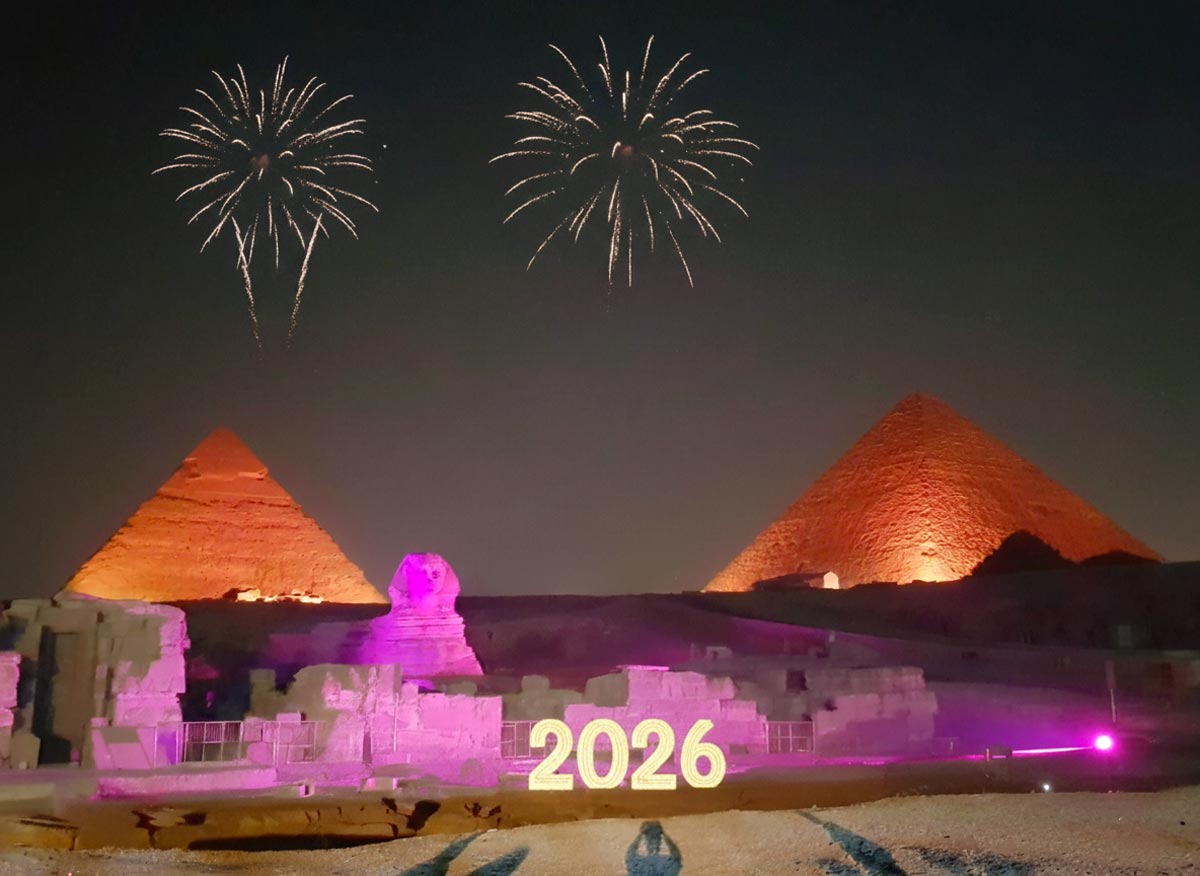
Ask any Egyptian child what do people in Egypt call Santa, and you will hear one name repeated again and again: Baba Noel. This is Egypt’s beloved version of the jolly, gift-bearing figure recognized around the world, and while the character shares plenty in common with his Western counterpart, he carries a distinctly Egyptian flavor that reflects the country’s own cultural blending.
“Baba” simply means “father” or “dad” in Egyptian Arabic, while “Noel” is borrowed from the French word for Christmas, a linguistic nod to Egypt’s historical ties with French culture and language, particularly strong throughout the nineteenth and early twentieth centuries. Put together, Baba Noel translates loosely to “Father Christmas,” and he plays much the same role as Santa Claus does elsewhere: a kind, generous figure associated with gifts, goodwill, and holiday cheer, typically depicted in the same red-and-white outfit familiar to most of the world.
Baba Noel makes appearances throughout Egypt during the Christmas season, particularly in shopping malls, hotel lobbies, and events organized by churches and schools for younger children. In cities like Cairo and Alexandria, it’s not unusual to see a costumed Baba Noel posing for photos with excited kids in major shopping centers throughout December, much like the mall Santa tradition found in many other countries. Some Coptic churches also incorporate a Baba Noel appearance into their children’s Christmas events, adding a fun, lighthearted touch to what is otherwise a deeply religious occasion.
It’s worth noting that Baba Noel is more closely associated with the broader, internationally influenced December 25th festive period than with the specifically religious Coptic Christmas of January 7th, though the character does appear across both timeframes depending on the family and community. This dual presence again reflects how Egyptian Christmas blends its own deep Coptic roots with the more globally recognized secular symbols of the season, creating a holiday experience that feels both uniquely Egyptian and comfortably familiar to international visitors.
For travelers wondering how do you say merry Christmas in Egyptian, the most common phrase you’ll hear is “Kol sana wa enta tayeb,” which literally translates to “may you be well every year,” a versatile greeting used across many Egyptian holidays and celebrations, not just Christmas. For a more direct translation closer to “Merry Christmas” specifically, Egyptians also say “Eid Milad Majid,” which translates to “Glorious Nativity Feast” or effectively “Merry Christmas.” Learning either phrase is a lovely, simple way to connect with locals during your visit, and Egyptians consistently appreciate when travelers make even a small effort to greet them in Arabic, especially during a meaningful holiday season like this one.
Travelers visiting Egypt with children in tow will find that spotting Baba Noel around Cairo’s malls or hotel lobbies adds a fun, familiar touchpoint to an otherwise entirely new cultural experience. It’s a small but delightful detail that helps younger travelers feel a sense of connection to the season even while exploring a country that, on the surface, looks and feels completely different from home. Combining a Baba Noel sighting with a fun day out, such as a stop through Sightseeing Tours Cairo, makes for a memorable, well-rounded day that blends festive fun with genuine cultural discovery.
11. Do Egyptian Muslims Celebrate Christmas? Interfaith Life
A genuinely common and thoughtful question travelers ask is do Egyptian Muslims celebrate Christmas. The answer offers one of the most heartwarming aspects of Egyptian culture and is well worth understanding before your trip, since it reveals just how deeply woven interfaith respect is into everyday Egyptian life.
While the religious observance of Christmas, meaning attending church and participating in the Nativity liturgy, is specific to Egypt’s Christian population, it is extremely common for Muslim Egyptians to participate in the broader social and cultural aspects of the season. Many Muslim families send Christmas greetings to Christian friends, neighbors, and colleagues, and it is entirely normal for Muslims to be invited to and attend a Coptic friend’s Christmas Eve feast as an honored guest. This mutual participation flows both ways too, as Coptic Christians commonly extend similar warmth and greetings to their Muslim friends during the two Eid holidays throughout the Islamic calendar year.
This spirit of shared celebration is actively encouraged at a national level as well. Egypt’s political and religious leadership frequently emphasizes national unity during the Christmas season, and it has become something of a modern tradition for Egypt’s president to personally attend the Coptic Christmas Eve liturgy at the Cathedral of the Nativity of Christ each year, a gesture widely reported in Egyptian media and seen as a powerful symbol of the country’s commitment to religious coexistence. This kind of visible solidarity has helped make Christmas celebration in Egypt feel like a shared national moment rather than an event exclusive to one religious community.
On a more everyday level, this interfaith harmony shows up in small but meaningful ways throughout Egyptian society. Schools with mixed Muslim and Christian student populations often host holiday-themed events around Christmas that all children participate in regardless of religion. Workplaces frequently exchange kahk cookies and other holiday treats across religious lines, and it’s common to see decorated storefronts and Christmas displays maintained respectfully by Muslim shop owners in mixed neighborhoods, simply as a welcoming gesture to their Christian customers and neighbors.
For travelers, this means you don’t need to worry about navigating a religiously divided or tense atmosphere during your visit. Egypt’s tourism industry, staffed by people of both major faiths working side by side, embraces the Christmas season warmly regardless of individual religious background, and you’ll find genuine holiday spirit across hotels, restaurants, and tour operations throughout the country during this period. Guides, drivers, and hospitality staff, whatever their personal faith, are typically well versed in explaining local Christmas customs to curious visitors and are happy to share their own perspective and experiences with the season.
This broader spirit of coexistence is part of what makes Egypt such a compelling destination beyond its ancient monuments. If interfaith history and culture particularly interest you, a well-guided Egypt Cultural Tours itinerary can be tailored to explore this theme in depth, visiting mosques, churches, and historic sites that together tell the story of a country where multiple faiths have coexisted, influenced one another, and built a shared national identity across many centuries.
12. Fun Facts About Christmas in Egypt
Every great trip is made richer by a few good stories to share along the way, so here is a collection of genuinely interesting fun facts about Christmas in Egypt that go beyond the basics and give you real conversation material for your 2026 travels.
Egypt holds a genuinely unique place in the Nativity story itself. According to the Gospel of Matthew, the Holy Family fled to Egypt to escape King Herod’s persecution, and Coptic tradition has mapped out a specific route, known as the Holy Family Trail, tracing their journey through various sites across the country, including locations in Old Cairo, the Nile Delta, and as far south as Assiut in Upper Egypt. This gives Christmas in Egypt a layer of biblical significance found in very few other countries in the world, and several churches along this trail hold special services and pilgrimages during the Christmas season specifically to honor this history.
The Coptic calendar itself is a fascinating piece of living history. It is based on the ancient Egyptian civil calendar, later adjusted to align with the Julian calendar used by early Christians, and it remains in active religious use today, over a thousand years after most of the Christian world transitioned to the Gregorian calendar. This is the direct reason Coptic Christmas falls on January 7th rather than December 25th, a detail that continues to surprise many first-time visitors.
Egypt’s Christmas fast, at 43 days, is actually longer than the Advent period observed in many Western Christian traditions, which typically spans around four weeks. This extended fasting period reflects the particularly rigorous devotional practices of Coptic Orthodox Christianity, and it directly shapes the enormous, celebratory nature of the Christmas Eve feast that follows it.
Alexandria, Egypt’s second-largest city, holds special historical importance in Christian history as the seat of one of the earliest and most influential Christian communities in the ancient world, home to renowned early theologians and scholars. Its Christmas celebrations, while smaller in scale than Cairo’s, carry a particularly deep historical resonance for those interested in the roots of early Christianity, and a visit to Alexandria Egypt Tours during the festive season offers a wonderful blend of Mediterranean coastal charm and rich religious history.
Here are a few more quick, shareable facts worth knowing before you go:
- Egypt officially recognized January 7th as a national public holiday in 2002, a significant moment for the country’s Christian minority.
- The word “Kahk,” Egypt’s iconic Christmas and Eid cookie, has roots going back to ancient Egyptian celebratory baking traditions thousands of years old.
- Some historians believe elements of modern Christmas gift-giving customs in Egypt overlap with far older Pharaonic New Year traditions involving small tokens of goodwill exchanged between family members.
- Egypt’s Red Sea resorts, including Hurghada and Sharm El Sheikh, see a significant spike in European tourist arrivals during the Christmas and New Year period, largely due to the region’s warm winter climate.
- The Cathedral of the Nativity of Christ in the New Administrative Capital seats around 8,200 people, making it one of the largest church buildings anywhere in the Middle East.
These details are more than trivia; they help explain why Egypt Christmas traditions feel so layered and meaningful compared to a purely commercial holiday experience. Understanding this depth before you arrive turns a good trip into a genuinely unforgettable one, especially when paired with expert local guides who can bring these stories to life in person.
13. Egypt Weather in December: What to Pack
Getting the packing list right can make or break a trip, so let’s talk about Egypt weather in December in real, practical terms. This is a question we hear constantly from travelers booking a Christmas in Egypt 2026 trip, and the good news is that Egyptian winters are remarkably mild and comfortable compared to what many international visitors expect from a desert country.
Weather in Egypt in December varies noticeably by region, so packing appropriately depends heavily on your specific itinerary. Cairo and the Nile Valley experience mild, pleasant days and noticeably cooler nights, while the Red Sea coast stays warmer throughout, making it a popular winter escape for European travelers seeking sunshine.
| Region | Daytime Temp (Approx.) | Nighttime Temp (Approx.) | What to Pack |
|---|---|---|---|
| Cairo & Giza | 18-22°C (64-72°F) | 8-11°C (46-52°F) | Layers, light jacket, comfortable walking shoes |
| Luxor & Aswan | 20-24°C (68-75°F) | 7-10°C (45-50°F) | Light layers by day, warm layer for evening |
| Hurghada & Red Sea | 22-25°C (72-77°F) | 14-16°C (57-61°F) | Swimwear, sun protection, light sweater for evening |
| Sharm El Sheikh | 22-25°C (72-77°F) | 14-17°C (57-63°F) | Swimwear, light layers, comfortable sandals |
| Alexandria | 17-20°C (63-68°F) | 10-13°C (50-55°F) | Warmer layers, waterproof jacket for occasional rain |
Cairo and Upper Egypt destinations like Luxor and Aswan can get genuinely chilly after sunset, particularly during evening felucca rides or nighttime sightseeing, so packing a warm layer, such as a fleece or light down jacket, is essential even though daytime temperatures feel comfortably mild. Mornings at the Pyramids or during sunrise hot air balloon rides over Luxor can also be noticeably cool, so dressing in easily removable layers is the smartest strategy throughout your trip.
Rain is uncommon but not unheard of, particularly in Alexandria and along the northern coast, so packing a light, packable rain jacket is a sensible precaution, even if you never end up needing it. Comfortable, sturdy walking shoes are essential regardless of season, given how much time most itineraries spend exploring archaeological sites, markets, and city streets on foot.
If your trip includes a Red Sea extension, whether in Hurghada or Sharm El Sheikh, swimwear absolutely belongs in your suitcase, since December remains a very swimmable, sunny season along the coast, even while Cairo experiences its cooler winter weather. This regional contrast is actually one of Egypt’s best-kept travel secrets: you can experience a cooler, layered winter atmosphere in Cairo and then fly less than an hour to enjoy genuinely warm, beach-worthy weather along the Red Sea, all within the same trip.
For travelers wanting to build a well-rounded itinerary that takes full advantage of this climate variety, combining Cairo sightseeing with a relaxing coastal stretch is easy to arrange. Our Cairo and Red Sea Holidays packages are specifically designed around this popular combination, letting you enjoy layered winter charm in the capital and warm sunshine on the coast, all in a single, seamlessly organized 2026 trip.
14. Best Places to Experience Christmas in Egypt in 2026
Not every destination in Egypt offers the same festive experience, so knowing where to focus your itinerary makes a real difference. Here is our expert breakdown of the best places to soak up Christmas in Egypt during your 2026 visit.
Cairo remains the undisputed top destination for experiencing the full breadth of Egyptian Christmas traditions. As the capital and home to the largest concentration of Coptic churches, historic sites, and international hotels, Cairo offers everything from grand cathedral services to festively decorated malls and Nile-side dinner cruises. Old Cairo, in particular, with its cluster of ancient churches including the Hanging Church, Saints Sergius and Bacchus, and the Coptic Museum, is essential for anyone wanting a deep dive into the religious and historical side of the season.
Alexandria offers a quieter, more coastal alternative with its own deep Christian historical roots, given its status as one of early Christianity’s most important intellectual centers. Its Mediterranean charm, combined with a noticeably less crowded holiday atmosphere than Cairo, makes it an excellent addition for travelers wanting a change of pace mid-trip.
Luxor and Aswan, while smaller in Coptic population than Cairo, still host meaningful Christmas services and offer the added benefit of experiencing the holiday season against the backdrop of Egypt’s most spectacular ancient temples. Watching the sun set over Karnak Temple or sailing the Nile near Aswan during the festive season creates a genuinely unforgettable combination of ancient wonder and modern celebration. A Nile Cruise Aswan to Luxor 3 Nights booked during this window lets you enjoy comfortable winter sailing weather while still being close to towns celebrating the season.
For travelers who want to add relaxation to their cultural exploration, Egypt’s Red Sea coast delivers warm, sunny weather throughout December and January, making it an ideal add-on after several culture-packed days in Cairo or along the Nile. Hurghada and Sharm El Sheikh both offer excellent hotel Christmas and New Year events, complete with festive dinners, entertainment, and, in many cases, fireworks over the water to ring in the new year. An All Inclusive Hurghada Egypt stay tacked onto the end of a Cairo and Nile itinerary is one of the most popular ways our guests choose to close out a Christmas in Egypt 2026 trip.
Minya and Assiut in Upper Egypt, while less commonly visited by international tourists, hold some of the largest and most historically significant Coptic communities in the country, along with several key sites along the Holy Family Trail. These destinations offer a genuinely off-the-beaten-path opportunity for travelers with a deeper interest in Coptic history and are best explored with an experienced local guide familiar with the region’s religious sites and customs.
Ultimately, the best itinerary blends several of these destinations rather than committing to just one. A well-designed multi-city trip lets you experience Cairo’s grand cathedral services, Luxor and Aswan’s ancient temples, and the Red Sea’s relaxed winter sunshine all in a single, well-paced journey. Our 15 Day Egypt Tours and shorter alternatives are specifically structured to make this kind of comprehensive, festive exploration both effortless and unforgettable.
15. How to Celebrate Christmas in Egypt as a Traveler: Practical Tips
Understanding how to celebrate Christmas in Egypt as a visitor, rather than as a local, requires a slightly different playbook. Here are our top, genuinely useful tips, gathered from years of organizing trips during this exact season, to help you make the most of your Egypt Christmas experience in 2026.
Book well ahead of time. Late December through early January is one of Egypt’s busiest travel windows, drawing both Coptic families reuniting for the holiday and international tourists escaping colder climates back home. Flights, hotels, and popular tours, particularly Nile cruises, tend to sell out weeks or even months in advance during this period, so securing your dates early is the single most important step toward a smooth, stress-free trip.
Dress respectfully for church visits. If you plan to attend or observe a Coptic Christmas service, modest clothing that covers shoulders and knees is appropriate, and women may want to bring a light scarf, though headcovering is generally not required inside Coptic churches the way it is in mosques. Arriving early secures a good vantage point, since services can draw large crowds, particularly at well-known churches like the Hanging Church or the Cathedral of the Nativity of Christ.
Learn a few key phrases. Greeting locals with “Eid Milad Majid” (Merry Christmas) or the more general “Kol sana wa enta tayeb” tends to spark warm, genuine smiles and conversation. Egyptians deeply appreciate visitors who make even a small effort to engage with local customs and language, and it often leads to richer, more memorable interactions throughout your trip.
Balance sightseeing with rest. Egypt’s Christmas season overlaps with peak tourist season at major sites like the Pyramids and the Grand Egyptian Museum, so building some flexibility into your schedule, along with an early start to major attractions, helps you avoid the largest crowds and midday heat, even in the cooler winter months.
Sample the seasonal food, even briefly. Whether through a guided food tour or simply asking your hotel restaurant about seasonal specialties, trying fattah, kahk, or basbousa during your visit adds a genuinely memorable, sensory layer to your understanding of Egyptian Christmas traditions that no amount of reading can replicate.
Consider timing around January 6th and 7th specifically. If witnessing the religious and cultural peak of the season is a priority, structure your Cairo days so you are in the city, ideally near Old Cairo or the New Administrative Capital, for the evening of January 6th and the following day, when the atmosphere is at its most vibrant and meaningful.
Work with a knowledgeable local operator. Coptic Christmas customs, church etiquette, and the best viewing spots for celebrations are details best navigated with an experienced local team rather than guesswork. Our Egypt Tailor Made Tours service allows travelers to build a completely custom itinerary around this specific season, ensuring you don’t miss the moments that matter most while also avoiding the common pitfalls that catch first-time visitors off guard, from overbooked sites to closed businesses on the January 7th public holiday.
Following these practical steps transforms a good trip into a genuinely exceptional one, letting you experience Christmas in Egypt with the confidence and cultural insight of a seasoned traveler, even on your very first visit.
16. Mısır’da Yılbaşı and Navidad en Egipto: Egypt for International Travelers
Egypt’s Christmas and New Year season draws curious searchers from around the globe, and it’s worth directly addressing a couple of the most common international questions we see, since they reflect genuine curiosity from travelers planning their Egypt Christmas 2026 trip from different corners of the world.
For our Turkish-speaking readers wondering mısır’da yılbaşı kutlanır mı, meaning “is New Year celebrated in Egypt,” the answer is yes, enthusiastically. December 31st into January 1st is widely celebrated across Egypt, particularly in Cairo, Alexandria, and the Red Sea resort towns, with fireworks, hotel galas, rooftop parties, and festive dinners marking the transition into the new year. This is distinct from the religious observance of Coptic Christmas on January 7th, and it is celebrated broadly across Egyptian society regardless of religious background, much like New Year’s celebrations found in most countries worldwide. Hotels along the Nile in Cairo and along the Red Sea coast often host elaborate New Year’s Eve events, complete with live entertainment, gala dinners, and fireworks displays over the water, making late December an excellent time to combine cultural sightseeing with genuine festive celebration.
For our Spanish-speaking readers curious about navidad en Egipto, the picture mirrors much of what we’ve covered throughout this guide: Egypt’s Christian minority, primarily Coptic Orthodox, celebrates Christmas on January 7th following the Julian calendar, while December 25th is recognized in a lighter, more commercial sense across hotels and tourist areas. If you’re specifically planning to viajar a Egipto en diciembre, meaning travel to Egypt in December, you’ll find comfortably mild weather, shorter lines at major sites compared to peak spring and autumn seasons, and a genuinely festive atmosphere building throughout the city in the lead-up to both December 25th and the more culturally significant January 7th celebration.
This international curiosity reflects something important about Egypt’s appeal as a winter destination: it offers a rare combination of comfortable weather, rich cultural and religious history, and a festive season that feels both familiar and refreshingly unique compared to celebrating the holidays at home. Whether you’re arriving from Istanbul, Madrid, London, or anywhere else in the world, Egypt’s December and January calendar has genuinely something for every kind of traveler.
Language barriers are rarely a serious concern for international visitors during this season either. English is widely spoken throughout Egypt’s tourism industry, and many hotels and tour operators, including our own team, are well equipped to communicate with guests in multiple languages, ensuring a smooth, well-supported experience regardless of where you’re traveling from.
For travelers arriving from further afield, well-structured multi-day itineraries make the most of a long-haul journey to Egypt. Options like our Egypt Tours from UK, Egypt Tours from Canada, and Egypt Tours from Singapore packages are built with international travelers specifically in mind, taking into account flight times, jet lag recovery, and the ideal pacing needed to enjoy a Christmas in Egypt 2026 trip to its absolute fullest, no matter which corner of the globe you’re traveling from.
17. Planning Your Egypt Christmas Trip 2026
Turning everything you’ve learned so far into an actual, bookable trip is the final and most important step. Here’s how to approach planning a trip to Egypt for the 2026 Christmas and New Year season, based on what consistently works best for our guests.
Start by deciding what matters most to you: the religious and cultural depth of Coptic Christmas, the festive commercial atmosphere of December 25th and New Year’s, or a blend of both alongside classic sightseeing. This decision shapes your ideal travel window. Arriving in mid-to-late December and staying through January 7th gives you the fullest possible experience, capturing both the commercial festive build-up and the deeper Coptic celebration, though it does require a longer trip, typically 10 to 15 days if you want to comfortably include Cairo, a Nile cruise, and a Red Sea extension.
For travelers with less time, a focused 7 to 8 day Cairo and Nile itinerary still delivers an excellent taste of the season, particularly if timed around either the December 25th period or January 6th and 7th specifically, rather than trying to stretch across both. Our 7 Day Egypt Tours and 8 Day Egypt Tours are consistently popular choices for travelers wanting a well-rounded but time-efficient Christmas season trip.
Booking logistics deserve real attention during this period. Flights into Cairo from major international hubs tend to fill up quickly for the last two weeks of December, so securing airfare at least two to three months in advance is strongly advised. The same applies to Nile cruise cabins, which are notably limited in number and highly sought after during this peak season; our Short Nile Cruise and longer cruise options should ideally be reserved well ahead of your travel dates to guarantee availability and the best cabin selection.
Visa requirements are straightforward for most nationalities, with Egypt offering a visa-on-arrival or e-visa system for the majority of visitors, though it’s always worth double-checking current requirements for your specific passport before departure. Travel insurance covering medical needs and trip interruptions is strongly recommended, as is standard practice for any international trip, particularly one involving multiple internal flights or cruise transfers.
Budgeting for this season should account for slightly higher rates on flights and premium hotels compared to Egypt’s shoulder seasons, given the elevated demand. That said, Egypt remains excellent value compared to many other winter sun destinations, especially when booked through a well-structured, all-inclusive package that bundles flights, accommodation, guided tours, and transfers into a single, transparent price.
Perhaps most importantly, working with a specialist who understands both Egypt’s practical travel logistics and its cultural and religious calendar makes an enormous difference in how smoothly your trip unfolds. From arranging respectful church visits to timing your Pyramid tour before the crowds arrive, these details separate an average trip from a truly exceptional one. Our Best Tour Packages for Egypt are built with exactly this level of seasonal expertise, ensuring your 2026 Christmas trip to Egypt is planned by people who genuinely understand every layer of this remarkable time of year.
18. Why Book Your 2026 Christmas Trip with Egypt All Inclusive
With so many moving pieces involved in planning a Christmas in Egypt 2026 trip, from understanding Coptic customs to timing your visit around January 7th, choosing the right travel partner matters enormously. This is exactly where Egypt All Inclusive stands apart from other operators in the industry.
Our team lives and works in Egypt year-round, giving us firsthand, current knowledge of exactly how the Christmas and New Year season unfolds each year, from which churches hold the most memorable services to which hotels put on the best festive events along the Nile and Red Sea coast. This isn’t information pulled from outdated guidebooks; it’s knowledge built from genuinely organizing this exact kind of trip for travelers year after year.
We handle every logistical detail so you don’t have to. Flights, hotel bookings, private guides, Nile cruise cabins, and airport transfers are all coordinated seamlessly through our Egypt All Inclusive Packages, meaning you can focus entirely on enjoying the experience rather than juggling reservations and logistics across multiple providers. For travelers who prefer a fully customized approach, our Egypt Tailor Made Tours let you build an itinerary shaped entirely around your personal interests, whether that’s deep religious history, luxury relaxation, family-friendly activities, or a mix of everything Egypt has to offer during this special season.
Our guides are carefully selected not just for their expertise in ancient Egyptian history, but for their genuine cultural fluency around Coptic traditions, church etiquette, and the nuances of Egypt’s festive season, ensuring you experience these customs respectfully and meaningfully rather than as a distant observer. This attention to authentic, well-informed guidance is a big part of why so many of our guests describe their trip with us as the highlight of their entire year.
Value and transparency matter too. Our packages bundle accommodation, guided tours, transfers, and often meals into a single upfront price, protecting you from the surprise costs and last-minute price hikes that often plague independent bookings during Egypt’s busiest travel season. Whether you’re drawn to our Luxury Egypt Vacations for a truly indulgent holiday experience, or our Budget Egypt Tours for excellent value without compromising on quality, we structure our offerings to fit a genuinely wide range of travel styles and budgets.
Ultimately, what sets us apart heading into 2026 is a simple commitment: we want every guest to leave Egypt not just having seen the Pyramids, but having genuinely understood and connected with the living, breathing culture that makes this country so extraordinary, and there is arguably no better season to experience that living culture than during the warmth, faith, and celebration of Christmas in Egypt. As we head into 2026, Egypt All Inclusive stands ready as the trusted, experienced partner to make that trip everything you’ve hoped for and more.
Frequently Asked Questions
Does Egypt celebrate Christmas?
Yes. Egypt’s Coptic Orthodox Christian minority celebrates Christmas on January 7th as an official public holiday, while December 25th is recognized more casually across hotels, malls, and the international community.
When is Christmas in Egypt?
Coptic Christmas falls on January 7th every year, based on the Julian calendar used by the Coptic Orthodox Church. December 25th is also acknowledged in a lighter, more commercial way.
Is Christmas celebrated in Egypt by everyone?
Not universally, since Egypt is a majority Muslim country, but Christmas is widely respected and often shared across religious lines, with many Muslim Egyptians participating in the season’s social and festive elements.
What do Egyptians call Christmas?
The most common phrase is “Eid Milad Majid,” meaning “Glorious Nativity Feast,” while the general holiday greeting “Kol sana wa enta tayeb” is also widely used.
How is Christmas celebrated in Egypt?
Through a 43-day fast followed by church services on the night of January 6th, a large family feast, home and church decorations, and days of visiting relatives afterward.
What day is Christmas in Egypt?
January 7th for the religiously significant Coptic Christmas, and December 25th for the internationally recognized date observed more casually in tourist areas.
Why does Egypt celebrate Christmas on January 7th?
Because the Coptic Orthodox Church follows the older Julian calendar for religious dates, which currently sits 13 days behind the Gregorian calendar used for December 25th.
What is the weather like in Egypt during Christmas?
Mild and pleasant, generally between 17 and 25°C (63-77°F) during the day, cooler at night, with warmer conditions along the Red Sea coast.
Conclusion
Christmas Customs in Egypt offer travelers something genuinely rare: a chance to witness centuries-old religious tradition, warm interfaith harmony, and joyful family celebration, all set against the backdrop of the world’s most iconic ancient monuments. From the candlelit Coptic Christmas Eve liturgy on January 6th to the festive lights glowing across Cairo, Alexandria, and the Red Sea coast, Egypt in December and January delivers an experience unlike anywhere else on earth. Whether you’re chasing history, culture, faith, food, or simply a warm winter escape, this season rewards curious travelers at every turn.
As you plan your 2026 journey, let Egypt All Inclusive, widely regarded as the best travel agency in Egypt in 2026, handle every detail with genuine local expertise and care. From tailor-made itineraries to seamless Nile cruises and unforgettable Cairo experiences, our team is ready to turn your Christmas dreams into reality. Don’t wait for prime dates to fill up. Book your Christmas in Egypt trip with Egypt All Inclusive today, and step into a celebration you’ll remember for a lifetime.