Quick Answer: Is Lake Nasser Worth Visiting 2027?
Yes. Lake Nasser is worth visiting if you want to see remote Nubian temples that most Egypt itineraries skip, experience a quieter alternative to the busy Nile Valley, and combine desert scenery with ancient history. It’s best suited to travelers who have at least 3-4 extra days, are already planning to visit Aswan or Abu Simbel, and prefer slow, scenic travel over a packed sightseeing schedule. It is less suited to travelers on a tight one-week Cairo-and-Luxor trip, since reaching the lake and cruising it takes real time.
Key facts at a glance:
Location: Southern Egypt and northern Sudan, starting just south of the Aswan High Dam
Type: Artificial reservoir (not a natural lake)
Length: Roughly 500-550 km (310-340 miles)
Surface area: About 5,250 sq km (2,030 sq mi) in Egypt alone
Formed by: The Aswan High Dam, built between 1960 and 1970
Named after: President Gamal Abdel Nasser
Known for: Nile crocodiles, relocated Nubian temples (including Abu Simbel), multi-day lake cruises, and fishing
Swimming: Only in designated, supervised areas on licensed cruise boats — not recommended independently
Best time to visit: October to April, when daytime desert heat is manageable
Lake Nasser at a Glance
| Question | Answer |
|---|---|
| Where is Lake Nasser? | Southern Egypt, immediately south of the Aswan High Dam, extending toward Sudan |
| What is it? | A huge artificial reservoir created by the Aswan High Dam |
| What river feeds it? | The Nile |
| Why is it famous? | Its enormous size, Nubian landscape, rescued archaeological monuments, fishing, wildlife, and cruises |
| Is it in Africa? | Yes. It lies in northeastern Africa |
| How large is it? | Its surface area varies with water level; commonly cited figures are around 5,250 km² for the Egyptian reservoir at particular operating conditions |
| How was it formed? | By impounding the Nile behind the Aswan High Dam |
| When was the dam completed? | The Aswan High Dam was completed around 1970 |
| How long did the reservoir take to fill? | The reservoir filled progressively during the 1960s and 1970s, reaching its intended operating level in the mid-1970s |
| Are there crocodiles? | Yes. Nile crocodiles occur in Lake Nasser |
| Can you swim? | Swimming is not recommended as a general tourist activity because crocodiles are present and the lake is not a conventional recreational beach destination |
| Main tourism gateway | Aswan |
| Famous destination | Abu Simbel |
| Typical cruise | Multi-night sailing between Aswan and Abu Simbel |
| Best for | Archaeology, history, photography, wildlife, quiet cruising, and Nubian landscapes |
Lake Nasser is one of the most overlooked destinations in Egypt, yet it holds some of the country’s most remote temples, its largest population of Nile crocodiles, and a landscape unlike anywhere else on the Nile. If you’re planning to visit Lake Nasser in 2027, this guide covers everything you need: where it is, how it was formed, whether it’s worth the trip, what it costs, when to go, and how to plan a cruise or day trip that actually fits your itinerary.
This article answers the questions travelers ask most often — is Lake Nasser safe, can you swim in it, are there really crocodiles, and how does a Lake Nasser cruise compare to a standard Nile cruise — with practical, up-to-date planning details rather than generic background history.
Where Is Lake Nasser?
Lake Nasser sits in the far south of Egypt, beginning at the Aswan High Dam and stretching south across the border into Sudan, where the southern portion is called Lake Nubia. On a map of Africa, it appears as a long, narrow body of water running roughly north to south through the eastern Sahara, following the ancient course of the Nile Valley that it flooded.
Around 83% of the lake’s surface area lies within Egyptian territory, with the remaining portion inside Sudan. The lake’s coordinates place it near 22.5°N, 31.9°E, and its widest section — close to 35 km (22 miles) across — sits near the Tropic of Cancer.
How to Picture Lake Nasser on the Map
If you’re looking at a map of Egypt, find Aswan in the south of the country, then trace the Nile southward. Instead of a narrow river, the valley widens dramatically into a long lake that continues past Abu Simbel and across the Sudanese border. This is Lake Nasser. It replaced roughly 500 km of the Nile Valley that was once a narrow river flanked by farmland and Nubian villages.
The nearest major city and travel hub is Aswan, which sits at the lake’s northern end, right next to the Aswan High Dam. Almost every Lake Nasser cruise, tour, or excursion begins or ends here. For general orientation on the region, see our Aswan travel guide and Aswan attractions overview.
How Was Lake Nasser Formed?
Lake Nasser was formed by the construction of the Aswan High Dam across the Nile River. Construction began in 1960, and the Nile’s waters started backing up behind the dam in 1964 once the diversion channels were closed. The dam itself was structurally completed in July 1970 and officially inaugurated in January 1971, but the reservoir kept rising for several more years as the Nile’s annual flow continued to fill the basin.
Before the dam, this stretch of the Nile Valley was part of ancient Nubia, home to Nubian communities who had farmed, fished, and lived along the river for thousands of years. As the water rose, roughly 500 km of valley were submerged, and tens of thousands of Nubians in Egypt and Sudan were resettled, mostly to new towns near Aswan and Kom Ombo. The flooding also threatened dozens of ancient temples and monuments, prompting an international UNESCO rescue campaign that relocated more than 20 major sites — most famously the temples of Abu Simbel and Philae — to higher ground before the water reached them.
The lake is named after Gamal Abdel Nasser, the Egyptian president who championed the High Dam project as a way to control the Nile’s floods, generate hydroelectric power, and secure water storage for agriculture.
How Long Did Lake Nasser Take to Fill?
Lake Nasser took roughly six years to reach the bulk of its operating capacity. Water storage began in May 1964, and by around 1970-1976 the reservoir had accumulated most of its full volume of about 132 cubic kilometers. The lake’s level still fluctuates seasonally today, rising with the Nile flood between August and October and dropping through the dry months, so its shoreline and surface area are never perfectly fixed.
How Big Is Lake Nasser?
Lake Nasser is the largest artificial lake in the world by surface area, and one of the largest reservoirs by volume anywhere on Earth. Its exact dimensions vary slightly by source, since water level changes seasonally and the Egypt-Sudan portions are sometimes measured together and sometimes separately.
| Measurement | Approximate Value |
|---|---|
| Total length | 500-550 km (310-340 mi) |
| Maximum width | 16-35 km (10-22 mi), widest near the Tropic of Cancer |
| Surface area (Egypt) | ~5,250 sq km (2,030 sq mi) |
| Combined area with Lake Nubia (Sudan) | ~6,000 sq km |
| Average depth | ~25 m (83 ft) |
| Maximum depth | 130-180 m (430-590 ft), deepest near the Sudan border |
| Water storage capacity | ~132 cubic km (32 cubic mi) |
| Share in Egypt vs. Sudan | ~83% Egypt, ~17% Sudan |
| Local Sudanese name | Lake Nubia |
For comparison, Lake Nasser’s surface area is larger than the entire country of Trinidad and Tobago, and its length roughly equals the driving distance from Cairo to Alexandria and back, twice over.
What Is Lake Nasser Known For?
Lake Nasser is known for four things: its population of wild Nile crocodiles, its relocated ancient Nubian temples, its multi-day cruise itineraries between Aswan and Abu Simbel, and its role as Egypt’s primary freshwater reservoir and hydroelectric power source. Unlike the Nile Valley further north, the lake’s shoreline is largely empty desert, broken only by scattered temples, fishing camps, and the occasional Nubian settlement.
For travelers specifically, the lake is best known as the setting for a slower, more remote alternative to the classic Luxor-to-Aswan Nile cruise — one that reaches temples inaccessible by road and includes genuine wildlife viewing.
Lake Nasser vs. the Nile
It is easy for visitors to assume that a Lake Nasser cruise is simply another version of a Nile cruise.
It is not.
| Feature | Traditional Nile Cruise | Lake Nasser Cruise |
| Main route | Luxor–Aswan | Aswan–Abu Simbel |
| Waterway | Nile River | Aswan High Dam reservoir |
| Main atmosphere | River valley, towns, farms | Desert, lake, remote Nubian landscape |
| Major temples | Karnak, Luxor, Edfu, Kom Ombo, Philae | Kalabsha, Wadi El Seboua, Amada, Abu Simbel |
| Cruise traffic | Much higher | More limited |
| Typical experience | Busy sightseeing schedule | Longer sailing periods and remote sites |
| Best for | First-time Egypt visitors | Archaeology lovers and travelers wanting something different |
| Abu Simbel | Usually a separate excursion | Can be part of the cruise route |
If you are planning your first Egypt trip, a conventional Nile cruise remains an excellent choice. If you want to explore beyond the standard itinerary, Lake Nasser adds a different layer to the journey.
Are There Crocodiles in Lake Nasser?
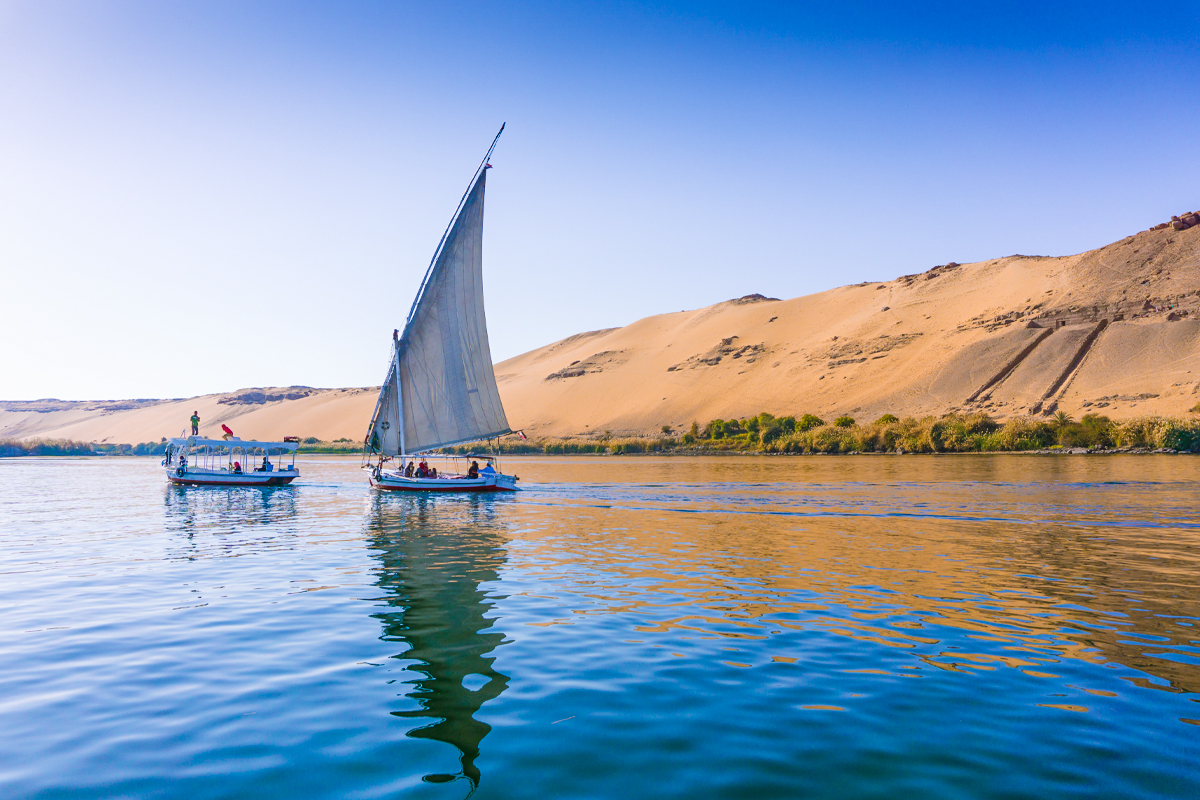
Yes. Lake Nasser has a large, well-established population of Nile crocodiles, and it’s one of the last strongholds of the species in Egypt. Estimates of the total population vary widely depending on the source and survey year, ranging from roughly 1,000 up to tens of thousands, since much of the lake’s shoreline is remote and difficult to survey consistently. What’s consistent across sources is that crocodiles are genuinely present in significant numbers, particularly in the lake’s southern reaches near the Sudanese border and in quieter side inlets known as khors.
Hunting or harming crocodiles in Lake Nasser is prohibited under Egyptian law, which has allowed the population to recover and stabilize since the lake formed in the 1960s.
Will You See Crocodiles on a Visit?
Sightings are possible but not guaranteed on a standard cruise route, since crocodiles tend to avoid the main shipping channels and busy tourist stops. Your best chances of a sighting are:
- On boat excursions into quieter side bays (khors) with an experienced guide
- Early morning or late afternoon, when crocodiles bask on the shoreline
- In the lake’s southern sections, further from Aswan
- On dedicated wildlife or fishing excursions rather than standard temple-hopping stops
Some cruise operators also mention occasional hippo sightings near the southern end of the lake, though these are far less common than crocodile sightings.
Can You Swim in Lake Nasser?
You can swim in Lake Nasser, but only in designated, supervised areas — typically a protected cove or beach near an overnight cruise stop, or a pool area on a licensed cruise vessel. Independent, unsupervised swimming anywhere on the open lake is not recommended, because of the crocodile population and the difficulty of judging water conditions and depth in unfamiliar spots.
Quick answer: Swimming is possible on organized cruises at designated spots chosen and supervised by the crew, but freelance swimming off an unmonitored beach or shoreline is discouraged.
If swimming is a priority for your trip, ask your cruise operator in advance which stops include a supervised swim break, since not every itinerary offers one, and policies vary between boats.
Is Lake Nasser Safe to Visit?
Lake Nasser is considered a safe destination for tourists, and organized cruises on the lake follow the same licensing and safety standards as Nile River cruises. The main practical safety points to know:
- Cruise ships operate on regulated routes with trained crews and standard maritime safety equipment
- Independent swimming or wading away from supervised areas is the primary avoidable risk, due to crocodiles
- The region is remote, so mobile signal and medical facilities are limited once you’re away from Aswan
- Sun exposure and heat are a bigger everyday risk than wildlife for most visitors, given the desert climate
- Photography restrictions apply near the Aswan High Dam itself, as it’s a strategic government facility
As with any remote travel in Egypt, booking through a licensed, reputable tour operator and following crew instructions covers the vast majority of safety concerns.
Best Time to Visit Lake Nasser
The best time to visit Lake Nasser is between October and April, when daytime temperatures in Upper Egypt’s desert climate are more comfortable for sightseeing and outdoor boat excursions. Summer months (June through August) regularly bring temperatures above 40°C (104°F) in the Aswan region, which makes midday temple visits and outdoor activity considerably more demanding.
| Season | Months | Conditions | Good For |
|---|---|---|---|
| Cool season | Nov-Feb | Mild days, cool evenings | Most comfortable overall visit |
| Shoulder season | Oct, Mar-Apr | Warm days, manageable | Good balance of comfort and fewer crowds |
| Peak heat | May-Sep | Very hot, especially Jun-Aug | Lower prices, but demanding conditions |
Cruise availability is generally higher in the cooler months, since this aligns with Egypt’s broader high season for Nile Valley tourism. If you’re traveling in summer, plan outdoor excursions for early morning or late afternoon and prioritize cruise boats with strong onboard climate control.
How to Get to Lake Nasser
Almost all travelers reach Lake Nasser through Aswan, since it’s the only city with the infrastructure — an international airport, cruise terminal, and tour operators — to access the lake.
- Fly or travel to Aswan. Aswan has its own airport with domestic connections from Cairo and Luxor, as well as some seasonal international routes. It’s also reachable by train or Nile cruise from Luxor.
- Book a Lake Nasser cruise or day excursion from Aswan. Multi-day cruises depart from a dedicated terminal near the High Dam. Shorter excursions and Abu Simbel day trips typically leave from central Aswan by road or a short boat transfer.
- Decide between a lake cruise and a land-based Abu Simbel trip. Many travelers who don’t have time for a multi-day cruise instead visit Abu Simbel directly by road or short flight from Aswan, which lets them see the lake’s most famous temple without committing to a full cruise itinerary. Our Abu Simbel tour from Cairo covers this option in detail.
- Combine it with a Nile cruise. Several itineraries pair a short Nile cruise between Luxor and Aswan with a separate Lake Nasser cruise, letting travelers experience both bodies of water on one trip.
Things to Do on Lake Nasser
Lake Nasser’s main draws are its temples, wildlife, and the slow-travel experience of the cruise itself. Here’s what most itineraries include:
- Visit relocated Nubian temples along the shore, including Kalabsha Temple, Beit el-Wali, Wadi es-Sebua, Amada, and Qasr Ibrim — most reachable only by boat
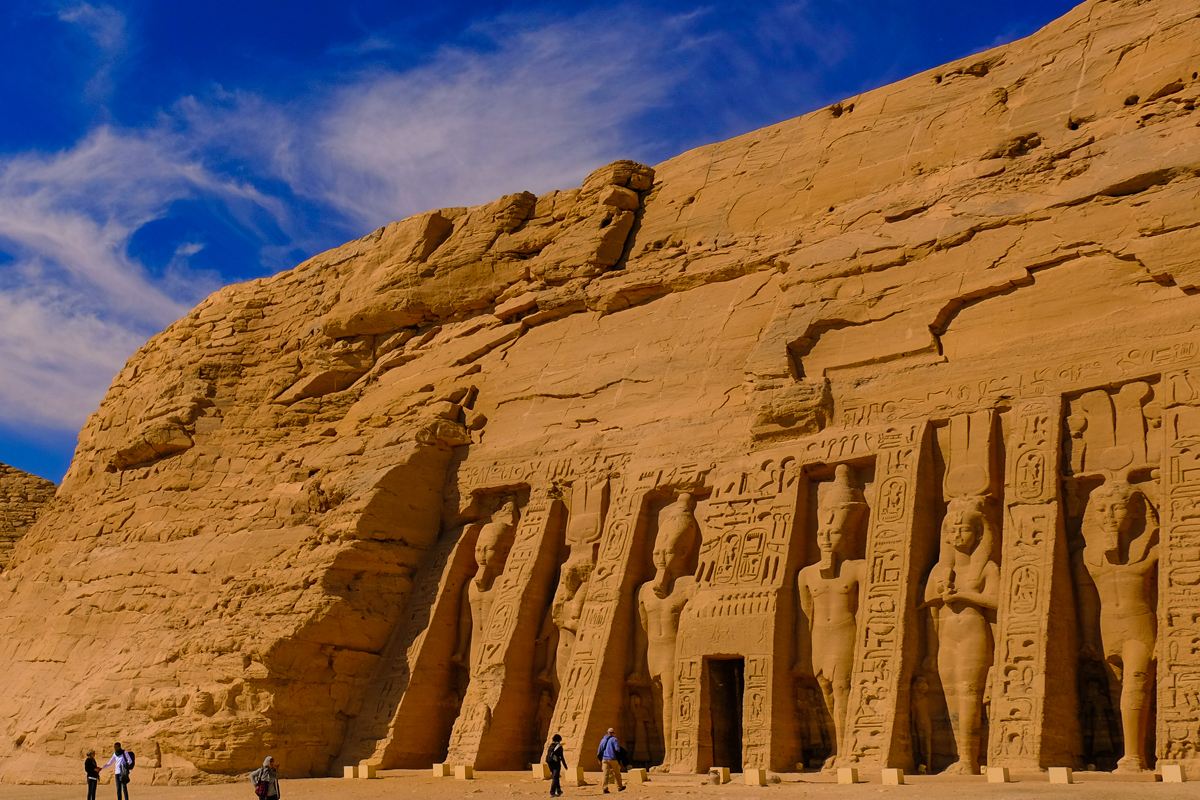
- Tour the Abu Simbel temples, the lake’s most famous site, built by Ramesses II and relocated above the rising waters in the 1960s
- Take a guided boat excursion into a quiet khor (side bay) for a chance to spot Nile crocodiles and birdlife
- Fish for Nile perch, a popular sport fish that can grow to a significant size in the lake’s deep waters
- Visit a Nubian village near Aswan before or after your cruise for local crafts, food, and Nubian culture — see our Nubian village guide
- Watch the sunset over open desert and water, one of the most consistently mentioned highlights of a Lake Nasser cruise
- Swim at a supervised stop, where the cruise schedule allows it
For context on the region’s other major sites, our guides to the construction of the Aswan High Dam, the Temple of Philae, and the Unfinished Obelisk in Aswan cover sites you’ll likely see before or after your time on the lake.
What Is a Typical Lake Nasser Cruise Itinerary?
A representative Aswan-to-Abu Simbel itinerary can look like this:
Day 1: Aswan and Kalabsha
Board the vessel near Aswan and begin sailing into the reservoir.
Depending on the itinerary, the first sightseeing stop may include Kalabsha and nearby monuments.
Day 2: Wadi El Seboua
Visit Wadi El Seboua, known for its temples and avenue of sphinxes.
The surrounding desert landscape is part of the attraction. Unlike Luxor, where monuments are surrounded by a modern city and agricultural areas, Lake Nasser often feels much more isolated.
Day 3: Amada and Nearby Sites
The cruise continues toward Amada, with visits potentially including:
- Amada Temple
- Temple of Derr
- Tomb of Pennut
The monuments here provide an opportunity to explore the history of Egyptian-controlled Nubia away from the major tourist centers.
Day 4: Qasr Ibrim and Abu Simbel
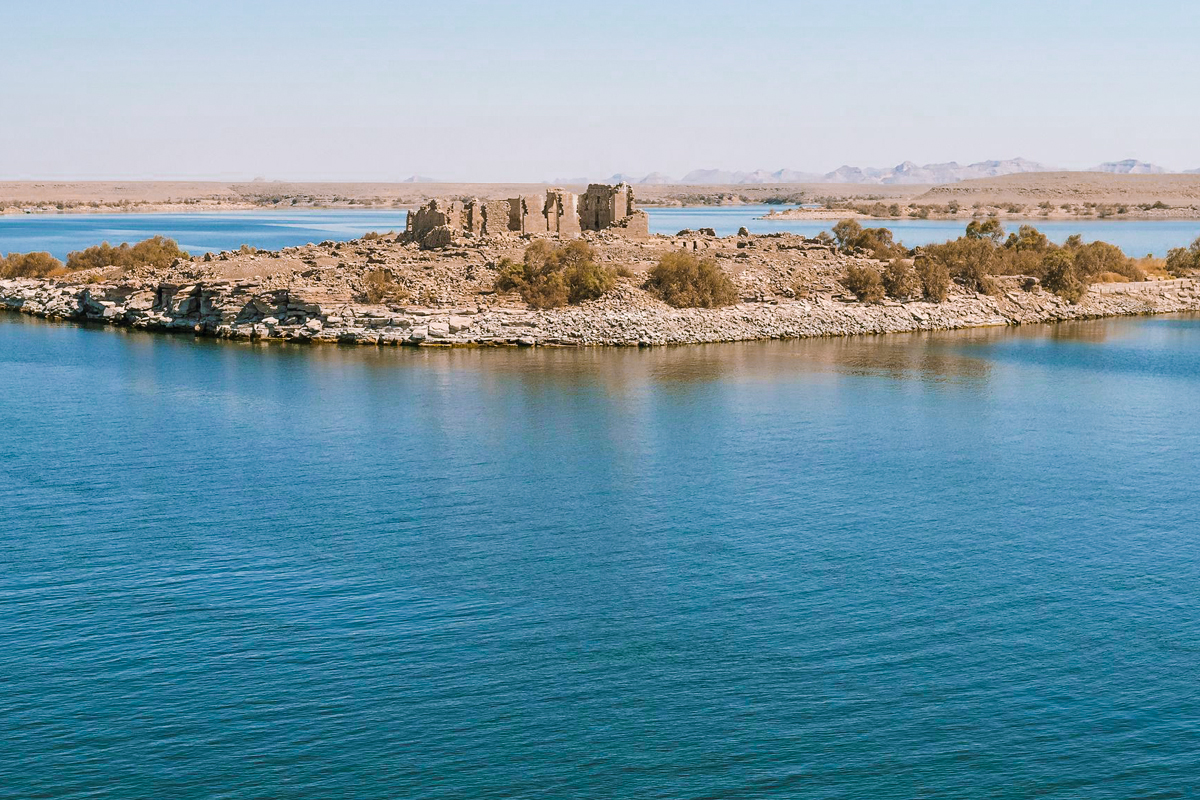
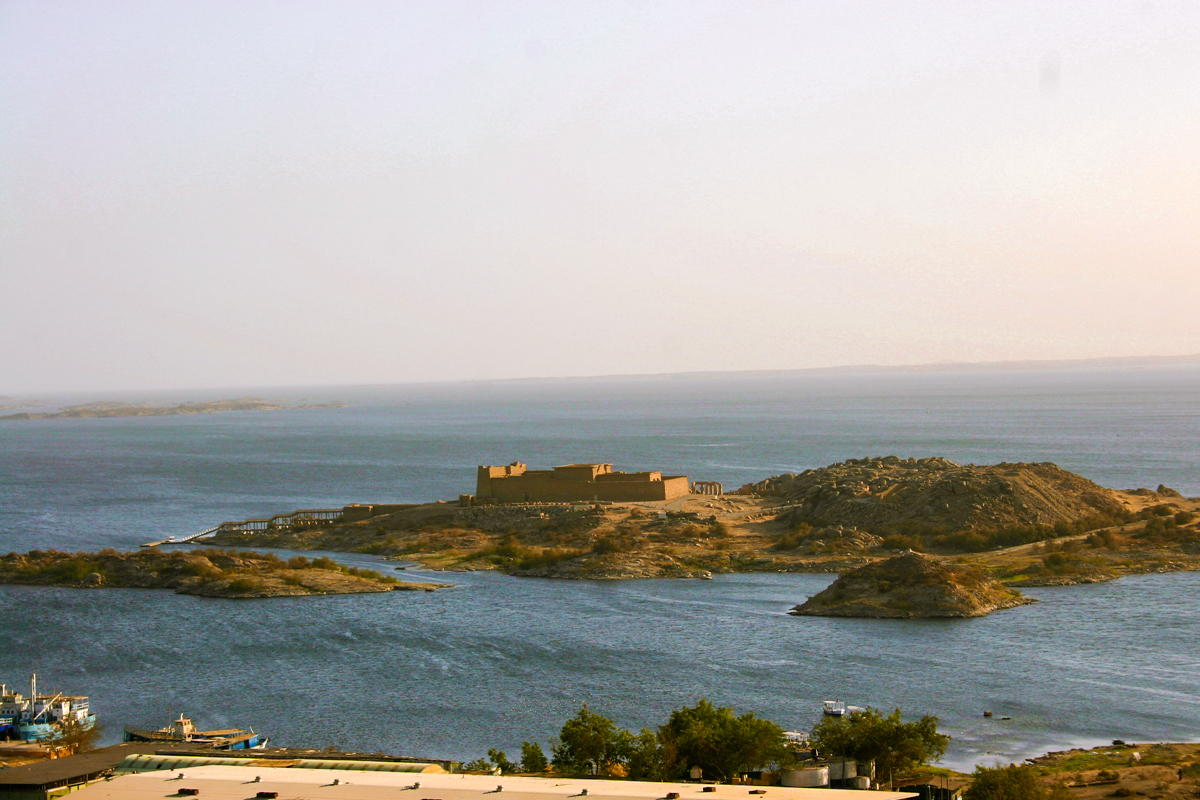
Qasr Ibrim is particularly interesting because much of the original archaeological site was submerged when the reservoir was created.
Today, the remaining ruins occupy a rocky island.
The Egyptian tourism authority identifies Qasr Ibrim as the only monument on Lake Nasser that remained in its original location, although most of the site was submerged.
The journey then continues toward Abu Simbel.
Final Day: Abu Simbel
The cruise ends at Abu Simbel or continues depending on the direction of travel.
This is the dramatic conclusion for many travelers: arriving at one of Egypt’s most famous monuments after several days of sailing through the Nubian desert.
What Can You See Around Lake Nasser?
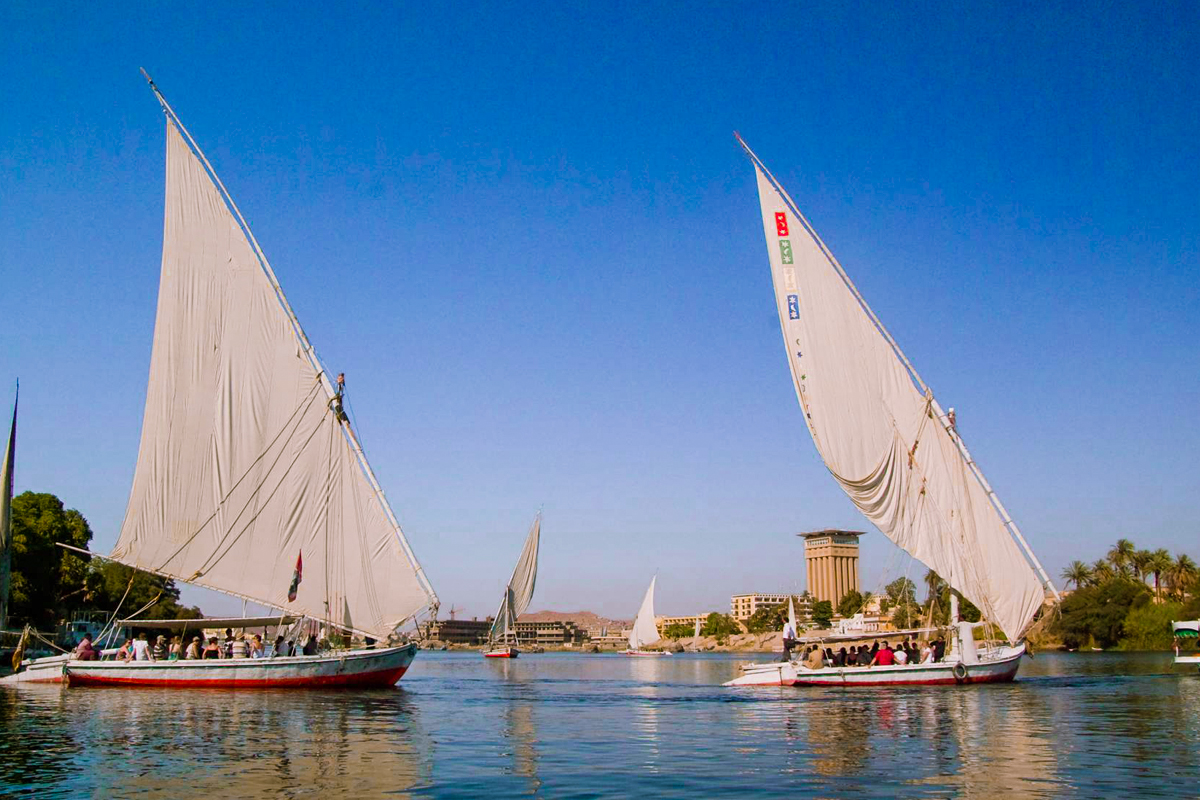
Lake Nasser’s greatest attraction is not simply the lake itself. It is the combination of water, desert, Nubian culture, and archaeological sites.
1- Abu Simbel
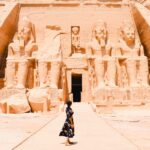
Abu Simbel is the headline attraction.
The site contains the monumental temples of Ramesses II and Queen Nefertari, carved into the rock during the 13th century BCE.
The temples were threatened by the rising waters created by the Aswan High Dam.
UNESCO coordinated an international campaign between 1960 and 1980 to save endangered Nubian monuments. Abu Simbel was dismantled and reconstructed approximately 60–65 metres above its original location.
This rescue operation is one of the most remarkable parts of the modern history of Egypt’s archaeological heritage.
Travelers visiting Abu Simbel should therefore understand that the modern location is not the original location.
The temples were carefully reconstructed so that their appearance, orientation, and architectural character could be preserved.
You can learn more about the site before your trip through the Abu Simbel Temple facts guide.
2- Kalabsha Temple
Kalabsha is one of the major monuments associated with Lake Nasser.
The temple was moved to protect it from the rising waters.
It is particularly interesting because its construction belongs to the Roman period of Egyptian history and reflects the continuation of Egyptian temple traditions during Roman rule.
3- Wadi El Seboua
Wadi El Seboua means “Valley of the Lions,” referring to the avenue of sphinxes associated with the site.
The temple complex is associated with Ramesses II and forms one of the most distinctive stops on a Lake Nasser itinerary.
For travelers who have already visited Karnak and Luxor Temple, Wadi El Seboua offers a very different archaeological setting.
4- Amada Temple
Amada is one of the older surviving temples in Nubia and is known for its historical inscriptions and decoration.
It is especially valuable to travelers interested in the earlier phases of Egyptian imperial activity in Nubia.
5- Qasr Ibrim
Qasr Ibrim is unlike most of the other Lake Nasser monuments.
Rather than being completely relocated, the surviving archaeological remains remain on their original rocky position, now transformed into an island by the rising reservoir.
Access to the archaeological remains is restricted, so travelers generally experience Qasr Ibrim from the cruise vessel rather than treating it as a conventional shore excursion.
Lake Nasser Cruise vs. Nile Cruise: What’s the Difference?
Travelers deciding between a Lake Nasser cruise and a standard Nile cruise (Luxor-Aswan) are usually choosing between two different kinds of trip: one focused on temple-dense sightseeing, the other on remote scenery and a quieter pace.
| Feature | Lake Nasser Cruise | Nile Cruise (Luxor-Aswan) |
|---|---|---|
| Typical duration | 3-5 nights | 3-7 nights |
| Route | Aswan to Abu Simbel (or reverse) | Luxor to Aswan (or reverse) |
| Number of major temples | Fewer, but very remote and uncrowded | Many, including Karnak, Luxor Temple, Valley of the Kings |
| Crowds | Generally light | Can be busy, especially at major sites |
| Wildlife viewing | Nile crocodiles, birdlife | Limited |
| Pace | Slower, longer distances between stops | More frequent stops |
| Swimming | Sometimes available at supervised stops | Less commonly emphasized |
| Best for | Travelers seeking remoteness and something different | First-time visitors wanting maximum historical sites |
Many travelers combine both: a short Nile cruise for the classic Luxor and Karnak sites, followed by a separate Lake Nasser cruise for Abu Simbel and the Nubian temples. If your schedule only allows one, a Nile cruise covers more world-famous sites, while a Lake Nasser cruise offers a quieter, less-visited experience with genuine wildlife interest.
Planning Your Trip: Costs, Duration, and What to Expect
How Long Do You Need?
Most Lake Nasser cruises run 3 to 5 nights, sailing one-way or round-trip between Aswan and Abu Simbel. A one-day Abu Simbel excursion by road from Aswan is possible in as little as 10-12 hours round trip if a full cruise doesn’t fit your schedule, though it only shows you the lake’s most famous temple rather than the full lake experience.
What Does It Cost?
Costs for Lake Nasser cruises vary significantly based on the vessel’s luxury level, cabin type, season, and whether the trip is bundled with a Nile cruise or Egypt tour package. Because pricing changes frequently with fuel costs, seasonal demand, and operator promotions, always confirm current rates directly with a licensed tour operator rather than relying on older published figures. As a general rule, Lake Nasser cruises tend to run on the smaller, more boutique side compared to the largest Nile cruise ships, which is part of what gives them a quieter, more intimate feel.
What to Bring
- Lightweight, breathable clothing plus a light layer for cooler evenings on the water
- Sun protection: a wide-brimmed hat, high-SPF sunscreen, and sunglasses
- Comfortable, closed-toe shoes for temple visits over uneven ground
- A swimsuit, in case your cruise includes a supervised swim stop
- Binoculars, if you’re hoping to spot crocodiles or birdlife from the deck
- A basic first-aid kit and any personal medication, since facilities are limited once you’re on the lake
Who Is Lake Nasser Suited For?
- History and archaeology enthusiasts who want to see temples most tourists skip
- Travelers who’ve already done a standard Cairo-Luxor-Aswan itinerary and want something different
- Photographers drawn to desert-and-water landscapes and dramatic sunsets
- Anglers interested in Nile perch fishing
- Anyone who prefers a slower, less crowded travel pace over a packed sightseeing schedule
It’s a less natural fit for travelers with only a few days in Egypt who want to maximize the number of famous sites seen, since a proper Lake Nasser visit takes real time to reach and appreciate.
Common Mistakes to Avoid
- Assuming Lake Nasser is a quick add-on. Reaching Aswan, then cruising or excursioning on the lake, takes meaningfully more time than most travelers expect — plan it into your itinerary deliberately rather than as an afterthought.
- Swimming outside supervised areas. Given the crocodile population, this is the single most avoidable safety mistake.
- Booking the cheapest possible cruise without checking the operator’s license and reviews. Vessel quality and crew experience vary widely.
- Visiting in peak summer without adjusting plans for the heat. Midday temple visits in July and August are genuinely taxing; shift activity to early morning or late afternoon.
- Forgetting that Abu Simbel and the wider Lake Nasser cruise are two different experiences. A day trip to Abu Simbel does not include the temples further south on the lake, or the slower cruise experience itself.
- Not confirming current entry fees and cruise pricing before booking, since these change over time and vary by operator and season.
Expert Tips for Visiting Lake Nasser
- Book your Lake Nasser cruise well in advance during the October-April high season, since the fleet of dedicated lake cruise vessels is smaller than the Nile cruise fleet.
- If crocodile sightings matter to you, tell your guide directly — they’ll know which khors have had recent activity and can plan an excursion accordingly.
- Pair a short Nile cruise with a Lake Nasser cruise if you have 10+ days in Egypt; the two experiences complement each other rather than duplicating it.
- Early morning is consistently the best time for both temple visits and wildlife spotting, before the heat peaks and before other boats arrive at the same stop.
- If you get seasick easily, ask about the vessel’s stabilization and typical lake conditions — Lake Nasser can occasionally be windier and choppier than the sheltered Nile River.
- Bring cash in small denominations for tipping crew and local guides at temple stops, as is customary throughout Egypt’s tourism industry.
Can Families Visit Lake Nasser?
Yes, but families should consider the nature of the experience.
Lake Nasser can work well for older children and teenagers who enjoy:
- Ancient Egypt
- Boats
- Wildlife
- Photography
- Adventure
- Geography
- Archaeology
Families with very young children should consider the practical challenges:
- Long sailing periods
- Heat
- Uneven archaeological surfaces
- Remote locations
- Water safety
- Limited access to medical facilities
For families who want more flexibility, a private Egypt itinerary can make it easier to adjust sightseeing and transportation.
Explore Egypt family tour packages if you are building a wider family itinerary.
Is Lake Nasser Suitable for Solo Travelers?
Yes, particularly through an organized cruise or private tour.
Solo travelers should avoid independent exploration of remote shores and archaeological areas.
An organized cruise provides:
- Accommodation
- Meals
- Transportation
- Guided visits
- Group safety
- Structured schedules
If you are traveling alone, you can also compare this experience with a solo trip to Egypt before deciding how much of the journey you want to organize independently.
Can You Combine Lake Nasser With a Nile Cruise?
Yes, and this is one of the best ways to experience southern Egypt.
A traveler with sufficient time can combine:
Luxor → Edfu → Kom Ombo → Aswan → Lake Nasser → Abu Simbel
This creates two completely different cruise experiences.
The first section follows the historic Nile Valley.
The second enters the enormous reservoir created by the Aswan High Dam.
You can also compare this with a private Nile cruise if you want more flexibility than a standard shared cruise.
A Sample 12-Day Egypt Itinerary With Lake Nasser
Here is one possible structure for travelers who want a comprehensive Egypt experience.
| Day | Destination | Main Experience |
| 1 | Cairo | Arrival |
| 2 | Cairo | Pyramids and Sphinx |
| 3 | Cairo | Museums and historic Cairo |
| 4 | Luxor | Arrival and East Bank |
| 5 | Luxor | West Bank |
| 6 | Nile Cruise | Luxor to Edfu |
| 7 | Nile Cruise | Edfu and Kom Ombo |
| 8 | Aswan | Philae and Aswan |
| 9 | Lake Nasser | Begin cruise |
| 10 | Lake Nasser | Wadi El Seboua / Nubian monuments |
| 11 | Lake Nasser | Amada / Qasr Ibrim |
| 12 | Abu Simbel | Temples and onward travel |
The exact sequence depends on cruise schedules, which should be confirmed before flights and hotels are finalized.
For alternative itinerary structures, see the 12-day Egypt itinerary and 14-day Egypt itinerary .
Frequently Asked Questions
Where is Lake Nasser located?
Lake Nasser is located in southern Egypt and northern Sudan, beginning just south of the Aswan High Dam near the city of Aswan and extending roughly 500-550 km south into Sudan, where it’s known as Lake Nubia.
How was Lake Nasser formed?
Lake Nasser was formed by the construction of the Aswan High Dam between 1960 and 1970, which blocked the Nile River and flooded roughly 500 km of the Nile Valley, submerging what had been ancient Nubian farmland and settlements.
How long did it take to fill Lake Nasser?
Water storage began in May 1964, and the lake reached most of its full operating capacity by around 1970-1976 — roughly six years from the start of filling to reaching close to its target volume.
How big is Lake Nasser?
Lake Nasser covers about 5,250 sq km (2,030 sq mi) in Egypt, stretches roughly 500-550 km in length, and holds around 132 cubic km of water, making it the largest artificial lake in the world by surface area.
Are there Nile crocodiles in Lake Nasser?
Yes, Lake Nasser has a well-established population of wild Nile crocodiles, particularly in its southern reaches and quieter side bays, and it’s one of the species’ last major strongholds in Egypt.
Can you swim in Lake Nasser?
Swimming is possible in designated, supervised areas on organized cruises, but independent swimming away from monitored spots is not recommended because of the crocodile population.
Is Lake Nasser worth visiting?
Yes, for travelers with the time to reach it — Lake Nasser offers remote Nubian temples, genuine wildlife viewing, and a quieter alternative to the busier Nile Valley itinerary, though it requires more planning time than a standard Cairo-Luxor trip.
What is Lake Nasser known for?
Lake Nasser is best known for its Nile crocodile population, its relocated ancient temples including Abu Simbel, its role as Egypt’s main freshwater reservoir and hydroelectric power source, and its multi-day cruise itineraries between Aswan and Abu Simbel.
How do you get to Lake Nasser?
Travelers reach Lake Nasser through Aswan, which has an airport and cruise terminal, then either board a multi-day lake cruise or take a day excursion to Abu Simbel by road.
Is Lake Nasser safe for tourists?
Yes, licensed cruises on Lake Nasser follow standard maritime safety practices, and the main precaution for visitors is avoiding unsupervised swimming due to the crocodile population.
What’s the difference between a Lake Nasser cruise and a Nile cruise?
A Nile cruise between Luxor and Aswan covers more famous temples and tends to be busier, while a Lake Nasser cruise between Aswan and Abu Simbel is quieter, slower-paced, and includes more remote temples and better wildlife-viewing chances.
When is the best time to visit Lake Nasser?
The best time to visit is between October and April, when temperatures in Upper Egypt’s desert climate are more comfortable for outdoor sightseeing and boat excursions than the intense heat of summer.
Planning a Trip to Egypt in 2027?
2027 is already shaping up to be a notable year for travel to southern Egypt, partly thanks to renewed interest in the region around the Luxor total solar eclipse, which is drawing travelers to combine Nile Valley sightseeing with rare astronomical events. If you’re building a 2027 itinerary that includes Aswan, it’s worth checking availability early, since demand for Nile Valley cruises — including Lake Nasser itineraries — tends to rise around high-interest travel periods.
For broader trip planning, see our guides to planning a trip to Egypt and the best tour packages for Egypt, or browse our Aswan tours to see current options for combining Lake Nasser with the rest of the Nile Valley.
Final Takeaway
Lake Nasser is a genuinely different kind of Egypt experience: a vast, artificial reservoir with wild crocodiles, remote Nubian temples, and a slower travel pace than the busier Luxor-Aswan Nile Valley route. It’s not a place to squeeze into a short first-time itinerary, but for travelers with a few extra days — or a strong interest in Nubian history and desert scenery — it’s one of the most rewarding regions in southern Egypt to add to a 2027 trip. Book through a licensed operator, plan around the cooler months if possible, and treat the crocodile population as a real feature of the ecosystem rather than a marketing exaggeration.