
King Cheops is the Greek name for Khufu, the ancient Egyptian pharaoh who built the Great Pyramid of Giza — the last surviving Wonder of the Ancient World. If you’re planning a trip to Egypt in 2026, understanding who King Cheops really was will completely change how you experience standing in front of his 4,500-year-old monument.
In the next few minutes, you’ll learn his true identity, his family history, the mystery of his missing mummy, and exactly how to plan your visit to his pyramid this year. Whether you’re a history lover, a curious traveler, or booking your first trip to Cairo, this guide answers every question you have about the man behind Egypt’s most famous landmark.
Who Was King Cheops? The Man Behind the Great Pyramid
Egyptian king Cheops is one of history’s most recognizable rulers, yet most travelers arrive in Giza knowing almost nothing about him beyond “the pyramid guy.” That’s a shame, because his story is far more interesting than the stone alone suggests.
Cheops was the Greek version of an Egyptian name. His actual name was Khufu, or more fully, Khnum-Khufu, meaning “Khnum protects me,” a tribute to the ram-headed god of creation and the Nile’s fertility. When Greek travelers and historians arrived in Egypt roughly 2,000 years after his reign, they Hellenized his name into “Cheops,” and that version stuck in Western history books, travel writing, and pop culture ever since. So when people ask, are Khufu and Cheops the same person, the answer is a simple yes — one man, two names, separated by language and time.
Was Khufu Hellenized as Cheops on purpose, or by accident of translation? Historians believe it was simply how the Egyptian sounds shifted when written in Greek script. The Egyptian priest-historian Manetho referred to him as “Suphis,” which shows just how many versions of his name circulated across different cultures and eras. Today, both “Khufu” and “Cheops” are used interchangeably in guidebooks, documentaries, and academic papers, so travelers will see both names on museum plaques and tour itineraries across Cairo and Giza.
So who is the pharaoh Cheops exactly? He was the second ruler of Egypt’s Fourth Dynasty, reigning during the Old Kingdom period, generally dated between roughly 2589 and 2566 BCE, though the exact length of his rule is debated. He inherited the throne from his father, Sneferu, a prolific pyramid builder in his own right, and used Egypt’s wealth, organized labor force, and administrative power to construct the largest pyramid ever built in the ancient world.
Quick Identity Snapshot
| Detail | Information |
|---|---|
| Egyptian name | Khnum-Khufu (“Khnum protects me”) |
| Greek name | Cheops |
| Alternate historical name | Suphis (used by Manetho) |
| Dynasty | Fourth Dynasty, Old Kingdom |
| Known for | Building the Great Pyramid of Giza |
| Approximate reign | c. 2589–2566 BCE |
Traveler’s Tip: When booking a Giza tour in 2026, ask your guide to point out both names, Khufu and Cheops, on hieroglyphic inscriptions and museum displays. Recognizing both will make every plaque, documentary, and souvenir shop reference instantly make sense, and it’s a great way to impress your travel companions with a bit of insider knowledge.
Egyptian King Cheops: Family, Birth, and Royal Bloodline
Understanding the Khufu family helps explain why the Fourth Dynasty is often called the golden age of pyramid building. Cheops didn’t rule in isolation; he came from a powerful royal lineage and built one of his own.
When was Khufu born?
Historians don’t have an exact birth date, since ancient Egyptian records tracked reigns rather than birthdays, but he is believed to have been born sometime in the early 26th century BCE, during or shortly before his father Sneferu’s rule. Khufu’s father was Sneferu, the founder of the Fourth Dynasty and builder of the Bent and Red Pyramids at Dahshur. Some researchers suggest Sneferu may have been a stepfather rather than a biological one, though the majority of Egyptologists still treat their father-son relationship as accepted history. Khufu’s mother is widely believed to have been Queen Hetepheres I, whose own richly furnished tomb equipment was discovered near the Giza plateau.
As for the Khufu family he built himself, records show he had multiple wives, including Queen Meritites I, his principal wife, and Queen Henutsen. Between his marriages, Khufu fathered a large royal household: historical and archaeological sources credit him with roughly nine sons and around fifteen daughters, though some records put the number closer to two dozen children in total. This is worth noting for travelers curious about the trivia question “what pharaoh had 200 kids” — that figure is a popular myth, often mistakenly attached to Ramesses II (who is documented with around 100 children, not 200). Khufu himself had a large but far more modest family by comparison.
Khufu’s son and intended heir was Prince Kawab, born to his principal wife Meritites. Kawab died before his father, and the throne eventually passed to Djedefre, another son, followed later by the famous Khafre, builder of the second Giza pyramid and likely the Great Sphinx. This succession is part of what makes the Giza plateau a genuine family monument spanning three generations of Fourth Dynasty pharaohs.
Khufu Family Overview
| Relation | Name | Notes |
|---|---|---|
| Father | Sneferu | Founder of the Fourth Dynasty, built Bent and Red Pyramids |
| Mother | Hetepheres I | Tomb equipment found near Giza |
| Principal wife | Meritites I | Mother of heir Prince Kawab |
| Secondary wife | Henutsen | One of several royal wives |
| Notable sons | Kawab, Djedefre, Khafre | Khafre later built the second Giza pyramid |
| Approx. children | 9 sons, 15 daughters | Total family size roughly 24 |
Traveler’s Tip: Visit the Giza Solar Boat Museum near the pyramid to see funerary items connected to Khufu’s family circle, and consider extending your day trip to Dahshur to see his father Sneferu’s pyramids — a great way to trace three generations of royal ambition in a single day.
The Great Pyramid of King Cheops: Engineering Facts That Still Amaze Experts
The great pyramid of king Cheops is the reason his name survived nearly five millennia. Built as his tomb and monument to eternal kingship, it remains one of the most studied structures on Earth, and modern engineers still debate exactly how it was built.
Originally standing at about 481 feet (146.6 meters), the pyramid held the title of the tallest human-made structure on the planet for over 3,800 years, a record unmatched until medieval European cathedrals surpassed it centuries later. Today, due to erosion and the loss of its outer casing stones, it stands closer to 455 feet. Its base covers more than 13 acres, and each side originally measured around 755 feet long, aligned with astonishing precision to the four cardinal directions.
Pyramid Khufu facts continue to surprise researchers even in the 21st century. The structure is believed to contain approximately 2.3 million limestone and granite blocks, some weighing as much as 80 tons, particularly the granite slabs used in the King’s Chamber. It was originally cased in polished white Tura limestone, which would have made it gleam brilliantly in the sun, a sight completely different from the tan, weathered exterior visitors see today.
Is Cheops the biggest pyramid? Yes — the pyramid of Khufu Cheops is the largest pyramid ever built in Egypt and remains the largest in the world by volume, even larger than the pyramids constructed later by his son Khafre and grandson Menkaure at the same Giza site. While Khafre’s pyramid appears taller due to its position on higher ground, Khufu’s structure holds significantly more mass and covers a larger footprint.
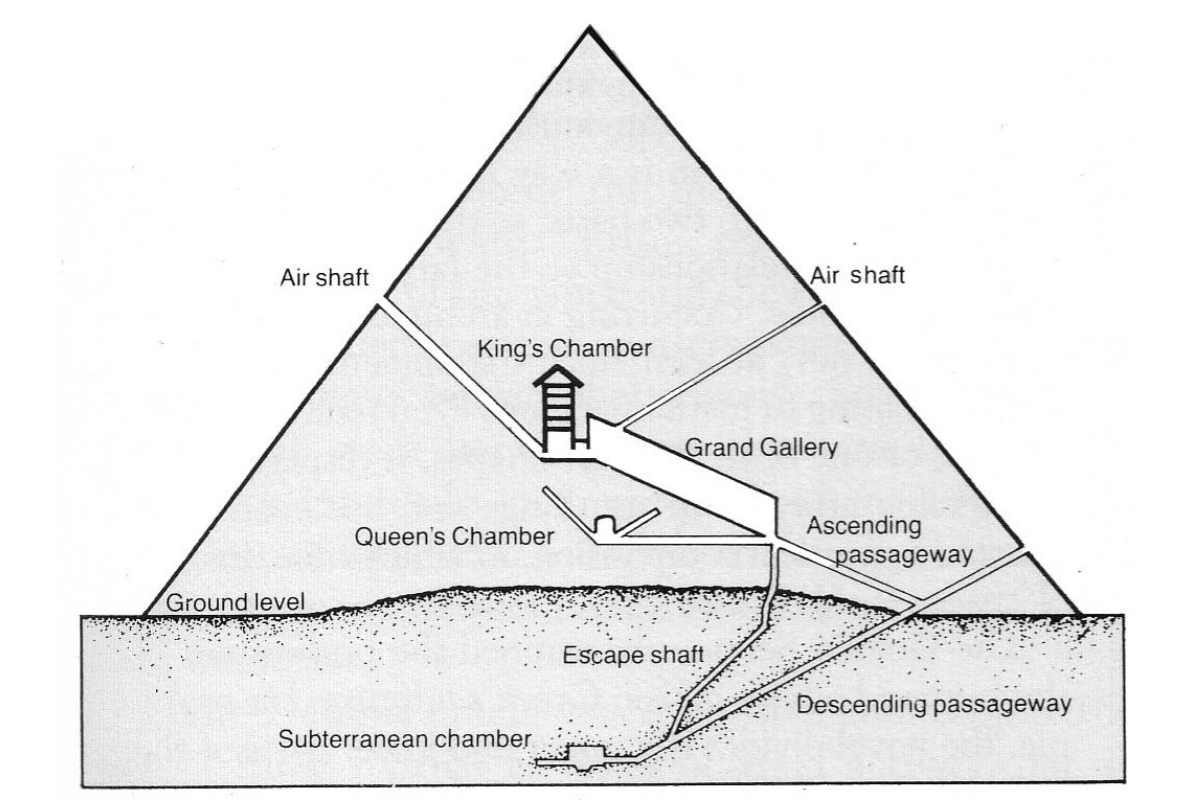
Inside, the pyramid of khufu cheops contains a network of passages, including the Grand Gallery, the King’s Chamber, the Queen’s Chamber, and mysterious narrow shafts that may have held astronomical or religious significance, possibly aligned with specific stars important to Egyptian beliefs about the afterlife. Modern scanning projects using cosmic-ray imaging have even revealed a previously unknown large void above the Grand Gallery, proving that this monument still holds secrets even after nearly two centuries of formal archaeological study.
Great Pyramid Fast Facts
| Feature | Measurement / Detail |
|---|---|
| Original height | ~481 feet (146.6 m) |
| Current height | ~455 feet (138.8 m) |
| Base area | Over 13 acres |
| Estimated blocks used | ~2.3 million |
| Heaviest granite blocks | Up to 80 tons |
| Construction period | Roughly 20 years |
| World record held | Tallest structure for 3,800+ years |
Traveler’s Tip: Book your Giza ticket with interior pyramid access separately in advance for 2026 visits, since entry into the Great Pyramid itself is limited daily and often sells out by mid-morning during high season (October through April).
Khufu’s Mummy, Sarcophagus, and the Mystery of His Death
One of the most fascinating unsolved puzzles in Egyptology involves Khufu’s final resting place. Despite building the largest tomb in ancient history, the man himself seems to have vanished from it entirely.
How did Khufu die? Historical records don’t give a clear cause of death. Ancient Egyptian sources didn’t document royal deaths the way modern history does, and no medical or forensic record has survived describing his final illness, injury, or age at death. Most Egyptologists estimate he ruled for around 23 years, based on the Turin King List, though the Greek historian Herodotus claimed a reign of 50 years, and Manetho suggested an even longer 63 years. Modern historians consider the shorter estimate far more reliable.
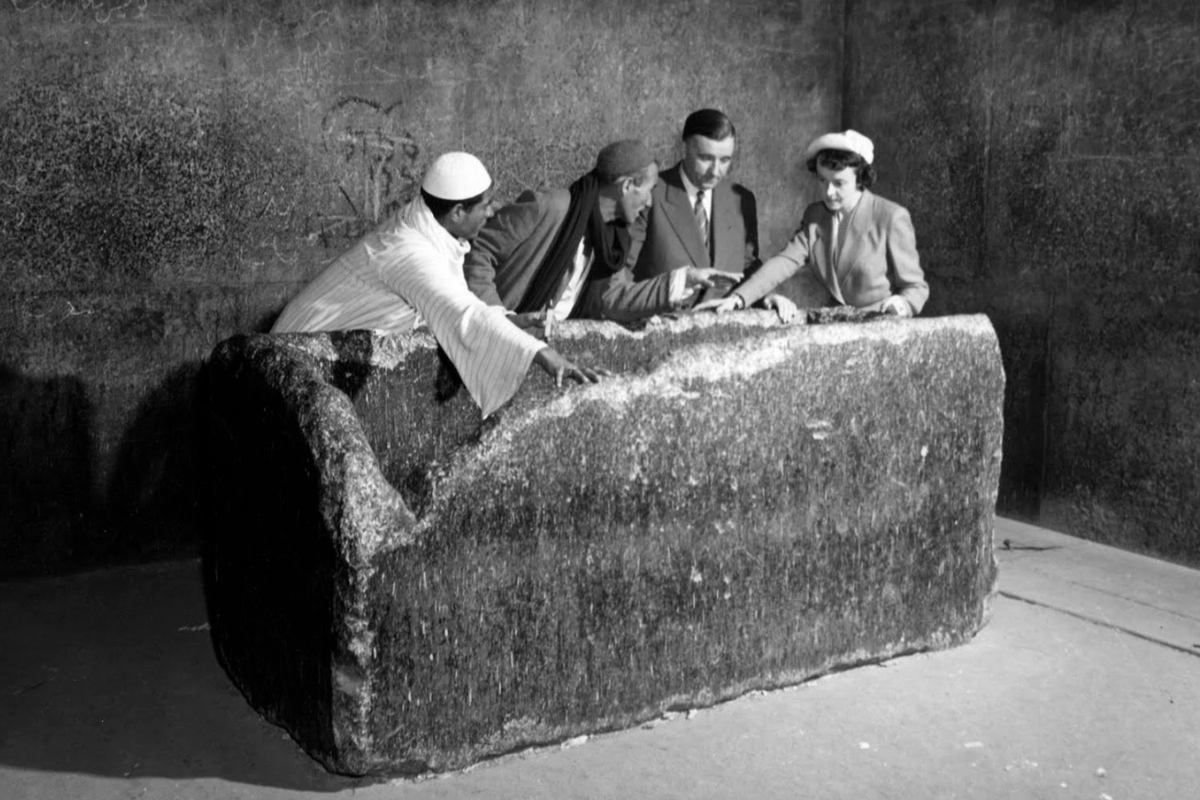
The Khufu mummy has never been found. Inside the King’s Chamber at the heart of the Great Pyramid sits an empty granite Khufu sarcophagus, one of the only original items remaining inside the monument. Interestingly, the sarcophagus is slightly too wide to fit through the chamber’s entrance, leading researchers to conclude that builders must have placed it inside the chamber during construction, before the surrounding walls and roof were completed around it. This discovery alone tells us how meticulously the Great Pyramid was planned from the very beginning.
So why is the sarcophagus empty? Like nearly all pharaonic tombs on the Giza plateau, the pyramid was likely targeted by tomb robbers in antiquity, probably not long after burial rituals were completed, since the immense wealth buried with a king would have made an irresistible target. When later explorers entered the pyramid’s chambers, they found no mummy, no treasure, and no inscriptions revealing burial details, only the empty sarcophagus and bare stone walls. This absence is part of what makes the Great Pyramid such an enduring mystery: the tomb survived almost perfectly intact structurally, yet its original purpose — housing the king’s body for eternity — was seemingly never fulfilled or was undone shortly after completion.
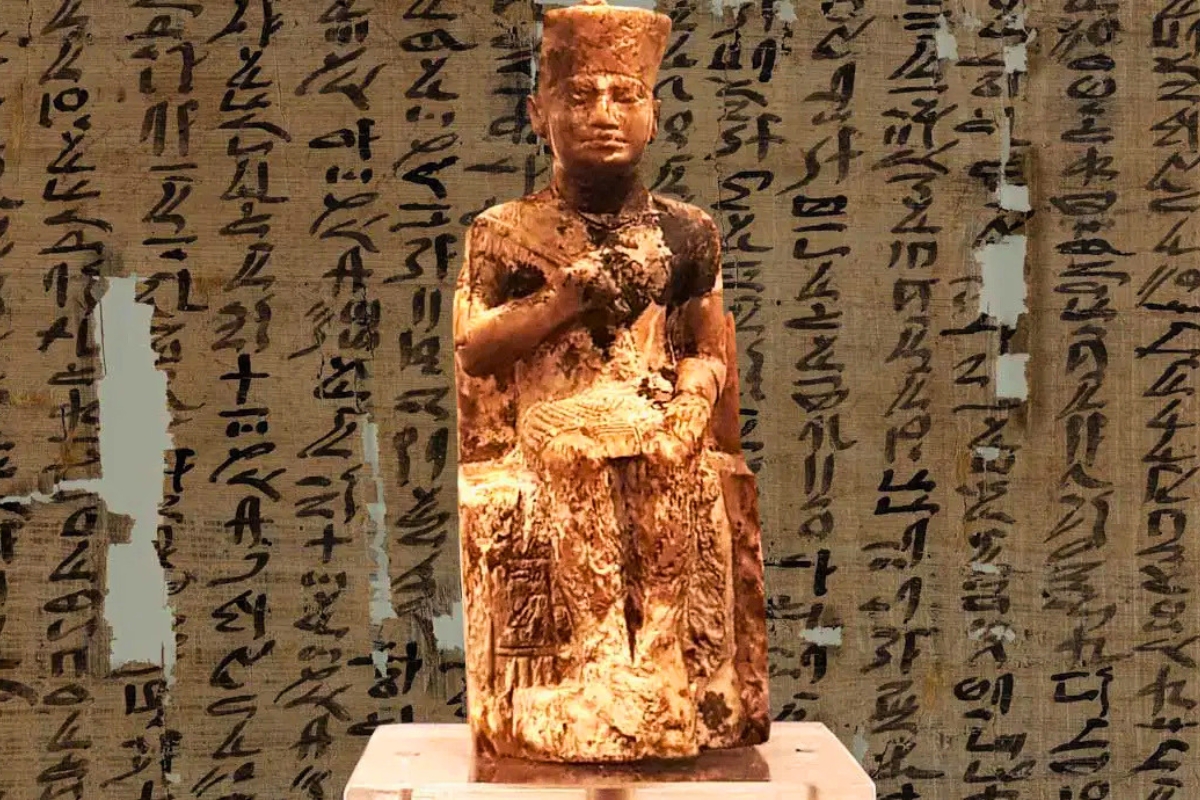
Only one confirmed image of Khufu exists today: a tiny ivory statuette just under three inches tall, discovered at Abydos and now displayed at the Grand Egyptian Museum. It remains a striking irony that the builder of the world’s largest ancient monument left behind the smallest surviving royal portrait in Egyptian history.
Mummy and Sarcophagus Facts at a Glance
| Question | Answer |
|---|---|
| Was Khufu’s mummy found? | No, it has never been discovered |
| Where is the sarcophagus? | Inside the King’s Chamber, Great Pyramid |
| Is the sarcophagus empty? | Yes |
| How did Khufu die? | Cause of death unknown; no records survive |
| Only confirmed image | A small ivory statuette, now in the Grand Egyptian Museum |
Traveler’s Tip: The tiny ivory statuette of Khufu is one of the most underrated exhibits in Cairo. Ask your guide to prioritize it during your Grand Egyptian Museum visit, as many first-time travelers walk right past this small but historically priceless piece.
King Cheops and the Magicians: Egypt’s Ancient Legend
Long before modern tourism, King Cheops had already become the star of Egyptian folklore. One of the most famous surviving stories from ancient Egyptian literature is known today as “King Cheops and the Magicians,” preserved in a document called the Westcar Papyrus, now housed in a Berlin museum.
The tale is structured as a collection of stories told to King Cheops by his own sons, each describing the magical feats performed by different sorcerers during the reigns of earlier kings. According to the narrative, Cheops becomes so entertained and intrigued by these stories that he summons a magician named Djedi to his own royal court, hoping to witness supernatural wonders firsthand. Djedi reportedly performs remarkable acts, including reattaching the severed head of an animal, and later reveals a prophecy about the future birth of three kings destined to found a new royal dynasty.
While clearly a work of fiction rather than historical record, this story matters enormously to Egyptologists, because it reveals how ancient Egyptians themselves viewed King Cheops centuries after his death. Rather than portraying him purely as the harsh tyrant later described by Greek writers like Herodotus, the Westcar Papyrus paints him as a curious, entertained, and relatively approachable ruler, eager for stories and wonder just like anyone might be today.
This contrast matters for modern travelers because it highlights just how differently the pharaoh has been remembered across cultures and centuries. Herodotus, writing around 450 BCE, roughly 2,000 years after Cheops actually lived, portrayed him as a cruel ruler who closed Egyptian temples and forced his own daughter into prostitution to help fund pyramid construction.
Modern historians widely reject these Herodotus accounts as unreliable secondhand storytelling, likely exaggerated by local guides eager to entertain a visiting Greek traveler rather than accurate historical testimony. Archaeological evidence instead paints a picture of a highly organized, well-resourced kingdom capable of housing, feeding, and paying tens of thousands of workers without draining the national economy, a level of administrative sophistication inconsistent with the “cruel tyrant” narrative.
For travelers, this legend adds a wonderful layer of storytelling to a Giza visit. Standing before the Great Pyramid isn’t just about admiring ancient engineering; it’s also about imagining a king who, according to his own people’s folklore, loved a good story just as much as we do today.
Traveler’s Tip: Ask your Egyptologist guide to share the Westcar Papyrus tale on-site at Giza. Hearing the legend of King Cheops and the magicians while physically standing in front of his pyramid creates one of the most memorable storytelling moments of any Egypt itinerary.
Was Khufu the First Pharaoh? Placing Cheops in Egyptian History
A common question among first-time travelers is whether King Cheops was Egypt’s very first ruler. He wasn’t, and understanding where he actually fits into Egyptian history makes a Giza visit far more meaningful.
Who was the very first pharaoh? Most Egyptologists credit Narmer, also historically associated with the semi-legendary king Menes, as the first pharaoh of a unified Egypt, having united Upper and Lower Egypt into a single kingdom around 3100 BCE. This event marked the beginning of Egypt’s dynastic period, roughly 500 years before Khufu was even born.
By the time Cheops came to power in the Fourth Dynasty, Egypt was already a mature, wealthy, centralized civilization with centuries of administrative experience, religious tradition, and monumental building know-how behind it, all of which made a project as ambitious as the Great Pyramid possible.
Cheops egyptian king status places him firmly in what historians call the Old Kingdom, often nicknamed the “Age of the Pyramids.” His father Sneferu had already experimented with pyramid design through the Bent Pyramid and Red Pyramid at Dahshur, working out structural problems and refining construction techniques. Cheops inherited this accumulated engineering knowledge and pushed it to its absolute limit with the Great Pyramid, a project so architecturally advanced it would not be surpassed in scale for thousands of years.
Cheops king fourth dynasty status also connects him directly to two of Egypt’s other most famous rulers: his son Khafre, who built the second Giza pyramid and is closely associated with the Great Sphinx, and his grandson Menkaure, who built the third and smallest of the three Giza pyramids. Together, these three generations created the entire Giza pyramid complex that defines Egypt’s skyline and tourism identity to this day.
Egypt’s Early Dynastic Timeline (Simplified)
| Ruler | Approximate Period | Historical Significance |
|---|---|---|
| Narmer / Menes | c. 3100 BCE | First pharaoh, unified Egypt |
| Sneferu | c. 2613–2589 BCE | Father of Khufu, pioneered pyramid design |
| Khufu (Cheops) | c. 2589–2566 BCE | Built the Great Pyramid of Giza |
| Khafre | c. 2558–2532 BCE | Built the second pyramid and likely the Sphinx |
| Menkaure | c. 2532–2503 BCE | Built the third, smallest Giza pyramid |
Traveler’s Tip: If your 2026 itinerary allows, extend beyond Giza to Saqqara, where you can see the Step Pyramid of Djoser, built even before Sneferu’s reign. This puts Khufu’s achievement in full historical context and makes for one of the richest possible pyramid-focused day trips in Egypt.
Visiting the Great Pyramid of King Cheops in 2026: A Complete Travel Guide
Now that you understand who King Cheops was, let’s talk about the part you actually came here for: planning your visit to his pyramid in 2026. Giza remains Egypt’s single most visited site, and a bit of planning goes a long way toward avoiding crowds, heat, and long ticket lines.
The best time to visit is between October and April, when daytime temperatures are far more comfortable for walking around an open desert plateau. Early morning visits, ideally right at opening time, offer the coolest temperatures, softer light for photography, and noticeably smaller crowds before tour buses arrive from Cairo hotels. Sunset visits are another excellent option in 2026, particularly for travelers hoping to see the pyramid complex bathed in golden light without the midday heat.
Entry to the Giza plateau itself is a separate ticket from entry into the interior of the Great Pyramid. Interior access is limited to a set number of visitors per day and often sells out by mid-morning, so travelers wanting to actually walk inside the pyramid khufu chambers should plan to arrive early or pre-book through a licensed tour operator. Interior visits involve climbing through narrow, low-ceilinged passages, so they aren’t ideal for visitors with claustrophobia, mobility limitations, or significant back problems, but for many travelers, standing inside the King’s Chamber beside the empty sarcophagus is one of the most unforgettable experiences of an entire Egypt trip.
Beyond the pyramid itself, most 2026 itineraries combine a Giza visit with the Great Sphinx, the Solar Boat Museum, and increasingly, a stop at the newly established Grand Egyptian Museum, which now displays thousands of artifacts, including pieces connected to Khufu and his royal family, in a purpose-built modern facility near the plateau.
2026 Giza Visit Planning Table
| Category | Recommendation |
|---|---|
| Best months to visit | October through April |
| Best time of day | Early morning or sunset |
| Interior pyramid access | Book in advance, limited daily tickets |
| Recommended duration | Half day for plateau, full day with museum |
| Combine with | Great Sphinx, Solar Boat Museum, Grand Egyptian Museum |
| Dress code | Modest, breathable clothing, comfortable closed shoes |
| Essentials to bring | Sun hat, sunscreen, water, cash for optional tips |
Traveler’s Tip: Book a private, licensed Egyptologist guide rather than relying only on informal guides at the entrance. A knowledgeable guide brings the story of King Cheops to life on-site, pointing out engineering details and historical context that self-guided visitors typically miss entirely.
Where to Stay Near King Cheops’s Pyramid: Hotels for 2026 Travelers
Choosing where to stay can dramatically shape your entire Giza experience. Many travelers specifically search for accommodations offering direct or near views of the pyramid complex, and 2026 brings an expanding range of options across every budget level.
Among smaller, traveler-favorite properties, the King Cheops Inn Hotel is frequently mentioned by budget and mid-range travelers searching for affordable stays within walking distance of the Giza plateau. Properties like this appeal to travelers who want proximity to the pyramids without the price tag of five-star pyramid-view resorts, and they’re often praised for friendly service and a genuinely local Giza neighborhood atmosphere rather than a more isolated resort feel.
For travelers wanting a more elevated experience, several internationally branded hotels near the plateau offer rooftop terraces and rooms with direct pyramid views, ideal for sunrise or sunset photography without even leaving your hotel. These properties tend to book up quickly during Egypt’s high season (October through April), so early reservations are strongly recommended for 2026 travel dates, particularly around major holiday periods.
When comparing hotel options near Giza, it helps to think in terms of three categories: proximity-focused budget stays, mid-range hotels balancing comfort and value, and luxury pyramid-view resorts. Each category serves a different kind of traveler, and choosing correctly can make the difference between a rushed pyramid visit and a leisurely, unforgettable experience with the monument practically outside your window.
Giza Hotel Categories for 2026
| Category | Best For | What to Expect |
|---|---|---|
| Budget stays (e.g., King Cheops Inn Hotel) | Backpackers, value travelers | Affordable rates, walkable to Giza plateau |
| Mid-range hotels | Couples, families | Comfortable rooms, some with partial pyramid views |
| Luxury resorts | Special occasions, honeymoons | Rooftop pyramid views, full-service amenities |
Traveler’s Tip: If a pyramid view matters to you, always confirm the specific room and floor before booking, since not every room in a “pyramid view hotel” actually faces the monument directly. Booking through an experienced Egypt travel agency helps ensure you get exactly the room and view you’re paying for.

Top Insider Tips for Visiting King Cheops’s Pyramid in 2026
Even well-traveled visitors often make avoidable mistakes at Giza. These insider tips are designed to help you get the most out of your 2026 visit to the great pyramid of Cheops Khufu, based on what genuinely improves the experience versus what simply looks good in a travel brochure.
- First, always separate your expectations of the plateau from popular culture. The pyramids sit closer to Cairo’s urban edge than many travelers expect, with the city visible from certain angles. This doesn’t diminish the experience, but knowing it in advance prevents disappointment for travelers expecting total desert isolation.
- Second, negotiate camel and horse rides firmly and in advance if you choose to include them, and always agree on a total price before mounting the animal, not per photo or per minute, which is a common source of tourist frustration in the area.
- Third, bring small denominations of Egyptian currency for optional tips to guides, security staff who may offer extra photo assistance, and restroom facilities, as this smooths out nearly every small interaction throughout your visit.
- Fourth, if visiting during summer months, hydration and sun protection aren’t optional extras, they’re essential, since the plateau offers very little natural shade and midday temperatures can climb well above 95°F (35°C).
- Finally, consider booking your Giza excursion as part of a broader, professionally organized Egypt itinerary rather than a single standalone day trip. Pairing your King Cheops pyramid visit with Cairo’s Egyptian Museum, a Nile dinner cruise, or an extended trip to Luxor and Aswan gives essential historical context that makes the pyramid itself feel even more significant once you understand the civilization that built it.
2026 Insider Tips Summary
| Tip | Why It Matters |
|---|---|
| Book interior pyramid tickets early | Daily entry is limited and sells out fast |
| Visit at opening time or sunset | Cooler temperatures, better light, fewer crowds |
| Agree on prices before camel/horse rides | Avoids common tourist overcharging |
| Carry small cash denominations | Smooths tipping and minor purchases |
| Pair Giza with a full Egypt itinerary | Adds historical depth and better trip value |
Traveler’s Tip: Combine your Giza day with a private guided tour rather than a large group bus tour. Smaller groups allow more flexibility for photography, unhurried exploration, and richer storytelling from your Egyptologist guide.
Frequently Asked Questions About King Cheops
Are Khufu and Cheops the same person?
Yes. Khufu is the original Egyptian name, and Cheops is the Greek version of the same name, used interchangeably in historical and travel literature.
What was King Khufu famous for?
He is most famous for commissioning and building the Great Pyramid of Giza, the largest pyramid ever constructed and the last surviving Wonder of the Ancient World.
Was Khufu Hellenized as Cheops?
Yes, when Greek historians and travelers visited Egypt centuries after his reign, they adapted his Egyptian name into the Greek form “Cheops,” which became the widely used Western name for him.
Who is the pharaoh Cheops?
Cheops was the second pharaoh of Egypt’s Fourth Dynasty during the Old Kingdom, best known as the builder of the Great Pyramid at Giza.
What is the Egyptian name for Cheops?
His original Egyptian name was Khnum-Khufu, meaning “Khnum protects me,” honoring the ram-headed god associated with creation and the Nile.
What pharaoh had 200 kids?
No pharaoh is reliably documented with 200 children. This is a popular exaggeration usually associated with Ramesses II, who historians credit with around 100 children, still an extraordinary number, but not 200. Khufu himself had a smaller royal family of roughly 24 children.
Is Cheops the biggest pyramid?
Yes, the pyramid built by Cheops is the largest pyramid in Egypt and the largest in the world by volume, larger than the pyramids of both his son Khafre and grandson Menkaure at Giza.
Who was the very first pharaoh?
Most historians credit Narmer, sometimes linked to the semi-legendary Menes, as the first pharaoh to unify Upper and Lower Egypt around 3100 BCE, roughly 500 years before Khufu’s reign.
How did Khufu die?
His exact cause of death is unknown, as no surviving records document his final illness or age at death.
Where is Khufu’s mummy today?
It has never been found. The sarcophagus inside the Great Pyramid’s King’s Chamber was discovered empty.

Plan Your 2026 Trip to King Cheops’s Pyramid with Egypt All Inclusive
Reading about King Cheops is one thing, but standing before his 4,500-year-old pyramid is something no article, documentary, or photograph can fully capture. As the best travel agency in Egypt in 2026, Egypt All Inclusive specializes in turning that experience into a seamless, unforgettable journey, from the moment you land in Cairo to the moment you watch the sun set behind the Great Pyramid of Giza.
Our expert Egyptologist guides bring King Cheops’s story to life on-site, blending verified historical facts with the legendary tales, like the Westcar Papyrus story of King Cheops and the magicians, that make ancient Egypt so endlessly fascinating. We handle every detail: skip-the-line tickets, private transportation, hand-picked hotels near the pyramids, and fully customized itineraries that pair Giza with the Grand Egyptian Museum, Saqqara, Luxor, Aswan, or a relaxing Nile cruise, depending on how deep you want your journey into ancient Egyptian history to go.
Whether you’re a first-time visitor curious whether Khufu and Cheops are the same person, or a seasoned traveler chasing the perfect sunrise photo of the Great Pyramid, Egypt All Inclusive designs your 2026 trip around what matters most to you. Don’t just read about King Cheops’s legacy, walk in the shadow of it yourself. Book your 2026 Egypt tour with Egypt All Inclusive today and let our team turn this ancient story into your next unforgettable travel memory.