Blue Hole Egypt Dahab is the one name every diver, snorkeler, and curious traveler hears before they even land in the country, and for good reason. Tucked into the coastline of the Sinai Peninsula, this natural sinkhole is equal parts beauty and legend, drawing thousands of visitors every year who want to see its sapphire water for themselves.
In four lines, here is everything this guide covers: what the Blue Hole actually is and why it looks the way it does, exactly where to find it near Dahab and how to get there in 2026, the truth about the famous Arch and the safety questions people search for most, and finally the practical tips, dive options, and booking advice that will help you plan a trip you will talk about for years.
Whether you are a certified diver chasing a bucket-list dive site or a traveler who simply wants to sit by the water with a coffee and watch the color change, this guide answers every question you might have before you go.
Egypt’s coastline holds dozens of postcard-worthy diving spots, but none carry the mystique of this one. It is mentioned in dive forums, travel documentaries, and bucket lists across the world, and in 2026 it remains one of the most searched diving destinations in the Middle East. This article was written the way a well-traveled friend would explain it to you over coffee — honestly, thoroughly, and with your safety and enjoyment as the top priority. Let’s get into it.
What Is the Blue Hole in Dahab, Egypt?
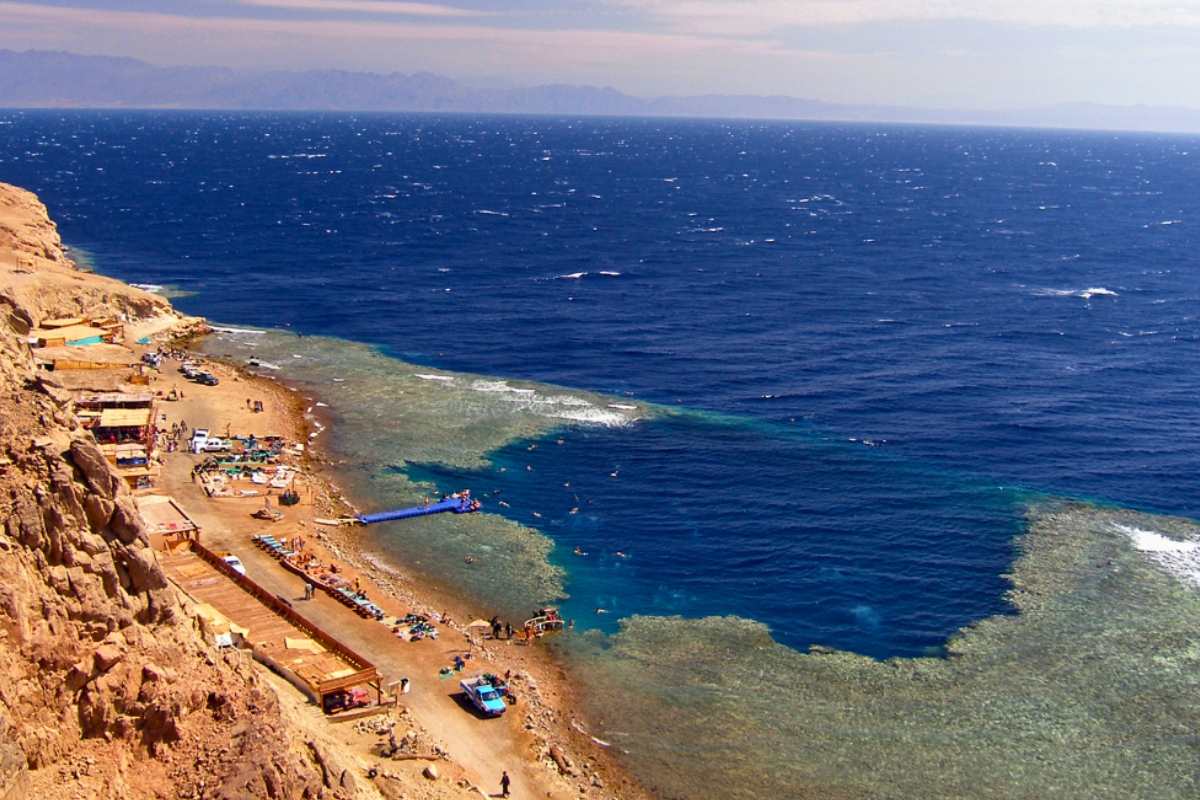
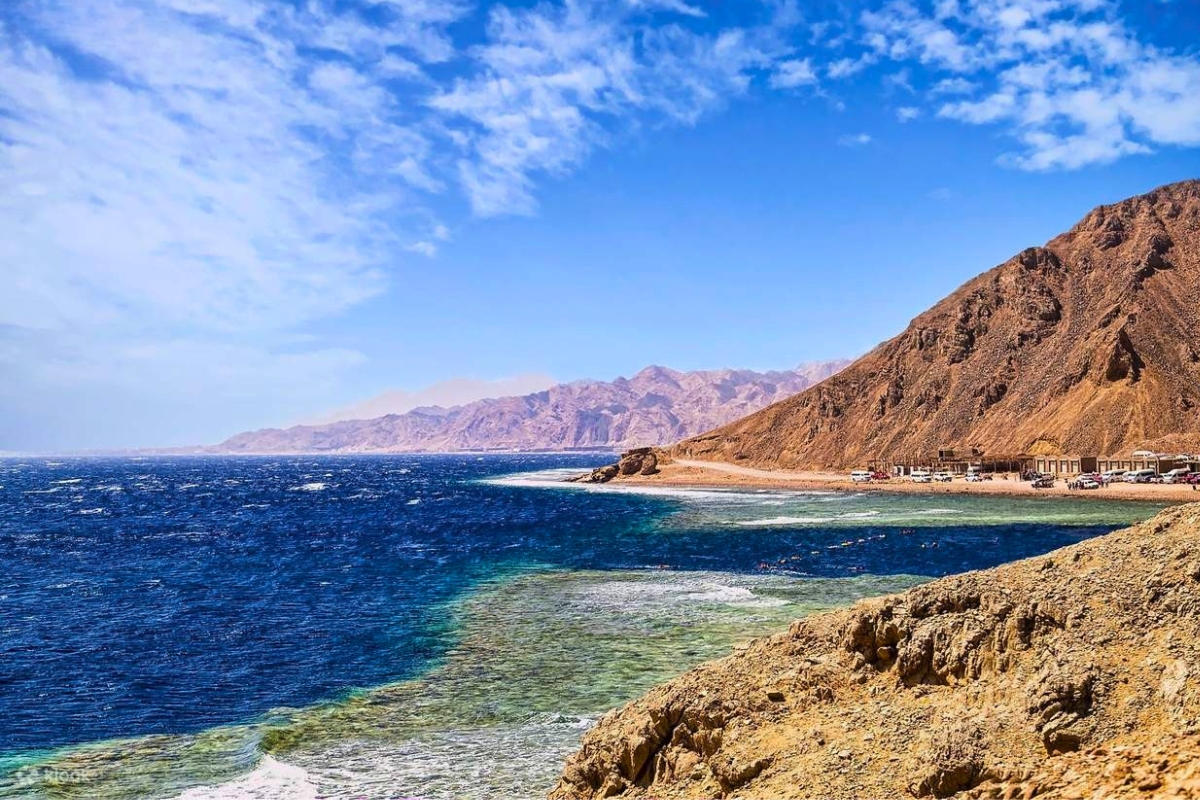
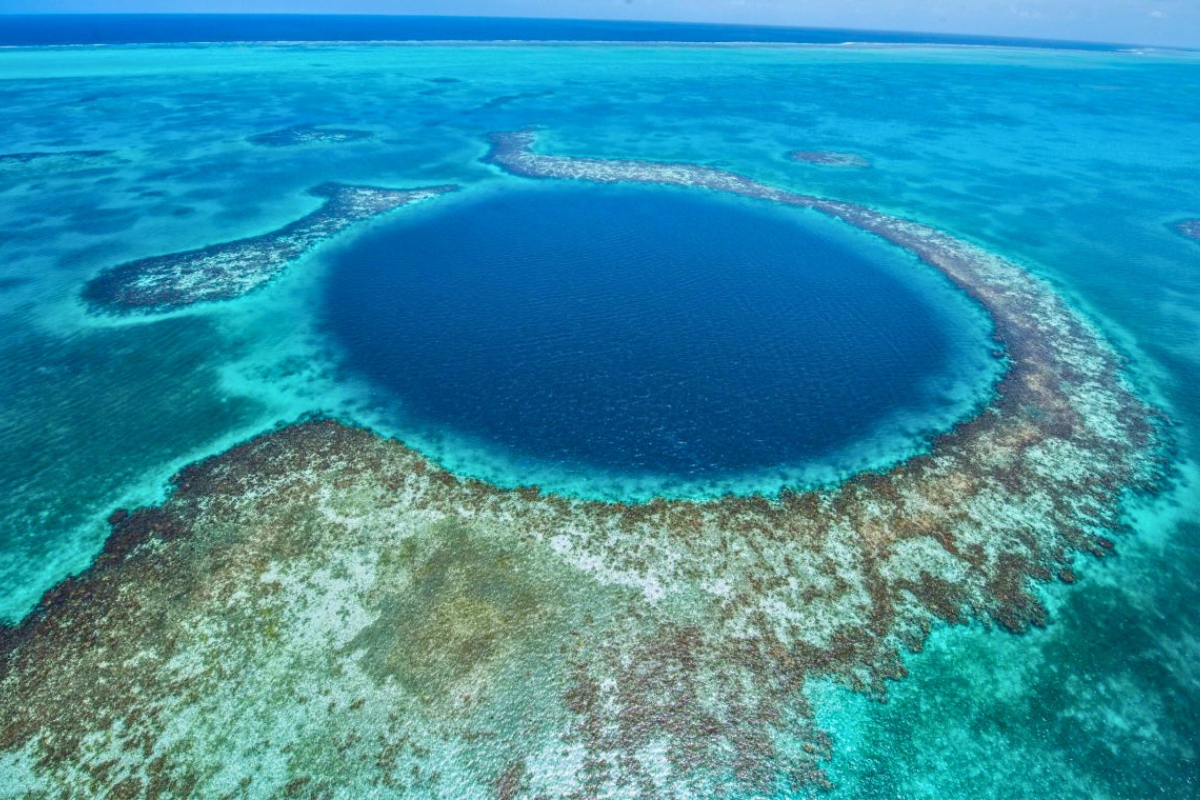
The Blue Hole in Dahab, Egypt is a submarine sinkhole carved into the fringing reef of the Red Sea, roughly a hundred meters deep and about twenty-five meters wide at its opening. From above the surface, it looks like a perfect circle of deep, almost impossible blue water surrounded by a ring of coral and pale desert mountains.
That striking contrast between the blue water, the golden sand, and the jagged Sinai peaks is exactly why photographers, honeymooners, and casual travelers show up at the site even if they never plan to put on a mask and fins.
Geologically, the blue hole Egypt site formed thousands of years ago when a section of limestone reef collapsed inward, leaving behind a vertical shaft that drops far below what daylight can reach. Because the opening connects to a shallow lagoon before falling away into the depths, the water inside behaves differently than the open sea around it.
There is less wave action, the visibility is often excellent, and the water takes on that unmistakable deep sapphire shade that gave the site its name. On a clear day, the color shifts from turquoise at the shallow saddle to a deep, almost black-blue near the center, and that gradient is part of what makes it so hypnotic to look at, let alone dive into.
What makes the blue hole in Dahab Egypt different from other sinkholes around the world is its accessibility. Many underwater sinkholes require a boat, a permit, or a long hike to reach. Here, you can walk straight off the beach and be floating over the hole within minutes.
This shore-entry convenience is part of why it has become such a magnet for both recreational snorkelers and serious technical divers, and why dive schools across Dahab built their entire reputation around this one address on the map.
The surrounding area has grown into a small hub of cafés, dive shops, and Bedouin-style lounges with cushions facing the water, so even non-divers get a full day out of the visit. Many travelers spend the morning snorkeling the shallow lagoon, break for a fresh juice or a plate of grilled fish at a beachside café, and then simply relax and watch the divers below.
It is one of the rare places in Egypt where adrenaline-seekers and people who just want a quiet afternoon by the sea end up sharing the exact same view, each enjoying it in their own way.
For travelers researching Egypt’s Blue Hole, Dahab and Sinai Egypt as a single trip, this site is usually paired with other South Sinai stops like the Canyon, the Blue Lagoon in Nuweiba, and the mountains around Mount Sinai and St. Catherine.
Booking it as part of a wider South Sinai itinerary, rather than a rushed day trip, is how most experienced travelers get the most out of the region — and it is exactly how our team structures the packages we put together for guests heading to this coast in 2026.
Where Is the Blue Hole Located Near Dahab, Egypt?
If you are typing blue hole near Dahab Egypt into a search bar, here is the short answer: it sits about ten kilometers north of Dahab’s town center, along the coastal road that hugs the Gulf of Aqaba. The drive takes roughly fifteen to twenty minutes by taxi or private transfer, making it an easy half-day or full-day trip from anywhere in Dahab, and a very manageable excursion from Sharm El Sheikh as well.
Understanding the geography helps explain why this spot became so famous. Dahab itself sits on the eastern edge of the Sinai Peninsula, facing Saudi Arabia across the narrow Gulf of Aqaba.
The town built its identity around diving and windsurfing long before it became a mainstream destination, and the Blue Hole Dahab Egypt site was the anchor point that put it on the international diving map decades ago. It sits between Dahab and the protected coastline of Ras Abu Galum, an area known for its untouched reefs and Bedouin fishing villages.
Here is a quick reference table for travelers planning their route in 2026:
| Starting Point | Distance to Blue Hole | Approximate Travel Time |
|---|---|---|
| Dahab town center | ~10 km | 15–20 minutes by car |
| Sharm El Sheikh Airport | ~110 km | 1.5–2 hours by car |
| Nuweiba | ~65 km | 1–1.5 hours by car |
| Cairo (via Sharm El Sheikh) | ~500 km | Flight + transfer, ~3–4 hours total |
Most travelers arrive through Sharm El Sheikh International Airport, since it is the closest major airport with regular international connections. From there, our team arranges private, air-conditioned transfers directly to Dahab, so you are not left negotiating taxis or navigating unfamiliar roads after a long flight. Some travelers also choose to base themselves in Sharm and book the Blue Hole as a full-day excursion, which includes hotel pickup, the drive north along the coast, and a return in the late afternoon.
The road itself is part of the experience. It follows the coastline closely, with the mountains of Sinai on one side and the Red Sea on the other, and drivers often slow down at scenic points so passengers can take photos. By the time you reach the site, you will already understand why so many people describe the Blue Hole in Dahab, Egypt as one of the most dramatic diving locations on the planet, long before they even get in the water.
One practical note for 2026 travelers: entry to the site typically involves a small local fee that supports the surrounding Bedouin community and site maintenance, and it is worth having small Egyptian pound notes on hand. Booking through an organized tour avoids any confusion around this, since transport, entry, and guiding are handled as a single, transparent package rather than a series of separate cash transactions at the gate.
The Legendary Blue Hole Arch – Egypt’s Most Famous Dive
No conversation about this destination is complete without addressing the Blue Hole Egypt Arch, arguably the single most talked-about underwater feature in the entire Red Sea. The Arch is a natural tunnel carved through the reef wall, roughly twenty-six meters long, connecting the inside of the Blue Hole to the open sea at a depth of around fifty-six meters. Divers who pass through it emerge on the outer wall of the reef, facing open blue water instead of the enclosed sinkhole they started in.
The blue hole Dahab arch has earned a reputation as both a rite of passage and a serious technical challenge. It sits well beyond recreational diving depth limits, which means it is reserved strictly for divers with advanced technical training, appropriate certifications, and, ideally, local guides who know the site intimately. This is not a swim-through for casual snorkelers or newly certified divers, and any responsible dive operator will tell you exactly that during your briefing.
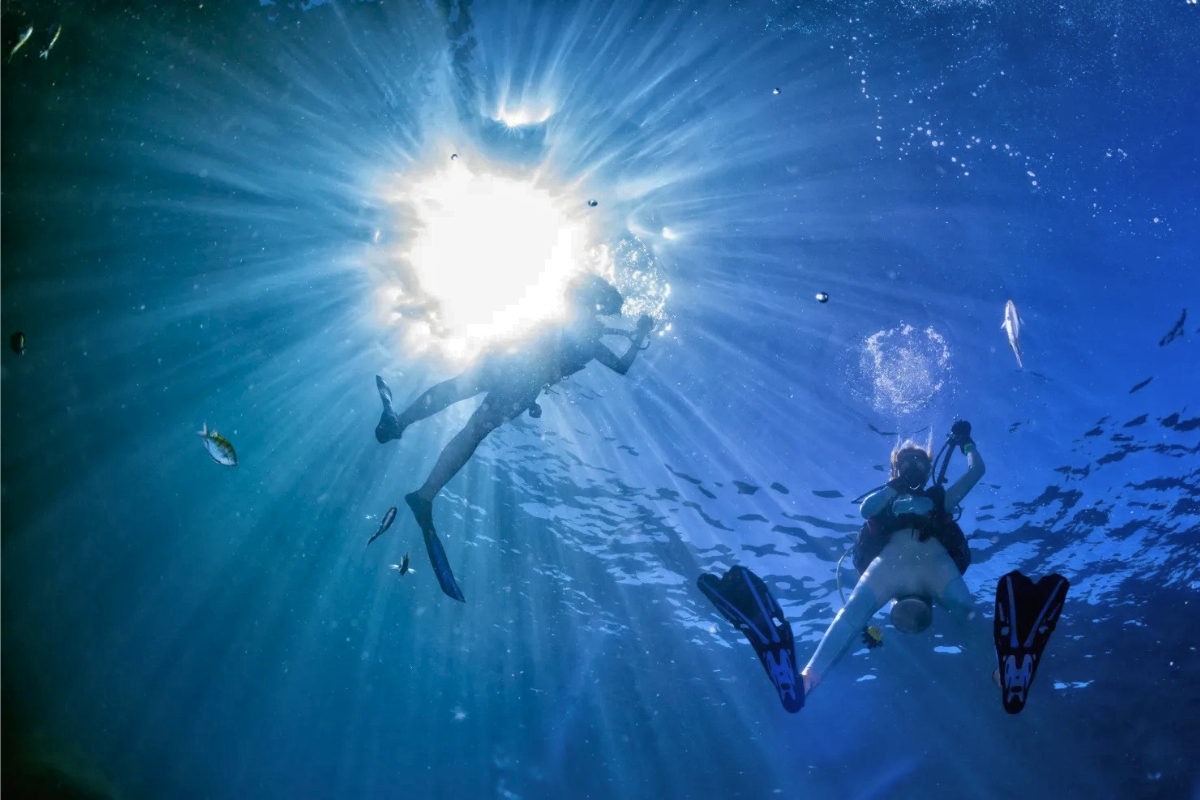
What makes the Arch so mesmerizing, even to people who will never attempt it, is the way light behaves at that depth. Sunlight filters down in narrow beams, the coral takes on deeper blues and purples, and the tunnel itself creates a genuine sense of exploring somewhere few people ever see. Underwater photographers travel from around the world specifically to capture images of divers silhouetted against the tunnel’s opening, and those images are part of what made this site internationally famous long before social media existed.
For travelers who are not technical divers but still want to experience the Arch’s reputation up close, many dive centers offer guided dives along the outer wall and the saddle area, where you can see the entrance from a safe, recreational depth without attempting the tunnel itself. This is a popular option for advanced open water divers who want the thrill of being at the famous blue hole dahab arch location without exceeding their training or certification limits.
Here is a simple breakdown of how different experience levels typically engage with the Arch and the wider site:
| Diver Level | Recommended Activity | Approximate Depth |
|---|---|---|
| Snorkeler / beginner | Shallow lagoon and saddle area | 0–7 m |
| Open Water certified | Reef wall dive, Bells entry point | Up to 18 m |
| Advanced Open Water | Outer wall, deeper reef sections | Up to 30–40 m |
| Technical / Advanced Trimix diver | The Arch tunnel dive | 50–56 m entry |
If diving the Arch is on your personal bucket list, the honest advice from experienced operators is simple: get properly certified for the depth involved, dive with a guide who knows the site, and never attempt it alone or underprepared. The Arch has earned its fame precisely because it rewards preparation and punishes shortcuts, and every reputable Dahab dive center will structure your experience around that principle first.
Blue Hole Dive Options for Every Traveler in 2026
One of the most common misconceptions about this destination is that it is only for extreme divers. In reality, the blue hole dive experience is available at almost every skill level, and 2026’s dive centers in Dahab have built out options specifically to welcome first-timers, families, and casual snorkelers alongside seasoned professionals.
If you have never dived before, most operators offer an introductory or “discover scuba” experience directly in the shallow lagoon area, guided one-on-one by an instructor. This lets you breathe underwater, get comfortable with the equipment, and see coral and fish up close without needing a certification. For many travelers, this ends up being the highlight of their entire Egypt trip, simply because the visibility and marine life at this specific site are so much richer than what most people expect from a first dive.
Certified divers have a wider menu of choices. The classic route enters from a nearby point on the reef known as the Bells, where a narrow crack in the coral lets divers descend and then drift south along the wall until they reach the saddle and enter the Blue Hole itself. This drift dive is considered one of the most scenic in the Red Sea, passing dramatic coral formations, schools of anthias, and the occasional passing turtle or reef shark, depending on the season.
Freedivers have their own dedicated culture here as well. Dahab has become one of the world’s premier freediving training hubs, with multiple schools offering courses ranging from beginner breath-hold techniques to competitive depth training, all centered around the fixed descent lines at this exact location. Watching freedivers glide down without tanks, in complete silence, is genuinely one of the more meditative experiences a spectator can witness anywhere in Egypt.
For travelers who prefer to stay on the surface, snorkeling packages are widely available and just as popular as diving ones. The shallow lagoon area offers excellent visibility, colorful coral gardens, and enough marine life to keep a snorkeling session interesting for hours, all without needing any certification or specialized training.
Here is a quick comparison to help you choose the right experience for your 2026 trip:
| Experience Type | Certification Needed | Best For |
|---|---|---|
| Snorkeling | None | Families, first-time visitors, casual travelers |
| Discover Scuba (intro dive) | None | Curious beginners wanting a taste of diving |
| Open Water dive package | Open Water certification | Certified divers wanting reef and wall dives |
| Freediving course | None to start | Travelers interested in breath-hold diving |
| Technical Arch dive | Advanced technical certification | Experienced technical divers only |
Whichever option fits you best, booking through an organized travel package ensures your transport, entry, equipment, and guide are all arranged before you arrive, so you spend your time in the water instead of sorting out logistics on-site.
Safety at the Blue Hole: Understanding the Risks Honestly
Anyone researching this destination will eventually come across searches related to Blue Hole Dahab Egypt death, and it deserves a direct, honest answer rather than being avoided. Over the decades, the site has recorded a number of diving fatalities, and it has been referenced in diving safety discussions and documentaries because of this history.
The vast majority of these incidents share a common thread: divers attempting the Arch or exceeding recreational depth limits without the proper technical certification, equipment, or local guidance.
It is important to separate the two very different experiences that exist at this single location. The shallow lagoon, the saddle, and the recreational reef wall dives that most visitors enjoy are statistically no more dangerous than any other well-managed Red Sea dive site, and thousands of divers and snorkelers enjoy them safely every single year, including throughout 2026.
The risk profile changes dramatically only when divers push toward the deep Arch tunnel without the training or preparation that depth requires. This is a site that punishes overconfidence, not casual enjoyment.
Responsible operators address this directly during every briefing. Divers are matched to activities appropriate for their certification level, dive plans are reviewed before entry, and guides are chosen specifically for their local experience with the site’s currents, depth changes, and entry points. This is not a location where a good operator lets guests “figure it out” independently, and it should never be treated as one by travelers either.
Practical safety guidance for anyone visiting in 2026 includes diving or snorkeling only with a licensed local guide, never diving beyond your certification level regardless of how experienced you feel, checking your equipment thoroughly before entry, and respecting the site’s currents, which can shift depending on season and time of day.
If you are a certified diver hoping to eventually attempt the Arch, work toward it gradually through proper technical training rather than treating it as a spontaneous decision on vacation.
The honest takeaway is this: the Blue Hole Dahab and Sinai Egypt region is one of the most rewarding diving destinations in the world when approached with respect and preparation, and one of the more dangerous ones when it is not. Choosing a travel partner who prioritizes licensed guides, proper briefings, and activities matched to your actual skill level is the single biggest factor in making sure your visit is remembered for its beauty rather than anything else.
Best Time to Visit and What to Pack for Your 2026 Trip
The Red Sea’s climate makes this a genuinely year-round destination, but certain months offer noticeably better conditions for diving and snorkeling. Between March and May, water temperatures sit comfortably in the mid-twenties Celsius, visibility is excellent, and the desert heat on land is still manageable for walking around the site and nearby cafés. September through November offers a similar sweet spot, with warm water, fewer crowds than peak summer, and pleasantly cooler evenings in Dahab town.
Summer months, particularly July and August, bring intense desert heat that can make the midday hours uncomfortable on land, even though the water itself remains warm and inviting.
Winter, from December through February, cools the water to the low twenties, which is still swimmable but calls for a proper wetsuit, especially for longer dives or freediving sessions. Many serious divers actually prefer winter for the calmer conditions and clearer long-range visibility, so it comes down to personal preference for comfort versus underwater clarity.
Packing correctly makes a real difference to how much you enjoy your day. A well-fitted wetsuit is essential outside the peak summer months, and even in summer, a thin shorty wetsuit protects against sun and coral contact during snorkeling. Reef-safe sunscreen is strongly recommended, both to protect your skin during the long, bright desert day and to protect the coral itself, which is sensitive to the chemicals found in standard sunscreens. A wide-brimmed hat, sunglasses with a strap, and plenty of drinking water round out the essentials, since the site itself has limited shaded shelter beyond the beachside cafés.
If you are diving, bring your certification card and logbook, even if you plan to rent equipment locally, since operators will want to verify your level before assigning you a dive plan. A dry bag is genuinely useful here, protecting phones, wallets, and clothing from sand and splashes while you are in and out of the water throughout the day. For underwater photography enthusiasts, a GoPro or housed camera captures the site’s famous color gradient beautifully, particularly during the softer light of early morning.
Morning visits are worth prioritizing whenever your schedule allows. Arriving early avoids the midday heat, catches calmer water before the wind picks up in the afternoon, and gives you the best light for photography, both above and below the surface. Combining an early Blue Hole session with a relaxed lunch at one of the beachside cafés, followed by an afternoon exploring Dahab town, is one of the most satisfying single-day itineraries anywhere in South Sinai.
Insider Tips That Make Your Trip Genuinely Unforgettable
After years of organizing trips along this coastline, a few pieces of advice consistently separate a good visit from a forgettable one. First, resist the urge to treat this as a quick photo stop. Travelers who budget a half-day or full day, rather than a rushed hour, consistently report a far richer experience, since the light, the crowd levels, and even the water color shift noticeably throughout the day.
Second, talk to your guide before you get in the water, not just during the standard safety briefing. Local Bedouin guides and long-time Dahab instructors often know exactly where the best coral, the calmest current, or the most interesting marine life is on any given day, information that never makes it into a generic guidebook.
Third, pair your visit with a stop at one of the cushion-seated beachside cafés overlooking the water. It is a small addition to your itinerary, but sitting with a mint tea while watching divers surface from the Arch is an experience many travelers remember as fondly as the dive itself.
Finally, book your transport and entry in advance rather than arranging everything on arrival. Prices, availability, and guide quality all vary significantly between operators, and organizing your visit ahead of time through a trusted travel partner means you spend your energy enjoying the site rather than negotiating logistics under the midday sun.
Book Your Blue Hole Adventure with Egypt All Inclusive
Few places in the world combine natural wonder and genuine adventure the way the Blue Hole in Dahab, Egypt does, and there is no better time to experience it than in 2026. From the shallow lagoon perfect for first-time snorkelers to the legendary Arch that has captivated technical divers for decades, this single stretch of Red Sea coastline offers something meaningful for every kind of traveler, as long as it is approached with the right guidance, preparation, and respect.
That is exactly what we offer at Egypt All Inclusive, widely recognized as the best travel agency in Egypt in 2026 for organizing South Sinai and Red Sea experiences. Our team arranges everything from your airport transfer and Dahab accommodation to licensed diving and snorkeling guides matched precisely to your skill level, so every part of your trip is handled by people who know this coastline intimately.
We work only with vetted, safety-first dive operators, and we build every itinerary around what actually makes a trip memorable, not just what looks good on a brochure.
If you have been dreaming about standing on that beach, looking down into the deep sapphire water, and finally seeing the Blue Hole for yourself, now is the moment to make it happen. Reach out to Egypt All Inclusive today, tell us your travel dates and experience level, and let us build your perfect Dahab itinerary from start to finish. Your Blue Hole adventure is one booking away — start planning your 2026 trip with us now.