How long did the New Kingdom of Egypt last? The New Kingdom of Egypt lasted for roughly 480 years, from around 1550 BCE to 1070 BCE, spanning Dynasties 18, 19, and 20. In this guide, you will learn the exact timeline, the pharaohs who built this golden age, the map of its empire, and the temples you can still visit in 2026. By the end, you will understand exactly why this era is considered the peak of ancient Egyptian civilization.
If you have ever stood in front of a photo of Karnak Temple, the Valley of the Kings, or the colossal statues of Ramesses II and wondered exactly when these wonders were built, you are not alone. The New Kingdom of Egypt is the single most famous period in Egyptian history, yet most travelers and history lovers only know fragments of the story. They know the name Tutankhamun.
They know Ramesses II. They may have heard of Hatshepsut, the female pharaoh. But very few people can answer the simple question that brought you here today: how long did the New Kingdom of Egypt actually last, and what made it so different from the Old Kingdom and Middle Kingdom that came before it?
This article was written for travelers planning a trip to Egypt in 2026, students researching ancient Egyptian history, and anyone who simply loves a great story about power, gold, war, and religion.
We will walk through the exact dates of the New Kingdom of Egypt, the map of its territory at its largest extent, the pharaohs who ruled it, the art and architecture it left behind, and the reasons it eventually collapsed. Along the way, we will also show you where you can see the real monuments of this era with your own eyes, because reading about the New Kingdom of Egypt is one thing, but standing inside Karnak Temple at sunrise is something else entirely.
Whether you searched for “new kingdom egypt timeline,” “new kingdom egypt map,” “new kingdom egypt pharaohs,” or simply “how long did the new kingdom of egypt last,” this guide answers every version of that question in one place, with clear tables, verified dates, and practical travel tips for 2026.
Table of Contents
- What Was the New Kingdom of Egypt?
- When Did the New Kingdom of Egypt Start and End?
- How Long Did the New Kingdom of Egypt Last? (The Direct Answer)
- Old Kingdom vs. Middle Kingdom vs. New Kingdom of Egypt
- Map of the New Kingdom of Egypt
- The Capital of Egypt During the New Kingdom
- How Did Egypt Grow Strong During the New Kingdom?
- New Kingdom Egypt Pharaohs You Should Know
- Religion in New Kingdom Egypt
- New Kingdom Egypt Art, Architecture, and Sculpture
- New Kingdom Egypt Government and Economy
- New Kingdom Egypt Culture, Clothing, and Daily Life
- New Kingdom Egypt Achievements and Facts
- What Was Distinctive About the New Kingdom of Egypt?
- Old Kingdom vs. New Kingdom Egypt: Key Differences
- The Decline and End of the New Kingdom of Egypt
- Fun Facts About the New Kingdom of Egypt
- Where to See New Kingdom Egypt in 2026: A Traveler’s Guide
- Frequently Asked Questions
- Conclusion
1. What Was the New Kingdom of Egypt?
The New Kingdom of Egypt was the third and final major golden age of ancient Egyptian civilization, following the Old Kingdom and the Middle Kingdom. It is widely regarded by historians and archaeologists as the peak period of ancient Egyptian power, wealth, and international influence. When people ask “what is the New Kingdom of Egypt,” the simplest answer is this: it was the era when Egypt transformed from an inward-looking river kingdom into a true empire, with armies stretching into modern-day Syria, Lebanon, Israel, and deep into Nubia in the south.
This period covered the 18th, 19th, and 20th Dynasties of Egyptian rulers. It began after Egyptian forces expelled the Hyksos, a foreign dynasty that had taken control of parts of northern Egypt during the preceding Second Intermediate Period. That victory did not just restore Egyptian rule. It changed the national mindset. Egypt’s rulers realized that to protect their homeland, they needed a permanent, professional army and control over the trade routes and buffer states beyond their borders. This single shift is the root cause of everything that defines the New Kingdom of Egypt: the military campaigns, the flood of gold and tribute, the massive temple-building projects, and the emergence of pharaohs as god-kings commanding an empire rather than simply a kingdom along the Nile.
The New Kingdom of Egypt is often called Egypt’s imperial age for exactly this reason. Previous periods of ancient Egyptian history were largely defensive and self-contained. The New Kingdom of Egypt was expansionist, wealthy, and cosmopolitan. Foreign princes were raised at the Egyptian court as diplomatic hostages and allies. Egyptian and Hittite royal families exchanged letters and eventually a peace treaty, one of the oldest surviving international peace agreements in human history. Nubian gold mines financed some of the most extraordinary building projects the ancient world had ever seen.
This is also the era that produced the pharaohs most people recognize today. Hatshepsut, one of history’s most successful female rulers, expanded trade networks reaching as far as the Land of Punt. Thutmose III, sometimes called the “Napoleon of Egypt,” led seventeen military campaigns and built the largest empire ancient Egypt ever controlled. Akhenaten attempted a religious revolution, briefly replacing Egypt’s traditional pantheon with worship of a single sun disk called the Aten. His son, Tutankhamun, restored the old religion and later became world famous simply because his tomb was found nearly intact in 1922. And Ramesses II, known as Ramesses the Great, ruled for 66 years, fought the famous Battle of Kadesh, and built more monuments than any pharaoh in Egyptian history.
Understanding what the New Kingdom of Egypt was is the first step to understanding why it still fascinates millions of visitors every year. It was not just a period of ancient Egyptian history. It was the moment ancient Egypt became a superpower, and the monuments left behind, from the Valley of the Kings to Abu Simbel, remain some of the most visited historical sites on Earth in 2026.
2. When Did the New Kingdom of Egypt Start and End?
One of the most searched questions about this era is straightforward: when did the New Kingdom of Egypt start and end? According to the mainstream Egyptological consensus, the New Kingdom of Egypt began around 1550 BCE with the reign of Pharaoh Ahmose I, who completed the expulsion of the Hyksos rulers from northern Egypt and reunified the country under native Egyptian control. The period ended around 1070 BCE, closing with the final years of the 20th Dynasty and the death of Ramesses XI.
It is worth noting that ancient Egyptian dates, especially before around 664 BCE, are based on a combination of king lists, astronomical records, and radiocarbon dating, so you will sometimes see slightly different figures across sources. Some scholars place the start of the New Kingdom of Egypt closer to 1570 BCE, while others use 1539 BCE. Similarly, the end date is sometimes listed as 1077 BCE or 1069 BCE, depending on the chronology system used. These are minor differences of a decade or two within a period covering nearly five centuries, and they do not change the overall picture: the New Kingdom of Egypt occupied roughly the 16th through 11th centuries BCE.
Here is a simple breakdown of the three dynasties that make up the New Kingdom of Egypt timeline:
| Dynasty | Approximate Dates | Notable Rulers |
|---|---|---|
| 18th Dynasty | c. 1550 to 1292 BCE | Ahmose I, Hatshepsut, Thutmose III, Akhenaten, Tutankhamun |
| 19th Dynasty | c. 1292 to 1189 BCE | Seti I, Ramesses II, Merneptah |
| 20th Dynasty | c. 1189 to 1070 BCE | Ramesses III, Ramesses XI |
The 18th Dynasty is generally considered the era of expansion and consolidation, when Egypt built its empire and reached its greatest territorial extent under Thutmose III. The 19th Dynasty, dominated by the Ramesside pharaohs, is remembered for massive construction projects and Egypt’s long conflict and eventual peace with the Hittite Empire. The 20th Dynasty saw Egypt defend itself successfully against the mysterious Sea Peoples under Ramesses III, but it also marked the slow decline of centralized royal power, rising corruption, tomb robberies, and economic strain that eventually brought the New Kingdom of Egypt to a close.
So, when was the New Kingdom in Egypt? In short, it spanned from approximately 1550 BCE to 1070 BCE, a period of roughly five centuries that historians divide into three dynasties and dozens of individual reigns. This timeline is the backbone of everything else in this article, because every pharaoh, monument, and historical event we will discuss below fits somewhere within these five hundred years. Knowing this timeline also helps travelers in 2026 understand what they are looking at when they visit sites like Luxor, Karnak, and Abu Simbel. Nearly everything monumental you see in those locations was built during this five-century window.
3. How Long Did the New Kingdom of Egypt Last? (The Direct Answer)
Let’s answer the core question directly and clearly: how long did the New Kingdom of Egypt last? The New Kingdom of Egypt lasted approximately 480 years, from around 1550 BCE to 1070 BCE. To put that in perspective, that is longer than the entire history of the United States as an independent nation, and roughly comparable to the length of time between the fall of Constantinople and today. Five centuries is an enormous span of time, and it is one of the main reasons the New Kingdom of Egypt produced so many different pharaohs, styles of art, religious movements, and military campaigns.
If you have seen slightly different numbers elsewhere, such as “about 500 years” or “nearly 470 years,” that is simply because different sources use slightly different start and end dates within the range we discussed in the previous section. Whether you calculate from 1550 BCE to 1070 BCE (480 years), from 1570 BCE to 1069 BCE (about 501 years), or from 1539 BCE to 1077 BCE (about 462 years), the New Kingdom of Egypt consistently lasted somewhere between 460 and 500 years. For nearly every practical and educational purpose, “approximately 480 years” or “roughly five centuries” is the answer you want.
To make this easier to visualize, here is how the duration breaks down by dynasty:
| Dynasty | Duration | Number of Pharaohs |
|---|---|---|
| 18th Dynasty | approximately 258 years | 15 pharaohs |
| 19th Dynasty | approximately 103 years | 8 pharaohs |
| 20th Dynasty | approximately 119 years | 10 pharaohs |
Notice that the 18th Dynasty alone lasted longer than the 19th and 20th Dynasties combined. This is part of why the 18th Dynasty is often treated as the true “golden age” within the golden age, the period when Egypt expanded fastest, accumulated the most wealth, and produced rulers like Hatshepsut, Thutmose III, and Akhenaten. The 19th and 20th Dynasties, while shorter, were arguably even more focused on monumental construction, especially under Ramesses II, who alone reigned for 66 of those years.
Why does the length of the New Kingdom of Egypt matter to you as a reader or traveler? Because it explains the sheer volume of monuments still standing today. Nearly five centuries of pharaohs, each eager to outdo their predecessors, means that modern-day Luxor alone contains temples, tombs, and statues spanning multiple generations of rulers. When your guide in the Valley of the Kings tells you that one tomb belonged to a pharaoh from the 18th Dynasty and the next belonged to a 20th Dynasty ruler, they might be describing structures built nearly 400 years apart, despite standing just a few hundred meters from each other. Understanding the true length of the New Kingdom of Egypt transforms a simple sightseeing trip into a journey through five hundred years of continuous, evolving history.
4. Old Kingdom vs. Middle Kingdom vs. New Kingdom of Egypt
To fully appreciate the New Kingdom of Egypt, it helps to see how it compares to the two earlier great periods of ancient Egyptian civilization: the Old Kingdom and the Middle Kingdom. Together, these three periods, separated by two “Intermediate Periods” of political fragmentation, make up what scholars call dynastic Egypt, a history stretching across roughly three thousand years.
The Old Kingdom of Egypt, lasting from around 2686 to 2181 BCE, is best known as the “Age of the Pyramids.” This is when the Great Pyramid of Giza and the Sphinx were built, during the 4th Dynasty. Old Kingdom Egypt was centered entirely around the Nile Valley, with a strong, centralized government and a pharaoh viewed as an absolute, semi-divine ruler. Its economy depended almost entirely on agriculture and internal trade, with limited foreign military ambition.
The Middle Kingdom of Egypt, running from about 2055 to 1650 BCE, is often described as a period of reunification and cultural flourishing after the political chaos of the First Intermediate Period. It produced some of ancient Egypt’s finest literature, expanded irrigation systems in the Faiyum region, and pushed Egyptian influence further into Nubia. However, it remained relatively modest in military scale compared to what would come later.
The New Kingdom of Egypt, spanning roughly 1550 to 1070 BCE, is different from both. It emerged from the trauma of foreign occupation by the Hyksos and responded with unprecedented militarization, territorial expansion, and international diplomacy. Below is a side-by-side comparison that makes the differences clear:
| Feature | Old Kingdom | Middle Kingdom | New Kingdom |
|---|---|---|---|
| Approximate Dates | 2686–2181 BCE | 2055–1650 BCE | 1550–1070 BCE |
| Known For | Pyramid building | Literature and reunification | Empire and international power |
| Capital | Memphis | Thebes / Itjtawy | Thebes (with Memphis and Amarna at times) |
| Military Focus | Minimal | Moderate, defensive | Extensive, expansionist |
| Famous Monuments | Great Pyramid of Giza, Sphinx | Temples at Faiyum | Karnak, Luxor Temple, Valley of the Kings, Abu Simbel |
| Religious Character | Sun god Ra prominent | Osiris cult grows | Amun-Ra dominant; brief Aten monotheism |
The most important distinction for travelers is this: if you are visiting the pyramids at Giza, you are seeing Old Kingdom Egypt. If you are exploring Luxor, Karnak, the Valley of the Kings, or Abu Simbel, you are almost entirely inside New Kingdom Egypt. This is precisely why so many people confuse the periods, assuming the pyramids and Luxor’s temples were built by the same rulers around the same time, when in reality they are separated by well over a thousand years, a gap roughly equivalent to the distance between the founding of the Islamic Caliphate and today.
5. Map of the New Kingdom of Egypt
If you look at a map of the New Kingdom of Egypt at its height, under Thutmose III and later Amenhotep III, you would see a territory far larger than modern Egypt itself. This was the largest empire ancient Egypt ever controlled, stretching from the Euphrates River in the north to the fourth cataract of the Nile in Nubia to the south, a distance of well over 2,000 kilometers.
To the north and east, the New Kingdom of Egypt controlled or heavily influenced the Levant, including territory in what is now Israel, the Palestinian territories, Lebanon, and parts of Syria. Cities like Megiddo, famous today from the biblical name “Armageddon,” were the sites of major Egyptian military victories, including Thutmose III’s decisive Battle of Megiddo around 1457 BCE, often cited as one of the earliest battles in history with a detailed surviving written record. Egyptian garrisons, administrators, and vassal kings kept this northern frontier loosely under Egyptian control, though it was constantly contested with the rival Hittite Empire based in Anatolia, and later with the Mitanni and Assyrian states.
To the south, Egypt controlled Nubia (modern-day Sudan) as a fully integrated province rather than a loose sphere of influence. This region, rich in gold mines, was governed by an Egyptian official known as the “King’s Son of Kush,” essentially a viceroy. Nubian gold was one of the primary sources of New Kingdom Egypt’s extraordinary wealth, funding temple construction, royal tombs, and the gold jewelry and funerary masks, including the famous mask of Tutankhamun, that still amaze visitors today.
A map of the New Kingdom of Egypt also shows a network of trade routes extending even further than its military borders. Egyptian ships sailed south to the semi-legendary Land of Punt, believed by most scholars to have been located somewhere along the coast of modern Eritrea, Djibouti, or Somalia, bringing back incense, ebony, ivory, and exotic animals. Hatshepsut’s famous expedition to Punt, depicted in relief carvings at her mortuary temple at Deir el-Bahari near Luxor, remains one of the best-documented trade voyages of the ancient world.
Here is a simplified breakdown of New Kingdom Egypt’s territorial reach at its peak:
| Region | Modern Location | Egyptian Role |
|---|---|---|
| Nile Valley Core | Egypt | Direct rule, administrative center |
| Nubia | Northern Sudan | Fully annexed province, gold mining |
| Levant / Canaan | Israel, Palestine, Lebanon, parts of Syria | Vassal states, military garrisons |
| Northern Frontier | Southern Syria | Contested with the Hittite Empire |
| Punt (trade partner) | Likely Horn of Africa region | Trade relationship, not conquest |
It is important to note that this empire was not static. The map of the New Kingdom of Egypt changed considerably across its five centuries. Under Thutmose III, Egypt reached its largest extent. Under Akhenaten, distracted by religious reform at home, Egyptian influence in the Levant weakened considerably. Under Ramesses II, Egypt fought the Hittites to a standstill at the Battle of Kadesh before signing what many historians consider the world’s first surviving written peace treaty. By the reign of Ramesses III, Egypt was fighting purely defensive wars against the invading Sea Peoples, having lost most of its earlier territorial holdings in the Levant. Watching the map of New Kingdom Egypt expand and then contract over five hundred years is, in many ways, watching the entire life cycle of an ancient empire play out in real time.
6. The Capital of Egypt During the New Kingdom
A common question travelers ask is: what was the capital of Egypt during the New Kingdom? The answer is slightly more complex than a single city, because the capital shifted at different points during this five-hundred-year period, reflecting the political and religious priorities of individual pharaohs.
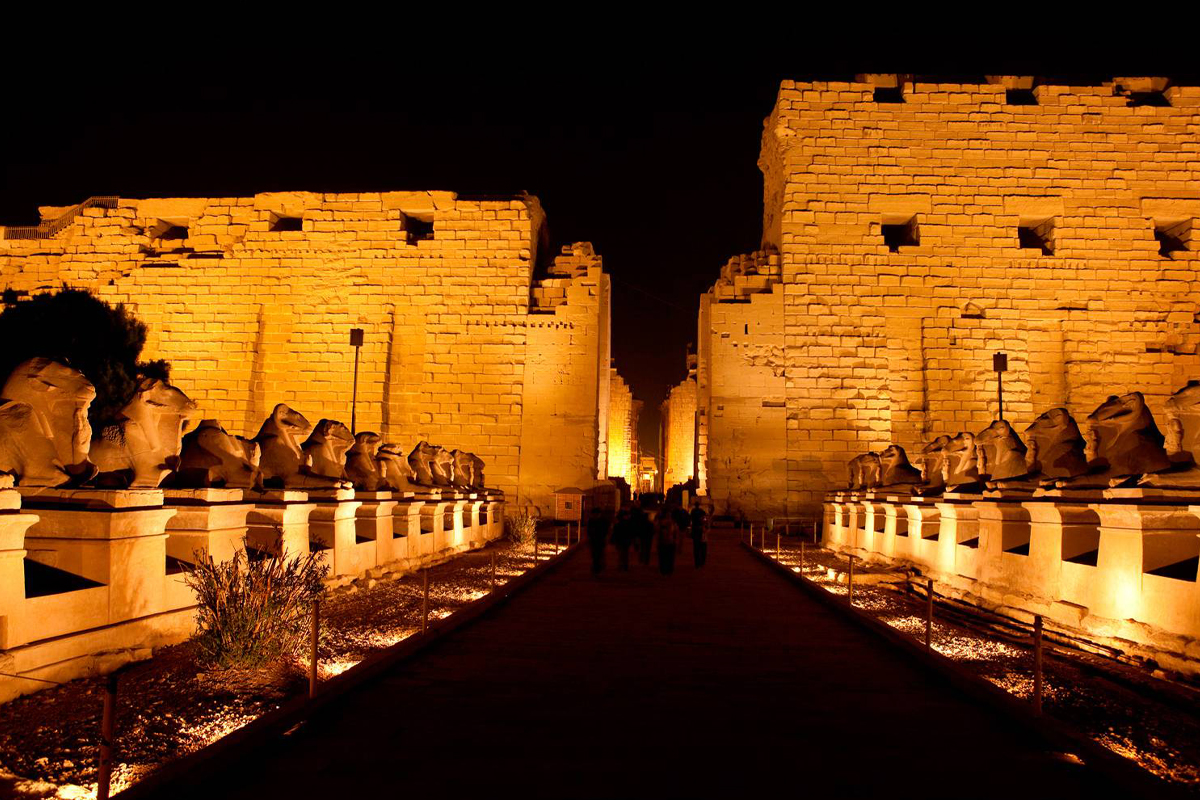
For most of the New Kingdom of Egypt, the primary capital and religious center was Thebes, known to the ancient Egyptians as Waset, and located on the site of modern-day Luxor. Thebes was home to the massive temple complex of Karnak, dedicated to the god Amun-Ra, who became the supreme state deity of the New Kingdom. The pharaohs of the 18th, 19th, and 20th Dynasties poured enormous resources into expanding Karnak, and it remains today the largest religious building complex ever constructed anywhere in the ancient world, covering more than 100 hectares.
However, Thebes was not always the seat of royal administration. Memphis, the ancient capital of the Old Kingdom located near modern Cairo, remained an important administrative and military center throughout the New Kingdom because of its strategic position near the Nile Delta and closer proximity to Egypt’s northern and eastern frontiers. Many pharaohs effectively ran the practical, day-to-day government of Egypt from Memphis while treating Thebes as the spiritual and ceremonial capital.
The most dramatic exception to this pattern came under Akhenaten, who abandoned both Thebes and Memphis entirely. Around 1346 BCE, he founded a brand-new capital city called Akhetaten, “Horizon of the Aten,” at a previously uninhabited site now known as Amarna. This move was closely tied to his religious revolution, which promoted the sun disk Aten as the sole god of Egypt and downgraded the powerful priesthood of Amun at Thebes. Akhetaten was abandoned almost immediately after Akhenaten’s death, and the capital reverted to Thebes and Memphis under his successors, including the young Tutankhamun.
Later, during the 19th Dynasty, Ramesses II built an entirely new capital in the eastern Nile Delta called Pi-Ramesses, “House of Ramesses.” This move made strategic sense: Pi-Ramesses was positioned much closer to Egypt’s northern frontier and the routes into the Levant, allowing faster mobilization of Egyptian armies against the Hittites and other regional powers. Pi-Ramesses remained an important royal city for the rest of the New Kingdom, though it was eventually abandoned as the Nile’s branches shifted course, and its stone monuments were later moved to nearby Tanis.
For today’s traveler, this history matters because it explains exactly why modern Luxor, built on the site of ancient Thebes, contains such a staggering concentration of New Kingdom monuments. When you walk through Karnak Temple, the Luxor Temple, or cross to the West Bank to see the Valley of the Kings and Hatshepsut’s mortuary temple, you are walking through what was, for most of five centuries, the spiritual heart of one of history’s greatest empires.
7. How Did Egypt Grow Strong During the New Kingdom?
If you have ever wondered how did Egypt grow strong during the New Kingdom, the answer lies in a combination of military reform, resource control, diplomacy, and religious unity, all reinforcing one another over the course of nearly five centuries.
The first and most important factor was military transformation. The trauma of Hyksos occupation taught Egypt’s rulers a hard lesson: a purely defensive, agriculturally focused kingdom was vulnerable to conquest. In response, the early New Kingdom pharaohs built Egypt’s first large, standing professional army, equipped with technology absorbed from the very Hyksos they had defeated, including horse-drawn chariots, composite bows, and improved bronze weaponry. This new military machine allowed pharaohs like Thutmose I and, later, Thutmose III to launch sustained campaigns far beyond Egypt’s traditional borders rather than simply repelling invaders.
The second factor was resource control, particularly gold. Nubia, fully brought under Egyptian administration during this period, contained some of the richest gold deposits in the ancient world. Egyptian control of these mines gave the New Kingdom pharaohs a level of wealth unmatched by any of their rivals in the Near East, so much so that a famous letter from the king of Mitanni to Amenhotep III describes gold in Egypt as being “as plentiful as dust.” This wealth financed everything from professional soldiers’ wages to the enormous temple complexes at Karnak and Luxor to the elaborate golden treasures found in royal tombs.
The third factor was strategic diplomacy combined with force. Rather than governing every conquered territory directly, Egypt typically installed loyal local vassal kings in the Levant, backed by the threat of military intervention and reinforced by taking royal children of foreign rulers to be educated at the Egyptian court, both as a diplomatic gesture and, frankly, as insurance against rebellion. This “soft power” approach let Egypt control a vast area without the enormous cost of direct occupation everywhere.
Religious unity was the fourth pillar of New Kingdom strength. The god Amun, merged with the sun god Ra into the composite deity Amun-Ra, became the central unifying force of the Egyptian state religion. Pharaohs justified their military campaigns and their right to rule as acts carried out on behalf of Amun-Ra, and in return they funneled enormous wealth into his temples, particularly Karnak. This created a powerful alliance between the monarchy and the priesthood that reinforced political stability, at least until that same priesthood grew so wealthy and powerful that it began to rival the pharaoh’s own authority later in the period, a tension that eventually contributed to the New Kingdom’s decline.
Finally, international trade played a significant role in Egypt’s strength during the New Kingdom. Beyond military conquest, Egypt engaged in extensive trade with neighboring civilizations, importing cedar wood from Lebanon, copper from Cyprus, and luxury goods from across the eastern Mediterranean and the Aegean world, including Minoan Crete and Mycenaean Greece. In return, Egypt exported grain, gold, papyrus, and fine crafted goods. This made New Kingdom Egypt not just a military power but the central hub of an interconnected ancient world economy, a role it maintained for the majority of its nearly five-hundred-year existence.
8. New Kingdom Egypt Pharaohs You Should Know
The New Kingdom of Egypt produced dozens of pharaohs across three dynasties, but a handful of names dominate the historical record and are essential for understanding this period, as well as for recognizing the monuments you will encounter on any trip to Luxor, Cairo, or Abu Simbel.
Ahmose I
(c. 1550–1525 BCE) founded the 18th Dynasty by completing the expulsion of the Hyksos, effectively launching the New Kingdom of Egypt. He reunified the country and laid the military and administrative foundation that his successors would build upon for the next five centuries.
Hatshepsut
(c. 1479–1458 BCE) remains one of the most remarkable rulers in world history, one of the few women to rule Egypt as pharaoh in her own right, complete with the full royal titulature and, in official art, even the traditional false beard of kingship. Rather than focusing on military conquest, she prioritized trade, most famously her expedition to the Land of Punt, and construction, including her stunning mortuary temple at Deir el-Bahari, considered one of the architectural masterpieces of ancient Egypt.
Thutmose III
(c. 1479–1425 BCE), Hatshepsut’s stepson and co-ruler before becoming sole pharaoh, is often called Egypt’s greatest warrior-king. He led at least seventeen military campaigns into the Levant, expanded Egyptian territory to its largest extent in history, and is credited with transforming Egypt into a genuine empire.
Akhenaten
(c. 1353–1336 BCE) is the New Kingdom’s most controversial figure, launching a religious revolution that promoted the Aten, the sun disk, as Egypt’s supreme deity, sidelining the traditional pantheon and the powerful priesthood of Amun. He moved the capital to Akhetaten (Amarna) and is closely associated with the striking naturalistic art style of the Amarna Period.
Tutankhamun
(c. 1332–1323 BCE), Akhenaten’s son, became pharaoh as a child and reigned only about ten years, restoring traditional religion after his father’s reforms. He is world famous today almost entirely because his tomb, discovered by Howard Carter in 1922, was found largely intact, offering the richest collection of royal Egyptian treasure ever recovered.
Ramesses II
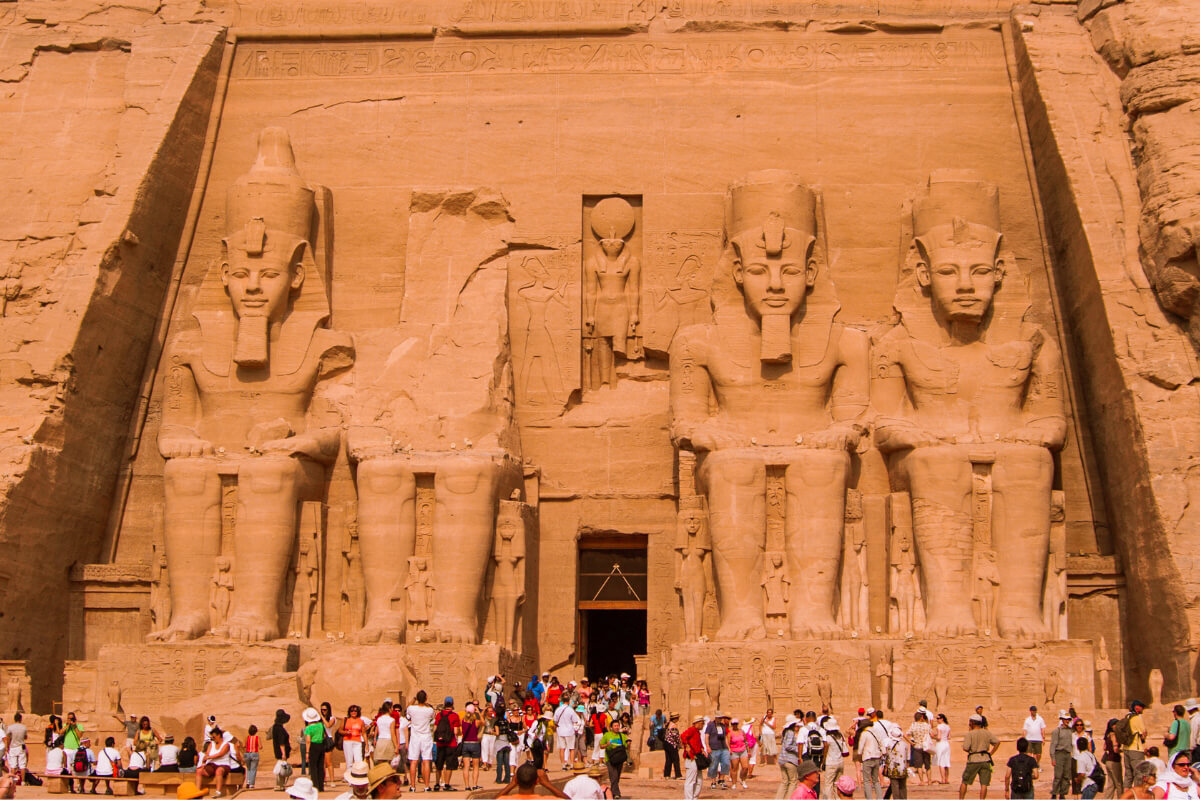
(“Ramesses the Great,” c. 1279–1213 BCE) ruled for an astonishing 66 years, longer than almost any other pharaoh in Egyptian history. He fought the Hittites at the Battle of Kadesh, later signed a landmark peace treaty, and built more monuments than any other pharaoh, including the Abu Simbel temples and the Ramesseum at Luxor.
Ramesses III
(c. 1186–1155 BCE) is remembered as the last great warrior-pharaoh of the New Kingdom, successfully defending Egypt against invasions by the mysterious Sea Peoples, whose attacks contributed to the collapse of several other Bronze Age civilizations around the same time.
| Pharaoh | Approximate Reign | Best Known For |
|---|---|---|
| Ahmose I | 1550–1525 BCE | Founding the New Kingdom, expelling the Hyksos |
| Hatshepsut | 1479–1458 BCE | Trade expeditions, Deir el-Bahari temple |
| Thutmose III | 1479–1425 BCE | Largest Egyptian empire, military genius |
| Akhenaten | 1353–1336 BCE | Religious revolution, Amarna Period |
| Tutankhamun | 1332–1323 BCE | Intact tomb discovery, restoring tradition |
| Ramesses II | 1279–1213 BCE | Longest reign, Abu Simbel, Battle of Kadesh |
| Ramesses III | 1186–1155 BCE | Defeating the Sea Peoples |
Getting to know these New Kingdom Egypt pharaohs by name will completely change how you experience a trip through Luxor. Instead of seeing “an old temple,” you will recognize whether you are standing in a monument built by the ambitious Hatshepsut, the conquering Thutmose III, or the record-breaking builder Ramesses II, and understand exactly why each one built what they built.
9. Religion in New Kingdom Egypt
Religion in New Kingdom Egypt sat at the very center of political power, artistic expression, and daily life. Understanding it is essential to understanding why so many of Egypt’s most famous monuments, from Karnak to the Valley of the Kings, were built the way they were.
At the heart of New Kingdom religion was Amun-Ra, a fusion of Amun, the local god of Thebes, with Ra, the ancient sun god long worshipped across Egypt. This merger elevated Amun-Ra into the “King of the Gods,” the supreme deity credited with granting pharaohs their victories and legitimacy to rule. The main center of his worship, the Karnak Temple complex, grew larger with nearly every reign of the New Kingdom, as each pharaoh added new pylons, halls, obelisks, and statues to honor the god who, in official propaganda, had personally granted them the throne.
The priesthood of Amun at Thebes grew extraordinarily powerful and wealthy during the New Kingdom, controlling vast estates of land, herds of livestock, and skilled workers, essentially becoming a second center of power alongside the pharaoh himself. This dynamic reached a breaking point during the reign of Akhenaten, who launched what is often described as history’s earliest known attempt at monotheism. Around 1346 BCE, Akhenaten declared the Aten, the visible disk of the sun, as Egypt’s sole legitimate god, closed traditional temples, erased the name of Amun from monuments across the country, and moved the capital away from Thebes entirely. This religious revolution, now called the Amarna Period, produced a strikingly different art style, more naturalistic and intimate than traditional Egyptian art, depicting the royal family in relaxed, affectionate scenes rather than rigid formal poses.
Akhenaten’s religious experiment did not survive him. Within a few years of his death, Egypt returned firmly to traditional polytheistic worship under his successors, including the boy-king Tutankhamun, whose very name change, from Tutankhaten to Tutankhamun, symbolizes this religious restoration. The traditional pantheon, including Amun-Ra, Osiris, Isis, Horus, Ptah, and Hathor, resumed its central role in Egyptian religious life for the remainder of the New Kingdom.
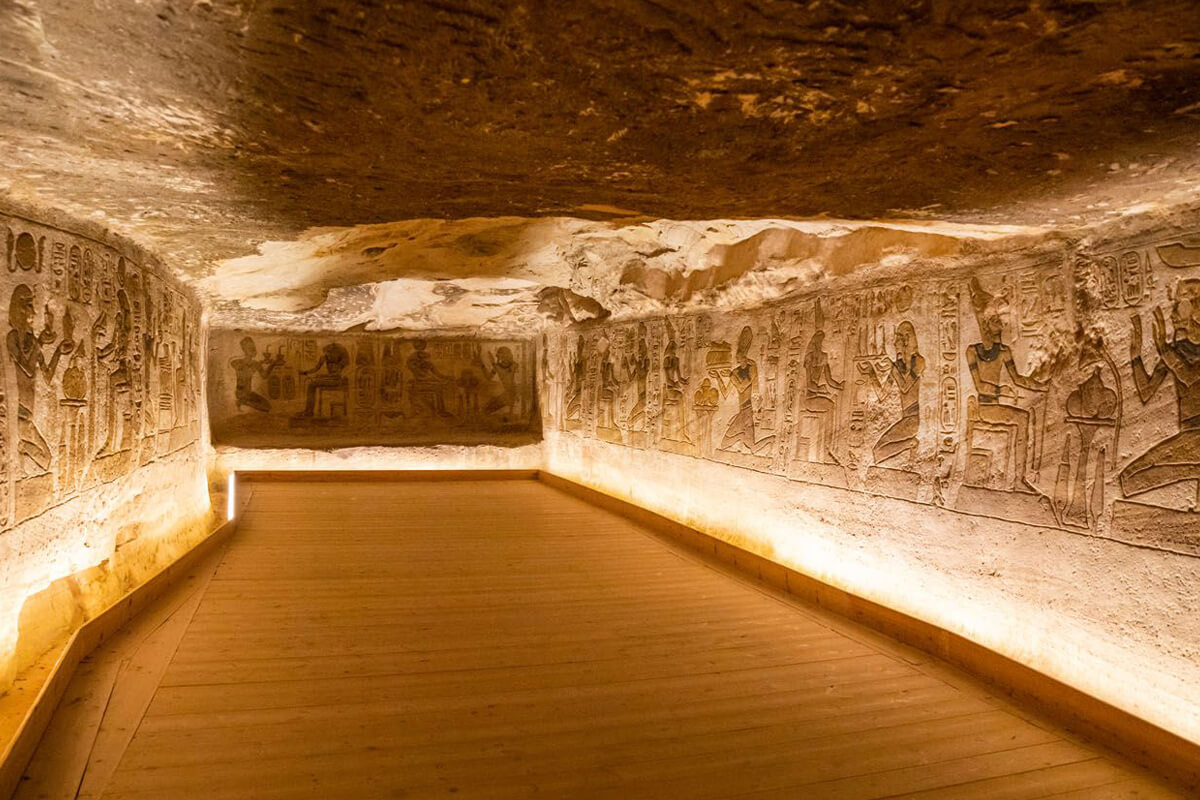
Beliefs about death and the afterlife also defined New Kingdom religion, and these are the beliefs most visible to travelers today. This period produced the Book of the Dead, a collection of spells and instructions intended to guide the deceased safely through the underworld to judgment before Osiris, where the heart was weighed against the feather of truth. This same period also saw the elaborate development of royal tomb decoration in the Valley of the Kings, where pharaohs were buried in deep rock-cut tombs, hidden from the pyramid-building traditions of earlier periods precisely because pyramids had proven too easy for tomb robbers to locate and plunder.
Religion in New Kingdom Egypt was not an abstract belief system confined to temples. It shaped foreign policy, since military campaigns were framed as acts of the gods working through the pharaoh. It shaped architecture, since temple building was considered a sacred duty and a path to eternal favor with the gods. And it shaped art, from the traditional formal statuary of most of the period to the brief, radical naturalism of the Amarna years. When you visit Karnak Temple, the Luxor Temple, or the tombs of the Valley of the Kings in 2026, you are walking through the physical expression of a religious worldview that governed nearly every decision made by New Kingdom Egypt’s rulers for five centuries.
10. New Kingdom Egypt Art, Architecture, and Sculpture
New Kingdom Egypt art, architecture, and sculpture represent, in the view of many art historians, the technical and aesthetic peak of ancient Egyptian civilization. The scale, ambition, and craftsmanship of this period’s monuments still leave modern visitors speechless, more than three thousand years after they were built.
In architecture, the New Kingdom perfected the temple as a monumental building type. Unlike the pyramid-focused Old Kingdom, New Kingdom pharaohs poured their resources into massive stone temples dedicated to the gods, most famously Karnak Temple, which grew continuously for centuries into the largest religious complex ever built in the ancient world. These temples followed a recognizable formula: an approach lined with sphinxes, towering stone gateways called pylons, open sun courts, dimly lit hypostyle halls filled with enormous carved columns, and an innermost sanctuary reserved for the god’s statue and the highest-ranking priests. The Great Hypostyle Hall at Karnak alone contains 134 massive columns, some over 20 meters tall, arranged to overwhelm visitors both then and now.
New Kingdom pharaohs also perfected the mortuary temple, a separate structure built to maintain the pharaoh’s memorial cult after death, physically distinct from the tomb itself. Hatshepsut’s mortuary temple at Deir el-Bahari, with its elegant terraces built into the cliffs of the Theban mountains, is considered one of the most architecturally sophisticated buildings of the ancient world. The Ramesseum, Ramesses II’s mortuary temple, and the temples of Abu Simbel, carved directly into a mountainside in southern Egypt, further demonstrate the engineering ambition of this era.
Sculpture during the New Kingdom ranged from the colossal to the intimate. Colossal statues of pharaohs, sometimes exceeding 20 meters in height, as at Abu Simbel, projected raw royal power to anyone who approached. At the same time, smaller-scale sculpture and relief carving reached extraordinary levels of detail, particularly during the Amarna Period under Akhenaten, when artists broke from centuries of rigid formal convention to depict the royal family with softer, more naturalistic, even elongated features, along with genuinely tender domestic scenes, a striking contrast to the idealized, eternally youthful images typical of most Egyptian royal art.
New Kingdom Egypt art was not confined to temples and tombs. This period produced extraordinary decorative arts, including gold jewelry, inlaid furniture, painted glass vessels, and finely carved wooden objects, many of which survive because they were sealed inside royal tombs. The treasures of Tutankhamun’s tomb, now displayed at the Grand Egyptian Museum, remain the single best surviving showcase of New Kingdom craftsmanship, featuring his solid gold funerary mask, gilded shrines, jewelry inlaid with semi-precious stones, and ceremonial furniture of astonishing quality.
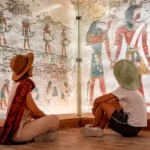
Tomb painting also flourished during this period, particularly in the Valley of the Kings and the nearby Valley of the Queens, and in the tombs of high officials at sites like the Valley of the Nobles. These paintings, protected from sunlight for millennia inside sealed rock-cut chambers, retain vivid colors that offer visitors today an almost unbelievably direct visual connection to daily life, religious belief, and royal ideology in ancient Egypt. Few experiences compare to standing inside a New Kingdom tomb and seeing colors applied more than three thousand years ago still glowing on the walls around you.
11. New Kingdom Egypt Government and Economy
The government and economy of New Kingdom Egypt evolved into one of the most sophisticated administrative systems of the ancient world, capable of managing a territory that stretched over thousands of kilometers and coordinating some of history’s largest construction projects.
At the top of New Kingdom Egypt’s government sat the pharaoh, viewed as a living god and the sole intermediary between the human world and the divine. In practice, however, the pharaoh relied on an extensive bureaucracy to actually govern. The most powerful official beneath the pharaoh was the vizier, essentially a prime minister who oversaw the entire administrative apparatus, including tax collection, the judicial system, and major building projects. During much of the New Kingdom, Egypt actually had two viziers at once, one based in Thebes overseeing Upper Egypt and one based in Memphis overseeing Lower Egypt, reflecting the practical need to manage a long, narrow country efficiently.
Beneath the viziers, New Kingdom Egypt’s government included a detailed hierarchy of scribes, treasury officials, temple administrators, and regional governors called nomarchs. Scribes held particularly high status, since literacy was rare and essential for tax records, legal documents, religious texts, and royal correspondence. The famous Amarna Letters, a diplomatic archive discovered at Akhenaten’s capital, show just how sophisticated New Kingdom Egypt’s international bureaucracy had become, with detailed correspondence exchanged between the Egyptian court and rulers across the Near East.
The economy of New Kingdom Egypt rested on three main pillars: agriculture, tribute and trade, and temple estates. Agriculture, fed by the predictable annual flooding of the Nile, remained the foundation of Egyptian wealth throughout the period, producing grain surpluses that fed the population, the army, and an extensive workforce of laborers and craftsmen. Tribute flowed in from conquered and allied territories in Nubia and the Levant, including gold, cattle, timber, and enslaved people, dramatically increasing the wealth available to the crown compared to earlier periods of Egyptian history.
Temples, particularly the temple of Amun at Karnak, became major economic institutions in their own right during the New Kingdom, controlling vast agricultural estates, herds of livestock, workshops, and a significant share of the labor force. By the later New Kingdom, the temple of Amun controlled an estimated significant percentage of Egypt’s cultivable land and workforce, a concentration of economic power that increasingly rivaled the pharaoh’s own authority and contributed to political instability toward the end of the period.
Trade also played an increasingly important economic role during the New Kingdom, connecting Egypt with Nubia, the Levant, Cyprus, Crete, and the wider Mediterranean and Near Eastern world. Egypt exported grain, gold, papyrus, linen, and finished luxury goods, while importing cedar wood, copper, tin, horses, and exotic goods from as far as the Aegean. This economic network made New Kingdom Egypt one of the central hubs of what historians now call the Late Bronze Age international system, a web of interconnected trading civilizations whose sudden, near-simultaneous collapse around 1200 to 1150 BCE would eventually contribute to the end of the New Kingdom itself, a topic we will explore later in this article.
12. New Kingdom Egypt Culture, Clothing, and Daily Life
Beyond pharaohs, temples, and battles, New Kingdom Egypt culture, clothing, and daily life offer some of the most relatable and human details of this ancient civilization, details that help modern readers understand how ordinary people, not just royalty, actually lived.
New Kingdom Egypt clothing reflected both the hot climate of the Nile Valley and the era’s growing wealth and international contact. Most Egyptians, regardless of social class, wore lightweight linen garments, since linen was breathable and well suited to Egypt’s heat. Men typically wore a simple kilt-like garment called a shendyt, while women wore a straight, close-fitting linen dress that fell from the chest to the ankles, sometimes with elaborate pleating for wealthier individuals. During the New Kingdom, clothing styles became noticeably more elaborate than in earlier periods, with fine pleating, fringed shawls, and increasingly transparent, finely woven linen fabrics for the elite, reflecting Egypt’s growing prosperity and exposure to foreign fashions through trade and diplomacy.
Jewelry and cosmetics were central to New Kingdom Egypt culture across social classes, though the materials varied enormously based on wealth. Wealthy Egyptians wore gold and semi-precious stone jewelry, elaborate wigs, and used kohl eyeliner, which was believed to have both cosmetic and protective, even medicinal, properties against eye infections and sun glare. Perfume cones, worn on top of wigs and believed (though this specific detail is debated among modern scholars) to slowly melt and release fragrance throughout the day, appear frequently in New Kingdom tomb art depicting banquets and celebrations.
Daily life in New Kingdom Egypt varied enormously depending on social class. The vast majority of the population worked as farmers, tied to the agricultural cycle dictated by the Nile’s annual flood. Skilled artisans, including the famous workers of the village of Deir el-Medina who built the royal tombs in the Valley of the Kings, lived in specially constructed communities and left behind an extraordinarily detailed archaeological and textual record of ordinary working life, including labor disputes, what may be the earliest recorded labor strike in history, personal letters, and even court records involving petty theft and adultery.
Family life centered on the household, with marriage typically arranged at a young age, though love poetry from the New Kingdom period reveals that romantic affection between spouses was culturally valued and celebrated, not simply a practical arrangement. Children were cherished, though child mortality remained high by modern standards, and religious practices connected to fertility and childbirth played an important role in household worship, often centered on protective household deities like Bes and Taweret rather than the grand state gods worshipped at temples like Karnak.
Food and drink in New Kingdom Egypt centered on bread and beer, the two staples of the Egyptian diet across all social classes, supplemented by vegetables, fruit, fish from the Nile, and, for wealthier households, meat from cattle, goats, and poultry. Wine, particularly from vineyards in the Nile Delta and oases, became an increasingly prestigious drink among the elite during this period, with wine jars often labeled with vintage, vineyard, and quality information not unlike modern wine labeling.
Understanding this side of New Kingdom Egypt culture, the clothing, food, family life, and daily routines of ordinary people, adds tremendous depth to a modern visit. The temples and tombs you will see on a trip to Luxor were not built in isolation. They were built by, and for the benefit of, a rich, layered society whose daily rhythms of work, worship, and family life were, in many surprisingly human ways, not so different from our own.
13. New Kingdom Egypt Achievements and Facts
The list of New Kingdom Egypt achievements is genuinely remarkable, and reviewing them helps explain why this five-century period is so consistently described as the high point of ancient Egyptian civilization.
Militarily, New Kingdom Egypt built the largest empire in ancient Egyptian history, at its peak under Thutmose III stretching from the Euphrates River in the north to deep into Nubia in the south. Egypt also fought and eventually made peace with the Hittite Empire following the Battle of Kadesh in 1274 BCE, resulting in what is widely considered the oldest surviving written peace treaty in world history, a copy of which is displayed today at the United Nations headquarters in New York as a symbol of international diplomacy.
Architecturally, the New Kingdom produced Karnak Temple, the largest religious complex ever constructed anywhere in the ancient world, along with the rock-cut temples of Abu Simbel, engineered so precisely that twice a year, on dates believed to correspond to Ramesses II’s birthday and coronation, sunlight penetrates 60 meters into the mountain to illuminate statues of the gods and the pharaoh in the temple’s innermost sanctuary, a feat of astronomical and architectural precision that still impresses modern engineers.
In terms of discoveries that shaped our modern understanding of ancient history, the New Kingdom gave us the tomb of Tutankhamun, discovered nearly intact in 1922, providing the single richest collection of ancient Egyptian royal treasure ever recovered, and the Amarna Letters, a diplomatic archive that revolutionized historians’ understanding of Late Bronze Age international relations across the entire eastern Mediterranean and Near East.
Religiously and intellectually, the New Kingdom produced the Book of the Dead, one of the most extensive surviving religious texts from the ancient world, and Akhenaten’s brief but historically significant experiment with monotheistic worship of the Aten, a development some historians consider one of the earliest documented attempts at monotheism in recorded history, predating other monotheistic traditions by centuries.
Here is a quick-reference table of standout New Kingdom Egypt facts:
| Achievement | Detail |
|---|---|
| Largest Ancient Egyptian Empire | Stretched from the Euphrates to Nubia under Thutmose III |
| Oldest Surviving Peace Treaty | Signed between Egypt and the Hittites, 1259 BCE |
| Largest Religious Complex | Karnak Temple, over 100 hectares |
| Richest Royal Tomb Discovered | Tutankhamun’s tomb, found intact in 1922 |
| Longest-Reigning Pharaoh of the Era | Ramesses II, 66 years on the throne |
| Earliest Documented Monotheism Attempt | Akhenaten’s worship of the Aten |
| Engineering Landmark | Abu Simbel’s solar alignment phenomenon |
New Kingdom Egypt also achieved significant advances in medicine, mathematics, and administration during this period, including detailed medical papyri describing surgical procedures, herbal remedies, and even early attempts at diagnosis based on observed symptoms. Standardized systems of taxation, land measurement, and record-keeping allowed the state to manage an empire of unprecedented scale and complexity, laying administrative groundwork that later civilizations, including the Greeks and Romans who eventually ruled Egypt, would study and, in some cases, adopt.
Taken together, these achievements explain why the New Kingdom of Egypt is not simply “one more period” in Egyptian history, but the period most responsible for the enduring global image of ancient Egypt as a civilization of golden treasures, colossal monuments, powerful pharaohs, and sophisticated statecraft, an image that continues to draw millions of curious travelers to Luxor, Cairo, and Aswan every single year, including throughout 2026.
14. What Was Distinctive About the New Kingdom of Egypt?
When historians and students ask what was distinctive about the New Kingdom of Egypt, or what was the New Kingdom of Egypt known for, several defining characteristics separate it clearly from the Old Kingdom and Middle Kingdom that preceded it, and from the periods of decline that followed.
The single most distinctive feature of the New Kingdom of Egypt was its transformation into a genuine empire. Earlier periods of Egyptian history were largely confined to the Nile Valley itself, focused on internal stability and modest defensive campaigns. The New Kingdom, by contrast, actively conquered and administered foreign territory across Nubia and the Levant, collected international tribute, and engaged in sophisticated diplomacy with rival great powers like the Hittites, Mitanni, Babylonians, and Assyrians as equals, a level of international engagement previous Egyptian kingdoms simply had not pursued.
A second distinctive feature was the shift in royal burial practices. Old Kingdom pharaohs built visible pyramids as their tombs, essentially advertising the location of their treasure to any would-be robber. New Kingdom pharaohs abandoned this approach entirely in favor of hidden, rock-cut tombs concealed in the Valley of the Kings, a remote desert valley on the west bank of the Nile opposite Thebes, deliberately chosen for its secrecy and the natural pyramid-shaped mountain, known to the ancient Egyptians as “the Peak,” that overlooks the valley and may have served as a symbolic substitute for a constructed pyramid.
A third distinctive feature was religious experimentation, embodied almost entirely in the figure of Akhenaten. No other period of ancient Egyptian history saw such a dramatic, top-down attempt to reshape the state religion, replace traditional gods with a single deity, and correspondingly transform artistic conventions that had remained largely stable for well over a thousand years. Even though this experiment was reversed within a generation, the Amarna Period remains one of the most studied and debated episodes in all of ancient Egyptian history precisely because it was so distinctive and so different from everything before and after it.
A fourth distinctive feature was the sheer scale of monumental construction. While earlier periods certainly built impressive structures, the New Kingdom’s combination of imperial wealth, religious devotion to Amun-Ra, and five centuries of competitive pharaohs each seeking to leave a larger legacy than their predecessors produced a concentration of monumental architecture that remains, even today, one of the densest collections of ancient monuments found anywhere on Earth, largely concentrated around modern Luxor.
Finally, the New Kingdom of Egypt was distinctive for elevating female political power to levels rarely seen elsewhere in the ancient world, most notably through Hatshepsut’s successful and stable reign as a female pharaoh, and later through powerful royal women like Nefertiti, Akhenaten’s chief wife who may have wielded significant religious and political authority, and Tiye, mother of Akhenaten, who appears in diplomatic correspondence as a respected figure in international relations even after her husband’s death.
Taken together, these distinctive features, imperial expansion, hidden royal tombs, religious experimentation, unmatched monumental construction, and notable female political power, are exactly what set the New Kingdom of Egypt apart, and exactly what continues to draw historians, students, and travelers to study and visit this remarkable period more than three thousand years after it ended.
15. Old Kingdom vs. New Kingdom Egypt: Key Differences
Because so many visitors combine a Cairo pyramid visit with a Luxor and Aswan tour on the same trip, understanding the differences between Old Kingdom and New Kingdom Egypt is one of the most practically useful things you can learn before traveling in 2026.
The most obvious difference lies in monument type. Old Kingdom Egypt is defined by pyramids, above-ground stone structures visible from great distances, built as royal tombs and surrounded by their own dedicated mortuary temples and complexes, as seen at Giza and Saqqara. New Kingdom Egypt, by contrast, is defined by temples dedicated to the gods, such as Karnak and Luxor Temple, combined with hidden, underground royal tombs cut directly into the rock of the Valley of the Kings, an approach adopted specifically because pyramids had proven too vulnerable to robbery.
A second key difference is geographic focus. Old Kingdom Egypt was centered almost entirely around Memphis and the surrounding area near modern Cairo, reflecting a kingdom focused on internal stability along the Nile. New Kingdom Egypt shifted its center of gravity south to Thebes (modern Luxor), while simultaneously projecting military and political power far beyond Egypt’s traditional borders into Nubia and the Levant, reflecting a fundamentally different, outward-looking, imperial mindset.
A third key difference is the nature of political power and religion. Old Kingdom pharaohs were viewed as supremely powerful, semi-divine rulers within a relatively simple, centralized state religion centered on the sun god Ra. New Kingdom pharaohs, while still divine kings, operated within a far more complex political and religious landscape, sharing influence with an increasingly powerful priesthood of Amun and navigating a broader diplomatic environment featuring other major international powers as genuine peers, not simply as subjects to be conquered.
A fourth key difference is military organization. Old Kingdom Egypt had no standing professional army in the sense we would recognize today, relying instead on conscripted militia forces raised as needed. New Kingdom Egypt developed a permanent, professional military establishment, complete with specialized chariot divisions, standardized weaponry, and a clear military hierarchy, reflecting the lessons learned from the trauma of Hyksos occupation before the New Kingdom began.
| Feature | Old Kingdom Egypt | New Kingdom Egypt |
|---|---|---|
| Primary Monument Type | Pyramids | Temples and hidden rock-cut tombs |
| Capital | Memphis | Thebes (with Memphis, Amarna, Pi-Ramesses at times) |
| Territorial Reach | Nile Valley only | Empire from Euphrates to Nubia |
| Military | Militia-based | Professional standing army |
| Religious Focus | Ra (sun god) | Amun-Ra, brief Aten monotheism |
| Famous Sites | Giza Pyramids, Sphinx, Saqqara | Karnak, Luxor Temple, Valley of the Kings, Abu Simbel |
For travelers, this comparison table is genuinely practical. A trip that combines the Giza Pyramids near Cairo with the temples of Luxor and Karnak is not simply “seeing more pyramids.” It is a journey across more than a thousand years of Egyptian history, from the earliest monumental phase of Old Kingdom Egypt to the imperial peak of the New Kingdom, and recognizing this difference dramatically enriches the experience of standing in front of each monument.
16. The Decline and End of the New Kingdom of Egypt
Understanding how the New Kingdom of Egypt ended is just as important as understanding how long it lasted, because the story of its decline is one of the most studied case studies of political and economic collapse in ancient history.
The decline of the New Kingdom of Egypt was gradual, unfolding over roughly a century, rather than a single dramatic collapse. Several interlocking factors contributed to it. The first was internal: the growing power of the priesthood of Amun at Thebes. By the later New Kingdom, the temple of Amun controlled such vast agricultural land, wealth, and manpower that the High Priest of Amun functioned almost as a rival power center to the pharaoh himself, particularly in Upper Egypt around Thebes, weakening centralized royal authority.
The second factor was external and closely tied to a broader regional catastrophe historians now call the Late Bronze Age Collapse, which occurred around 1200 to 1150 BCE and devastated numerous eastern Mediterranean civilizations almost simultaneously, including the Hittite Empire, Mycenaean Greece, and several Levantine city-states. A mysterious confederation of raiders known as the “Sea Peoples,” whose exact origins remain debated among historians, launched repeated invasions against Egypt during this period. Ramesses III successfully repelled major Sea Peoples invasions in significant land and naval battles, events he proudly recorded on the walls of his mortuary temple at Medinet Habu, but the ongoing military pressure, combined with disruption to Late Bronze Age trade networks across the wider region, placed severe strain on Egypt’s economy and administration.
The third factor was economic strain and internal instability, particularly evident during the later 20th Dynasty. Historical records, including court documents and worker records from Deir el-Medina, describe delayed grain payments to royal tomb workers, leading to what may be the first recorded labor strike in human history, along with rising corruption and a documented wave of tomb robberies, some involving officials who were supposed to be protecting the very royal tombs being looted, as revealed in surviving trial records from this era.
The fourth factor was political fragmentation. By the reign of Ramesses XI, the last pharaoh of the 20th Dynasty and the New Kingdom as a whole, Egypt was effectively split in practice between the official pharaoh ruling from the north and the increasingly autonomous High Priests of Amun controlling Thebes and Upper Egypt in the south. When Ramesses XI died around 1070 BCE without the New Kingdom’s traditional centralized authority intact, Egypt formally entered what historians call the Third Intermediate Period, a roughly four-century era of political fragmentation, foreign rule, and competing dynasties that would not fully end until the rise of new unifying forces, and eventually, centuries later, the arrival of Persian, and then Greek, conquest under Alexander the Great.
It is worth emphasizing that the end of the New Kingdom of Egypt was not the end of ancient Egyptian civilization itself. Egyptian culture, religion, language, and artistic tradition continued for well over a thousand years afterward, through the Third Intermediate Period, the Late Period, the Ptolemaic Period following Alexander’s conquest, and finally Roman rule, before the ancient Egyptian religious tradition faded in the early centuries CE. But the New Kingdom specifically, the imperial golden age of pharaonic power, ended around 1070 BCE, and Egypt would never again command the same level of unrivaled international military and political dominance it had enjoyed at the height of Thutmose III’s or Ramesses II’s reigns.
17. Fun Facts About the New Kingdom of Egypt
Beyond the major historical narrative, there are dozens of fun facts about the New Kingdom of Egypt that rarely make it into standard textbooks but genuinely delight travelers, students, and history lovers alike. Here are some of the most memorable.
Ramesses II fathered an extraordinary number of children, with historical estimates suggesting somewhere between 100 and 160 sons and daughters across his 66-year reign and numerous wives, making him not just Egypt’s longest-reigning pharaoh but also, quite possibly, its most prolific father.
Hatshepsut’s mortuary temple architect, a court official named Senenmut, was so trusted by the queen that he was buried with unusual privileges, and some scholars have speculated, without firm proof, about a particularly close personal relationship between the two, a debate that continues among Egyptologists today.
The peace treaty between Ramesses II and the Hittite king Hattusili III following the Battle of Kadesh survives in two versions, an Egyptian hieroglyphic copy carved at Karnak and a Hittite cuneiform copy discovered in modern Turkey, and a reproduction of this ancient treaty hangs today at the headquarters of the United Nations as a symbol of peacemaking between nations.
Tutankhamun, despite being one of the most famous pharaohs in the world today, was actually a relatively minor ruler in his own lifetime, dying young at around 18 or 19 years old after a short reign, and it is precisely because his tomb was small, hastily prepared, and hidden beneath later construction debris that it escaped the systematic robbery that emptied nearly every other pharaoh’s tomb in the Valley of the Kings.
Akhenaten’s chief wife, Nefertiti, is one of the most recognizable royal figures in world history today thanks almost entirely to a single painted limestone bust discovered at Amarna in 1912 and now displayed in Berlin, even though relatively little concrete historical information about her actual political role and eventual fate has survived.
The workers who built the royal tombs in the Valley of the Kings lived in a purpose-built village now called Deir el-Medina, and thanks to an unusually well-preserved trove of written records, historians know an astonishing amount of detail about their daily lives, including labor disputes, personal gossip, marriage contracts, and what is widely considered the earliest recorded labor strike in human history, staged when royal grain payments were delayed.
Egyptian and Hittite royal correspondence from the New Kingdom period even includes a rare and touching account of Queen Ankhesenamun, likely Tutankhamun’s widow, writing to the Hittite king asking to marry one of his sons rather than marry an Egyptian commoner, a Hittite prince who tragically appears to have been killed before ever reaching Egypt, according to surviving Hittite records.
The temples of Abu Simbel were so precisely engineered that, twice a year, sunlight travels 60 meters into the mountain to illuminate statues inside the innermost sanctuary, and when the temples were relocated in the 1960s to save them from flooding caused by the Aswan High Dam, engineers worked meticulously to preserve this exact solar alignment in the new location.
These fun facts about the New Kingdom of Egypt are exactly the kind of stories that turn a simple historical timeline into something genuinely memorable, and they are also exactly the kind of details a knowledgeable Egyptologist-guide can bring to life when you are standing in the actual locations where these events happened, rather than simply reading about them from thousands of kilometers away.
18. Where to See New Kingdom Egypt in 2026: A Traveler’s Guide
Reading about the New Kingdom of Egypt is fascinating, but nothing compares to standing inside these monuments yourself. If this article has sparked your curiosity, here is a practical, insider’s guide to experiencing New Kingdom Egypt firsthand in 2026, based on exactly the sites discussed throughout this article.
Karnak Temple, Luxor. This is the single most important religious site of the New Kingdom, expanded continuously across nearly two thousand years, but overwhelmingly by New Kingdom pharaohs. Walk through the Great Hypostyle Hall’s 134 towering columns, and try to arrive at opening time in 2026 to avoid both the crowds and the intense midday heat.
Luxor Temple. Located right in the heart of modern Luxor, this temple was largely built by Amenhotep III and Ramesses II, and it is one of the very few major ancient Egyptian sites beautifully illuminated at night, making it a completely different, arguably more atmospheric, experience after sunset.
The Valley of the Kings. Home to the tombs of nearly every major New Kingdom pharaoh, including Tutankhamun, Seti I, and Ramesses VI, this is where you can descend into painted burial chambers still displaying vivid colors after more than three thousand years. Standard tickets include entry to three tombs, though Tutankhamun’s tomb and a handful of others require a separate additional ticket.
Deir el-Bahari (Hatshepsut’s Temple). This dramatic, terraced mortuary temple built into the cliffs of the Theban mountains is one of the most photogenic New Kingdom sites in all of Egypt and offers a completely different architectural style than the more traditional pylon-and-column temples elsewhere in Luxor.
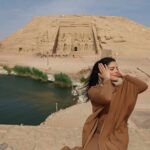
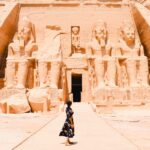
Abu Simbel. Located near Aswan, roughly a three-hour drive or a short flight from Luxor, Ramesses II’s twin rock-cut temples remain one of the most awe-inspiring sights in all of Egypt. If your 2026 travel dates allow it, try to time your visit around February 22 or October 22, when the famous solar alignment illuminates the inner sanctuary, though the temples are extraordinary to visit on any day of the year.
The Grand Egyptian Museum, Giza. While not itself an ancient site, this museum, fully opened near the Giza Plateau, now houses the complete Tutankhamun collection displayed together for the first time in history, alongside an enormous range of other New Kingdom artifacts, making it an essential modern complement to visiting the ancient sites themselves.
Below is a quick planning table for travelers organizing a New Kingdom-focused itinerary in 2026:
| Site | Location | Best Time to Visit | Why It Matters |
|---|---|---|---|
| Karnak Temple | Luxor | Early morning | Largest religious complex of the ancient world |
| Luxor Temple | Luxor | Sunset / evening | Beautifully lit at night, built by Amenhotep III and Ramesses II |
| Valley of the Kings | Luxor West Bank | Early morning | Royal tombs including Tutankhamun |
| Deir el-Bahari | Luxor West Bank | Morning | Hatshepsut’s iconic terraced temple |
| Abu Simbel | Near Aswan | Sunrise, or Feb 22 / Oct 22 for solar alignment | Ramesses II’s colossal rock-cut temples |
| Grand Egyptian Museum | Giza | Full day | Complete Tutankhamun collection |
Planning this itinerary independently can be genuinely overwhelming: ticket systems, timing, transportation between Luxor and Aswan, licensed Egyptologist guides, and simply knowing which sites deserve two hours versus twenty minutes all require local expertise. This is exactly where our team at Egypt All Inclusive comes in. As a specialist Egypt travel agency, we design New Kingdom-focused itineraries that connect every site in this article into one seamless, expertly guided journey, so you spend 2026 experiencing history, not navigating logistics.
Insider tip that sets a great itinerary apart from an average one: most tourists visit Karnak and Luxor Temple on the same rushed afternoon. We recommend splitting them across two separate visits, Karnak at sunrise and Luxor Temple at sunset, because the lighting, temperature, and crowd levels completely transform how each site feels, and because it gives our licensed Egyptologist guides enough time to properly walk you through five centuries of history at each location rather than rushing you through a checklist.
19. Frequently Asked Questions
How long did the New Kingdom of Egypt last?
The New Kingdom of Egypt lasted approximately 480 years, from around 1550 BCE to 1070 BCE, covering the 18th, 19th, and 20th Dynasties.
When did the New Kingdom of Egypt start and end?
It started around 1550 BCE with Pharaoh Ahmose I’s reunification of Egypt after expelling the Hyksos, and it ended around 1070 BCE with the death of Ramesses XI.
What was the capital of Egypt during the New Kingdom?
Thebes (modern Luxor) served as the main religious capital for most of the period, while Memphis remained an important administrative center, and Akhenaten briefly moved the capital to Amarna, with Ramesses II later founding Pi-Ramesses in the Nile Delta.
Who were the most famous New Kingdom Egypt pharaohs?
The most famous include Ahmose I, Hatshepsut, Thutmose III, Akhenaten, Tutankhamun, and Ramesses II, each associated with distinct achievements ranging from military conquest to religious revolution to record-breaking monumental construction.
What was the New Kingdom of Egypt known for?
It is best known for transforming Egypt into an empire, building Karnak Temple and Abu Simbel, developing the hidden royal tombs of the Valley of the Kings, and producing legendary rulers like Ramesses II and Tutankhamun.
What is the difference between the Old Kingdom and New Kingdom of Egypt?
The Old Kingdom is defined by pyramid building around Memphis with a purely domestic focus, while the New Kingdom is defined by temple building around Thebes, hidden rock-cut royal tombs, and an expansive, internationally engaged empire.
Why did the New Kingdom of Egypt end?
A combination of factors caused its decline, including the growing power of the Amun priesthood, invasions by the Sea Peoples during the wider Late Bronze Age Collapse, internal economic strain, and eventual political fragmentation between northern and southern Egypt.
Can I still visit New Kingdom Egypt sites in 2026?
Yes. Karnak Temple, Luxor Temple, the Valley of the Kings, Hatshepsut’s temple at Deir el-Bahari, and Abu Simbel are all open and among the most visited historical sites in the world, and the Grand Egyptian Museum now displays the complete Tutankhamun collection.
Conclusion
So, how long did the New Kingdom of Egypt last? Approximately 480 years, from around 1550 BCE to 1070 BCE, a five-century golden age that gave the world Hatshepsut’s soaring temple, Thutmose III’s empire, Akhenaten’s religious revolution, Tutankhamun’s golden treasures, and Ramesses II’s colossal monuments at Abu Simbel. Few periods in human history left behind a legacy so vast, so well preserved, and so genuinely awe-inspiring to walk through in person.
Understanding this timeline is more than a history lesson. It is the key to truly appreciating what you are looking at when you stand inside Karnak Temple, descend into a painted tomb in the Valley of the Kings, or watch sunlight strike the statues deep inside Abu Simbel. Every stone, every hieroglyph, and every gilded treasure tells part of the story of these remarkable five hundred years.
If this guide has inspired you to see the New Kingdom of Egypt with your own eyes in 2026, our team at Egypt All Inclusive is ready to help. As the best travel agency in Egypt in 2026, we specialize in expertly guided, fully personalized journeys through Luxor, Aswan, Cairo, and every major New Kingdom site mentioned in this article, led by licensed Egyptologist guides who bring this history to life far beyond what any article or guidebook can offer. From private tours of the Valley of the Kings to unforgettable sunrise visits to Abu Simbel, we design every detail so you can focus entirely on the experience.
Don’t just read about the New Kingdom of Egypt. Walk through it. Contact Egypt All Inclusive today to book your 2026 Egypt journey and discover the golden age of the pharaohs for yourself.