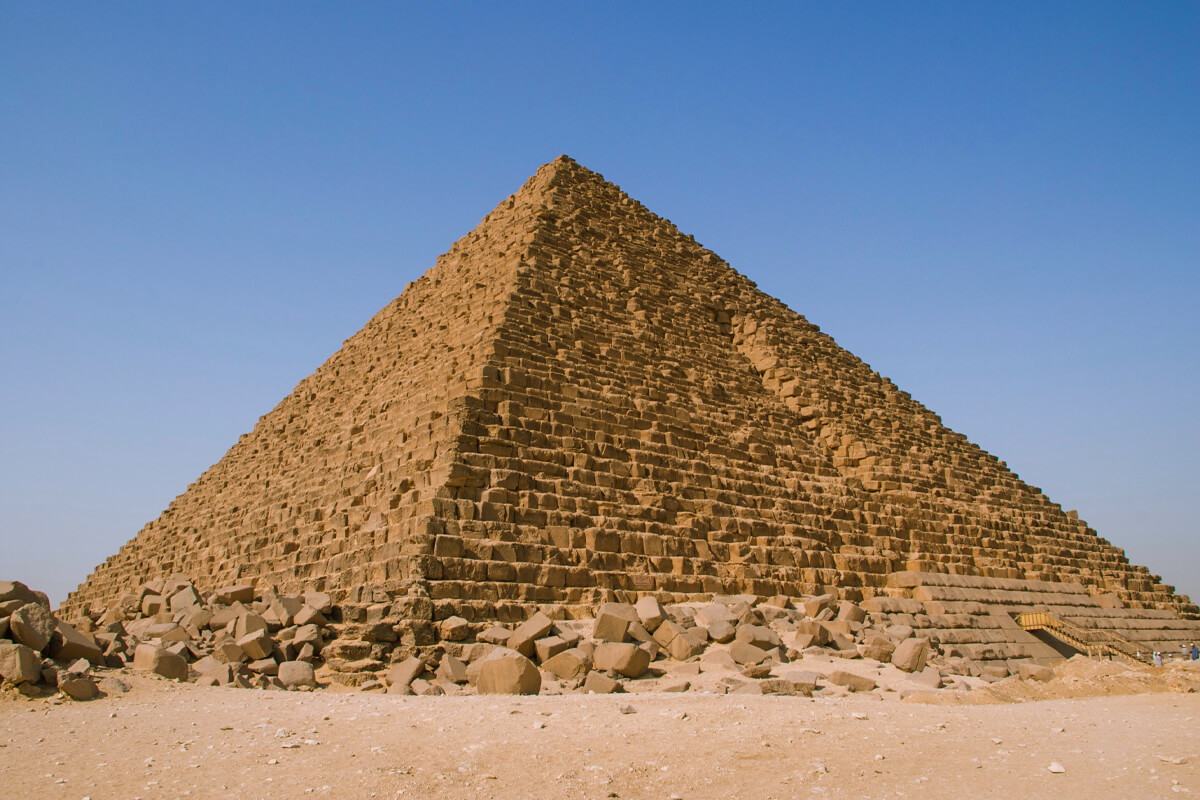
The Pyramid of Menkaure is the smallest yet one of the most fascinating pyramids on the Giza Plateau. Situated alongside the Great Pyramid of Khufu and the Pyramid of Khafre, this pyramid represents the final masterpiece of Egypt’s Fourth Dynasty. Visitors in 2026 can explore its history, dimensions, interior, and the pyramid complex, making it an essential part of any Egypt tour.
Built around 4,500 years ago, the Pyramid of Menkaure is shrouded in mystery, from its construction methods to the intriguing hole in the Pyramid of Menkaure. In this guide, we’ll cover everything travelers need to know: the pyramid’s height, dimensions, restoration, facts, and interior exploration, as well as its location, builders, and cultural significance. We’ll also provide practical tips for visiting, combining your trip with other Giza attractions, and ensuring an unforgettable experience.
History and Significance of the Pyramid of Menkaure
The pyramid of menkaure was built as a tomb for Pharaoh Menkaure, the last great king of Egypt’s Fourth Dynasty. It stands as a testament to ancient Egyptian engineering and religious beliefs, symbolizing the pharaoh’s journey to the afterlife. The pyramid is smaller than its neighbors—why is the pyramid of menkaure the smallest—but its craftsmanship and architectural complexity remain remarkable.
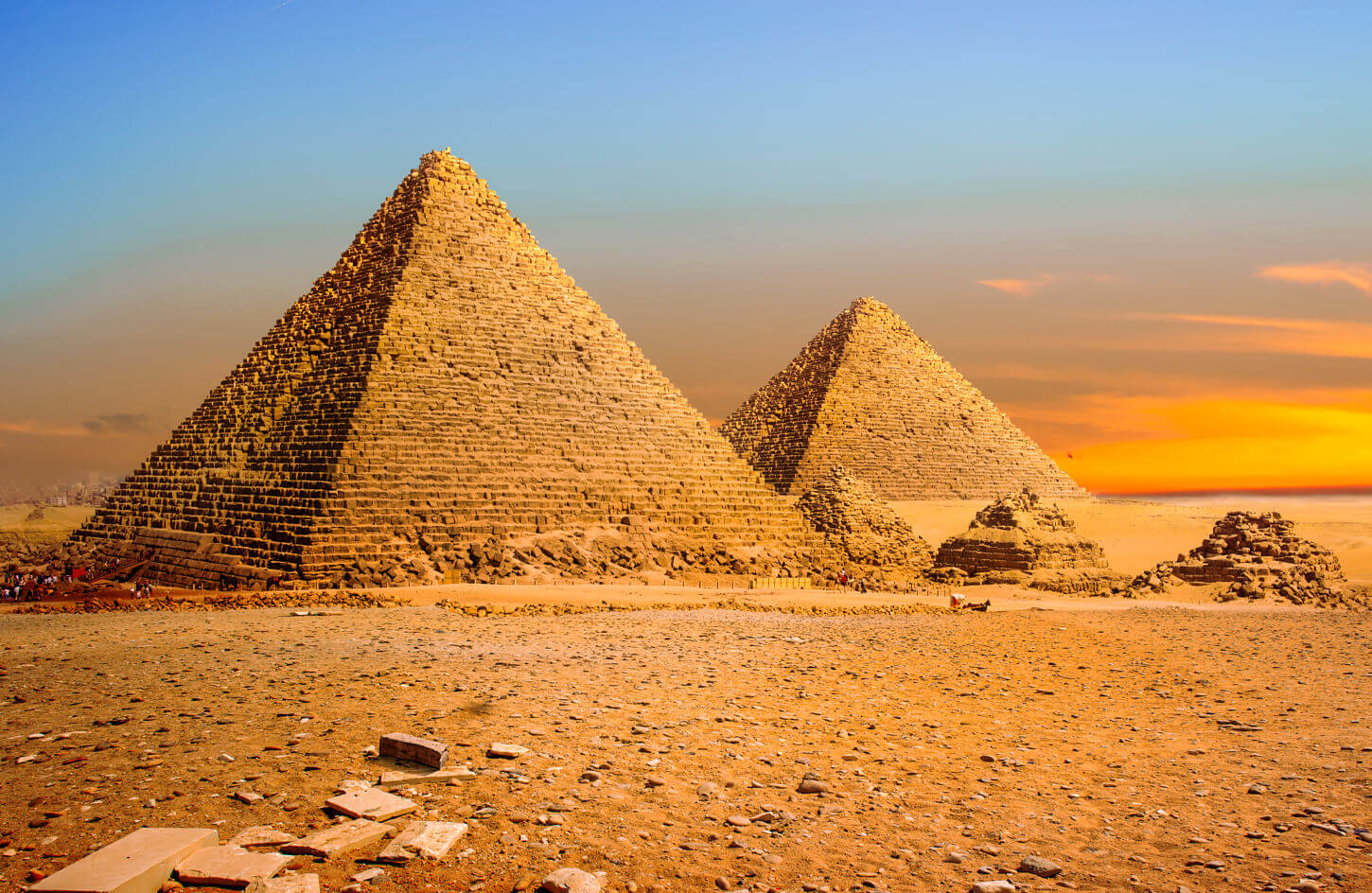
Constructed with limestone and granite, the pyramid is part of the pyramid complex of menkaure, which includes smaller subsidiary pyramids, temples, and the surrounding causeways. Archaeological evidence suggests Menkaure intended his tomb to reflect both his political power and his spiritual connection with the gods.
Travelers exploring the Giza pyramids in Egypt can see the contrast between Menkaure’s pyramid and the towering Khufu and Khafre pyramids, appreciating the range of construction styles and symbolic purposes. The great pyramid of menkaure is not just a historical site; it is a cultural experience that connects visitors to thousands of years of Egyptian civilization.
Pyramid of Menkaure Dimensions and Height
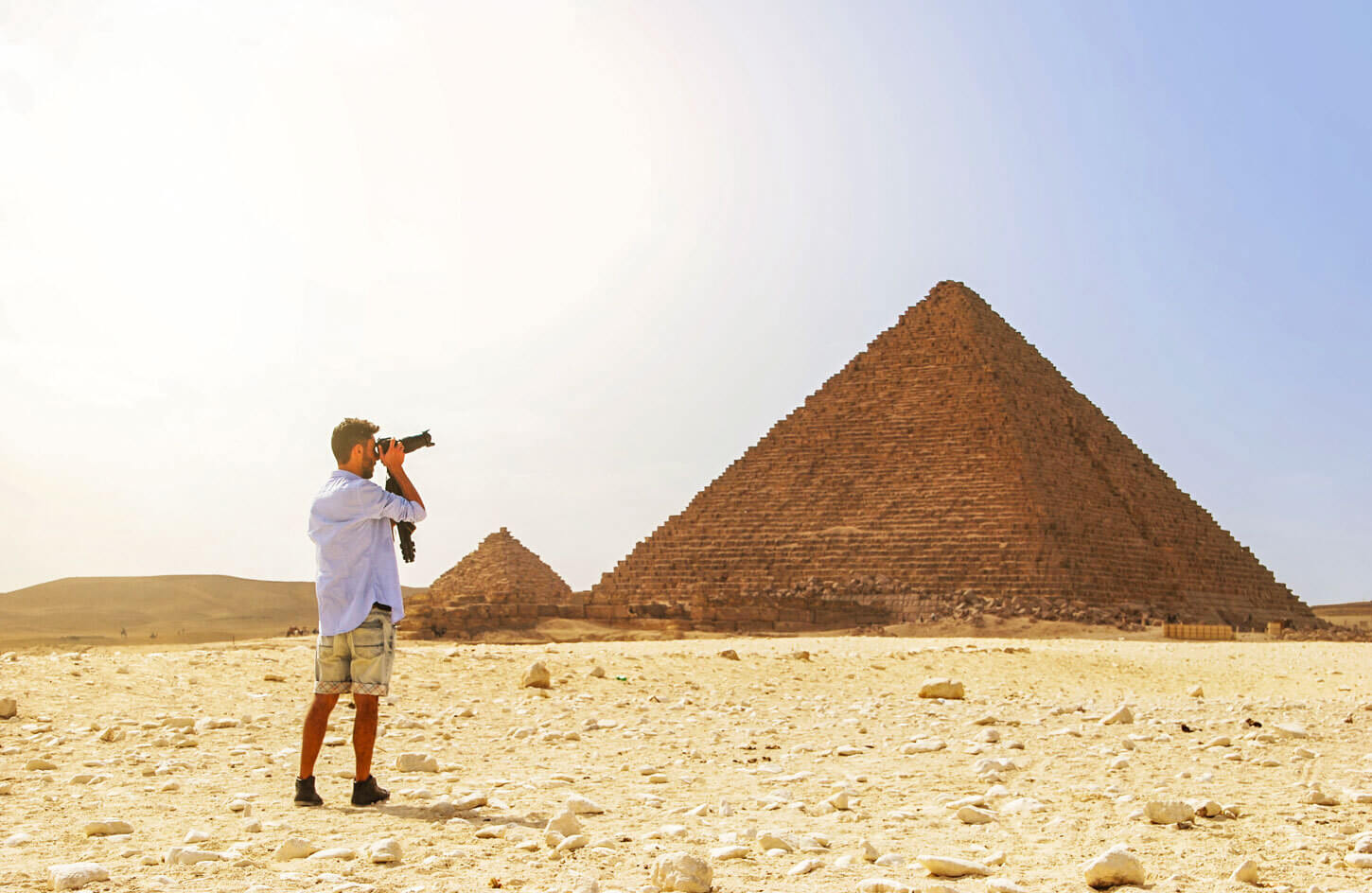
One of the most common questions for visitors is, how tall is the pyramid of menkaure? Originally, the pyramid stood at approximately 65 meters (213 feet), although erosion and the loss of its outer casing have reduced its height to around 61 meters (200 feet). The pyramid of menkaure dimensions reveal a base of about 108 meters (354 feet) per side, making it significantly smaller than Khufu’s and Khafre’s pyramids.
Despite its size, the pyramid of menkaure height and proportions demonstrate the precise engineering skills of ancient Egyptians. The smaller scale allowed for more intricate stonework, especially in the use of red granite for the lower courses, imported from Aswan over 800 km away.
Travelers in 2026 visiting the pyramid of menkaure location will notice the contrast between its compact structure and the grand scale of the other Giza pyramids. Understanding the dimensions and construction techniques adds depth to your visit and helps appreciate the architectural genius of ancient Egypt.
Inside the Pyramid of Menkaure: Exploring the Interior
Exploring inside the pyramid of menkaure offers a rare glimpse into ancient burial practices. The pyramid contains a descending corridor leading to the burial chamber, where remnants of the pharaoh’s sarcophagus were found. For modern visitors, the pyramid of menkaure interior showcases the precision of stone cutting, ventilation shafts, and the clever use of space.
The pyramid of menkaure inside also raises intriguing questions, such as why is there a hole in the pyramid of menkaure. This hole, or breach, is believed to have been made by ancient tomb robbers, yet it also allows modern travelers to observe the interior without extensive excavation.
Visiting the inside pyramid of menkaure gives travelers a tangible connection to Menkaure and his era, turning abstract history lessons into a tactile and immersive experience. For 2026 tourists, guided tours inside the pyramid provide safety, context, and insights about burial customs and pyramid engineering.
Who Built the Pyramid of Menkaure and When
The who built the pyramid of menkaure question is answered by historical records and archaeological findings: Pharaoh Menkaure of the Fourth Dynasty commissioned the pyramid, likely around 2510 BC. Construction likely took decades, involving thousands of skilled laborers, artisans, and engineers.
Understanding when was the pyramid of menkaure built provides insight into the technological and administrative capabilities of ancient Egypt. The coordination required to transport granite, carve limestone, and assemble the pyramid is astounding, especially considering the tools and resources available at the time.
Modern visitors can learn about these construction techniques on-site or through AC Origins pyramid of menkaure references, which dramatize the construction process and offer immersive historical perspectives.
Facts About the Pyramid of Menkaure
The pyramid of menkaure facts reveal its unique features:
- It is the smallest of the Giza pyramids but intricately designed.
- Built with limestone and red granite, demonstrating advanced quarrying techniques.
- Part of a larger pyramid complex including temples and smaller subsidiary pyramids.
- Its burial chamber contained a sarcophagus, now in museums for study.
- The pyramid’s breach, or pyramid of menkaure gash, provides a peek into its interior and has intrigued scholars for centuries.
Travelers exploring the the pyramid of menkaure facts can gain a deeper appreciation for the religious, political, and engineering significance of this historic site.
Restoration and Preservation of the Pyramid
The pyramid of menkaure restoration has been ongoing to protect the structure from natural erosion, pollution, and tourist impact. Restoration projects include stone stabilization, reconstruction of eroded areas, and protective measures to maintain its historical integrity.
Visitors in 2026 will notice the careful work done to preserve the pyramid of menkaure interior, making it safe and accessible while maintaining authenticity. This ongoing restoration ensures that future generations can continue to experience one of Egypt’s most fascinating monuments.
Where is the Pyramid of Menkaure Located?
The pyramid of menkaure location is on the Giza Plateau, southwest of Cairo. Its proximity to the pyramids in Giza Egypt makes it easy to combine a visit with the Great Pyramid of Khufu and the Pyramid of Khafre. The pyramid complex of menkaure includes the main pyramid, three smaller pyramids for queens, mortuary temples, and causeways.
For travelers, visiting the the pyramid of menkaure along with neighboring pyramids provides a comprehensive experience of Egypt’s Fourth Dynasty monumental architecture and urban planning.
Why the Pyramid of Menkaure Is Unique
The pyramid of menkaure facts emphasize its uniqueness:
- Smallest yet most detailed of the Giza pyramids.
- Combines limestone and granite construction.
- Offers a peek into pharaonic funerary practices.
- Historical and symbolic significance as the final Fourth Dynasty pyramid.
The great pyramid of menkaure is a perfect example of how size does not diminish cultural and architectural importance. Its distinct features, combined with the surrounding pyramid complex of menkaure, make it a must-visit in 2026.
Visiting Tips for Travelers in 2026
- Arrive early to avoid crowds and capture the best photos.
- Combine your visit with the pyramids of Khufu and Khafre for a full Giza plateau experience.
- Hire a licensed guide to explain the inside pyramid of menkaure and historical context.
- Wear comfortable shoes; the terrain around the plateau can be uneven.
- Respect the restoration areas and avoid touching ancient stones.
These tips ensure that travelers get the most out of their visit while preserving the pyramid for future generations.
The Pyramid of Menkaure in Modern Culture
The pyramid of menkaure has inspired historians, architects, and filmmakers. It appears in documentaries, cultural tours, and even video games, such as AC Origins pyramid of menkaure, helping modern audiences connect with ancient history.
Its visual appeal, historical significance, and cultural symbolism make it not only a physical landmark but also a centerpiece of Egypt’s tourism experience in 2026.